
The head of CINEA, the European agency that manages the LIFE program, visits the Ebro Resilience regionThe head of CINEA, the European agency that manages the LIFE program, visits the Ebro Resilience regionThe head of CINEA, the European agency that manages the LIFE program, visits the Ebro Resilience regionThe head of CINEA, the European agency that manages the LIFE program, visits the Ebro Resilience region
  • STRATEGY
    • Background
    • The Strategy
    • Lines of action
    • Entities
  • JOIN US!
    • Informative Days
    • Participatory Workshops
    • Participation and LIFE capabilities
  • PROGRESS MADE
  • PROYECT LIFE P1
    • The project
    • Objetives
    • Progress LIFE Ebro Resilience P1
    • Actions
    • Newsletters and information resources
    • Documents and materials
    • Beneficiaries
    • LIFE Programme
  • NEWS
  • CONTACT
  • Tramo 7
    • Ebro en Alcalá de Ebro y Remolinos
  • Tramo 8
    • Ebro en Cabañas de Ebro
  • Tramo 9
    • Ebro en Torres de Berrellén y Sobradiel
  • Tramo 12
    • Ebro en Osera de Ebro y Fuentes de Ebro
  • Tramo 14
    • Ebro en el Burgo de Ebro
English
  • Spanish
Search
Generic filters
Exact matches only
  • Inicio
  • Life
  • The head of CINEA, the European agency that manages the LIFE program, visits the Ebro Resilience region

The head of CINEA, the European agency that manages the LIFE program, visits the Ebro Resilience region

28 October, 2026
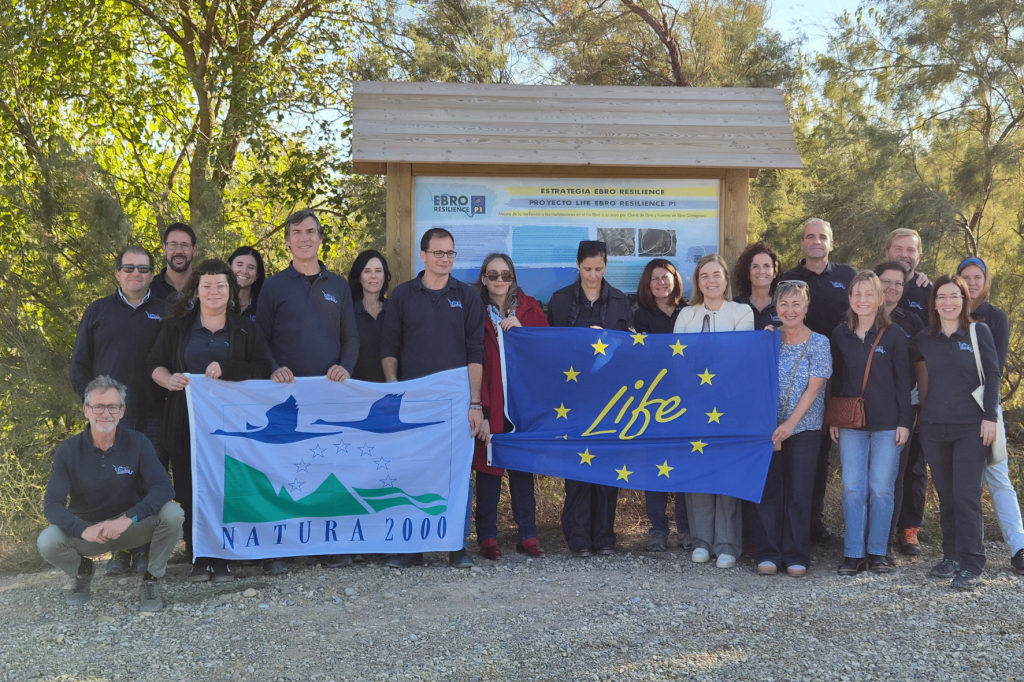
CINEA Director Visits the "Grupo Bandera" in Meandro de Aguilar

CINEA, the flagship group at Meandro de Aguilar

The director of the European Commission’s European Climate, Infrastructure, and Environment Agency (CINEA), Paloma Aba Garrote, has visited the project sites of the LIFE Ebro Resilience P1 project to gain firsthand insight into the actions being carried out to reduce flood risk and promote adaptation to this extreme event in the middle reaches of the Ebro River.

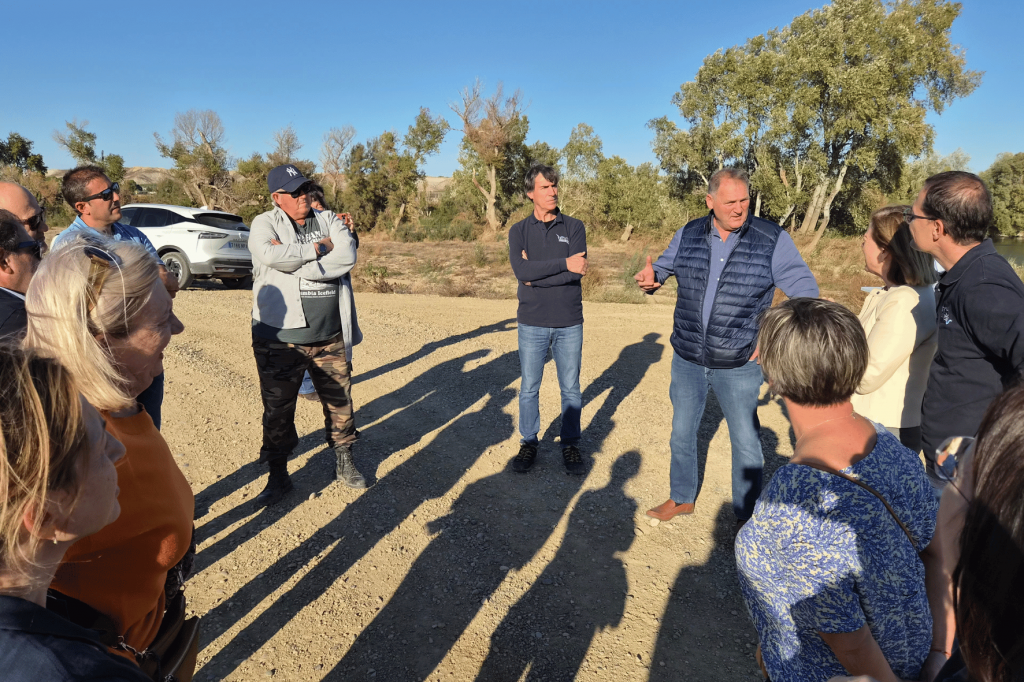
In addition to meeting with the technical team, he was also able to connect with stakeholders through his meeting with the Huerta del Ebro Irrigation Community in Fuentes de Ebro and with the mayors of Fuentes de Ebro: María Pilar Palacín, Enrique Gómez of Osera de Ebro, and representatives from the Quinto City Council.

The visit underscores the European Union’s interest in this project, which is 55% funded by the LIFE Program for the 2021–2027 period and is part of the Ebro Resilience Strategy.

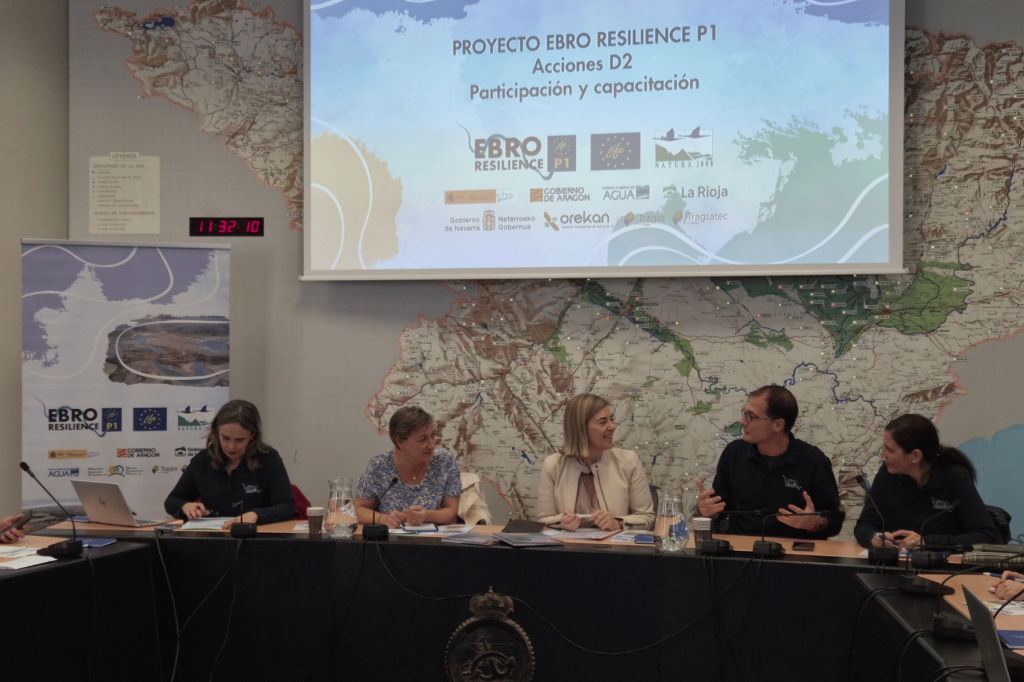
The day began by once again demonstrating the effective coordination and collaboration among the partner government agencies, with an analysis of the project’s status alongside the technical team, composed of representatives from the Ministry for Ecological Transition and the Demographic Challenge (MITECO), the Ebro River Basin Authority (CHE), the regional governments of La Rioja and Aragon; Orekan-Gestión Ambiental de Navarra; the Aragonese Water Institute; and the state-owned companies TRAGSA and TRAGSATEC.

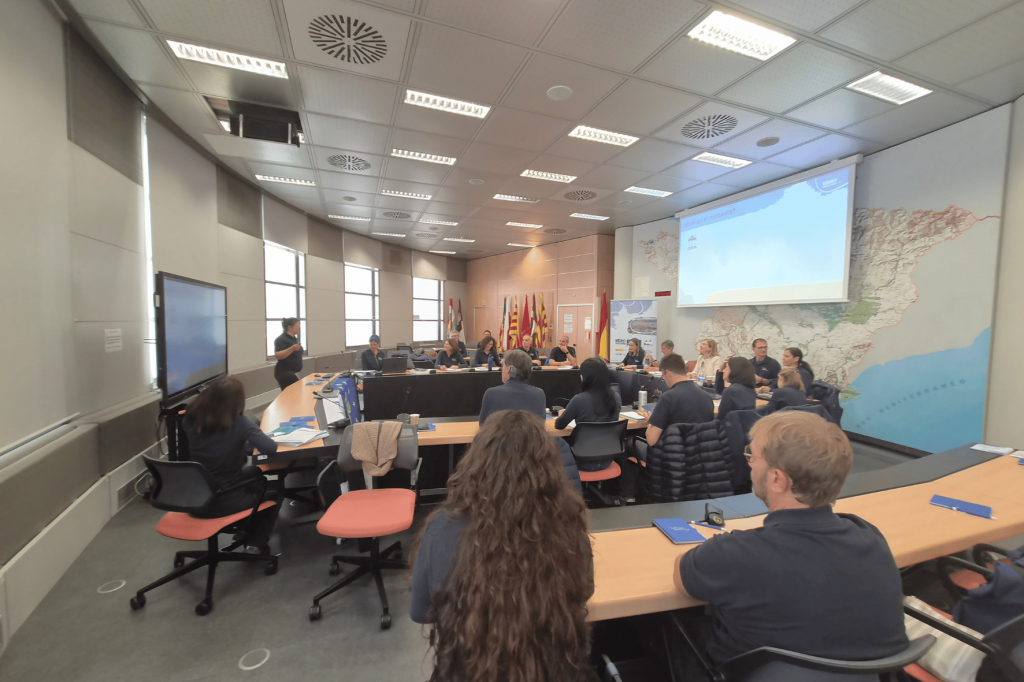
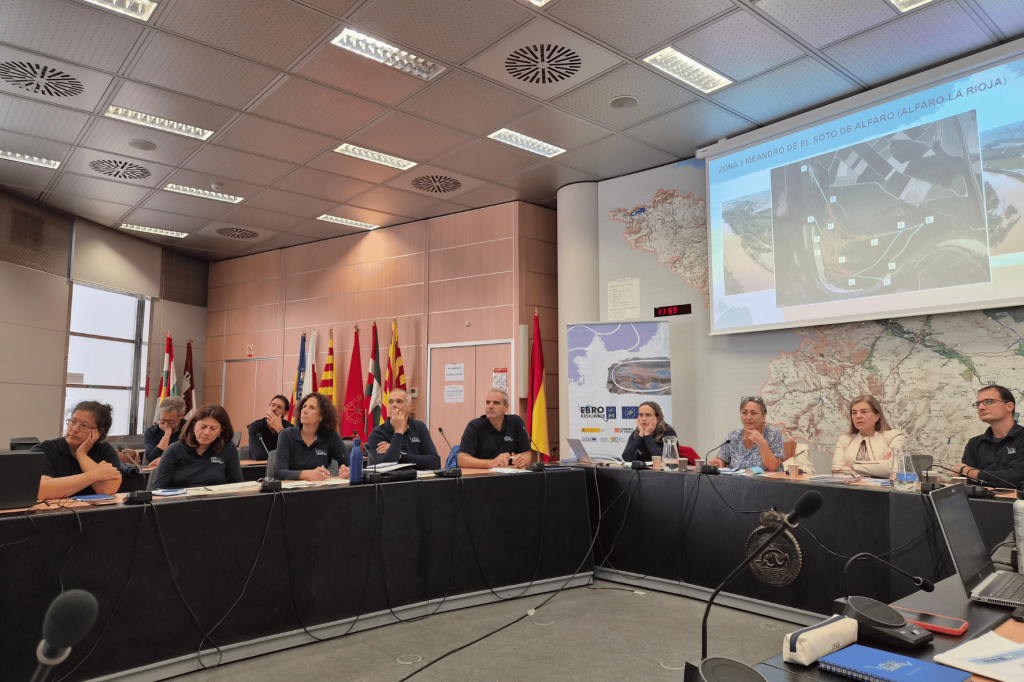
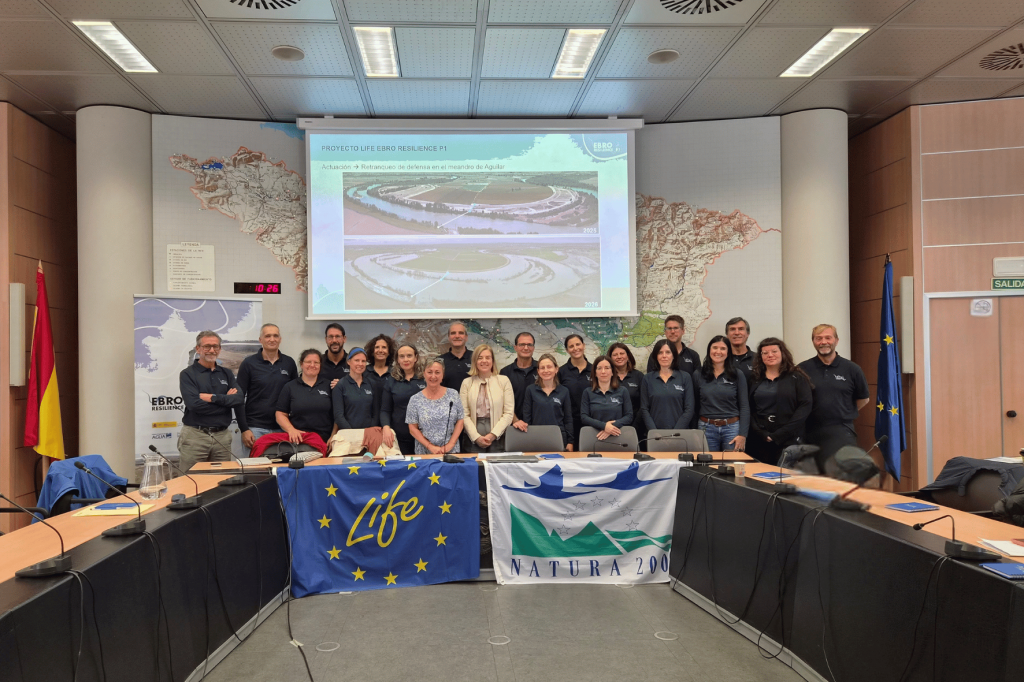
The meeting, held at the headquarters of the Ebro River Basin Authority, provided an opportunity to review the progress of the project’s actions and indicators, which are considered a best-practice example of Nature-Based Solutions according to the Spanish catalog of such measures. The meeting also addressed the public engagement and social capacity-building initiatives carried out since 2021, which have fostered the active involvement of the local population and stakeholders in all phases of the project.

LIFE Ebro Resilience P1 Technical Team and CINEA Director

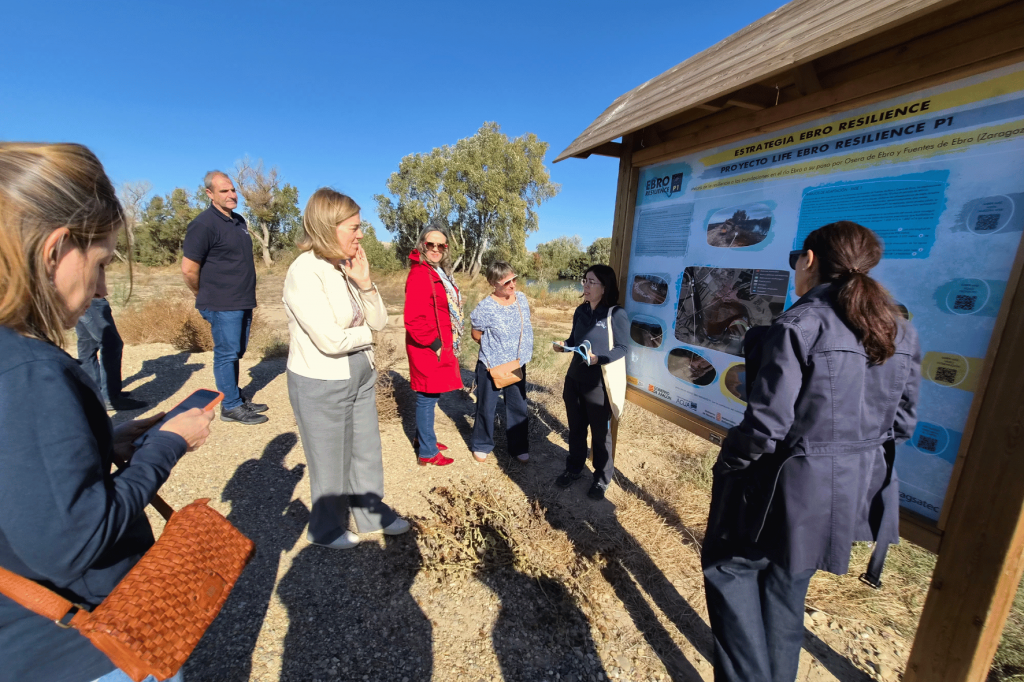
Visit to Osera de Ebro and Fuentes de Ebro

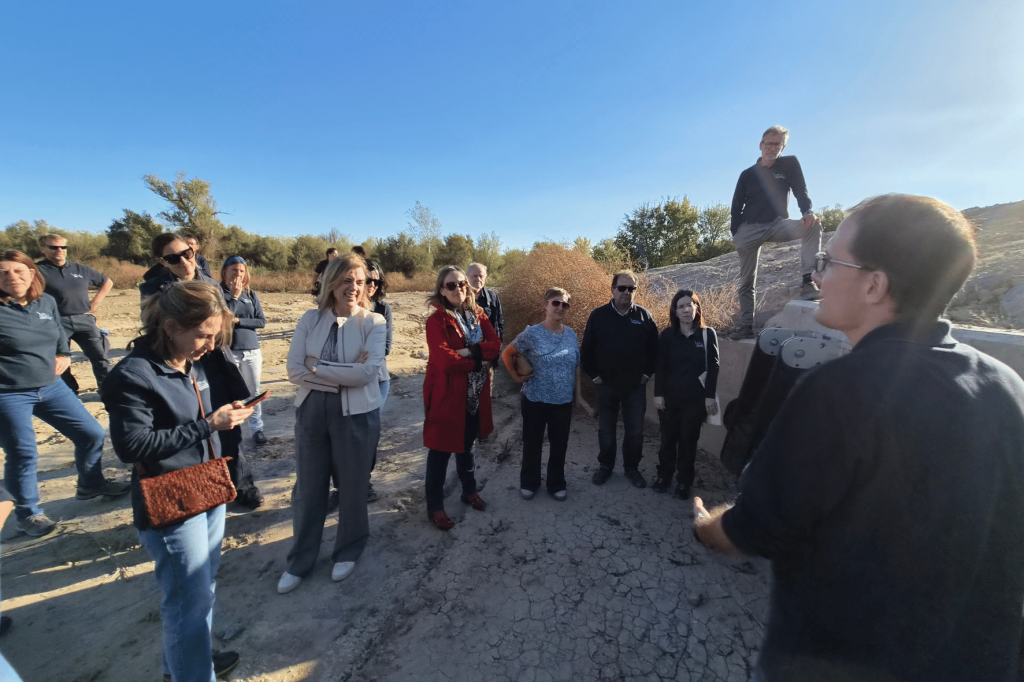
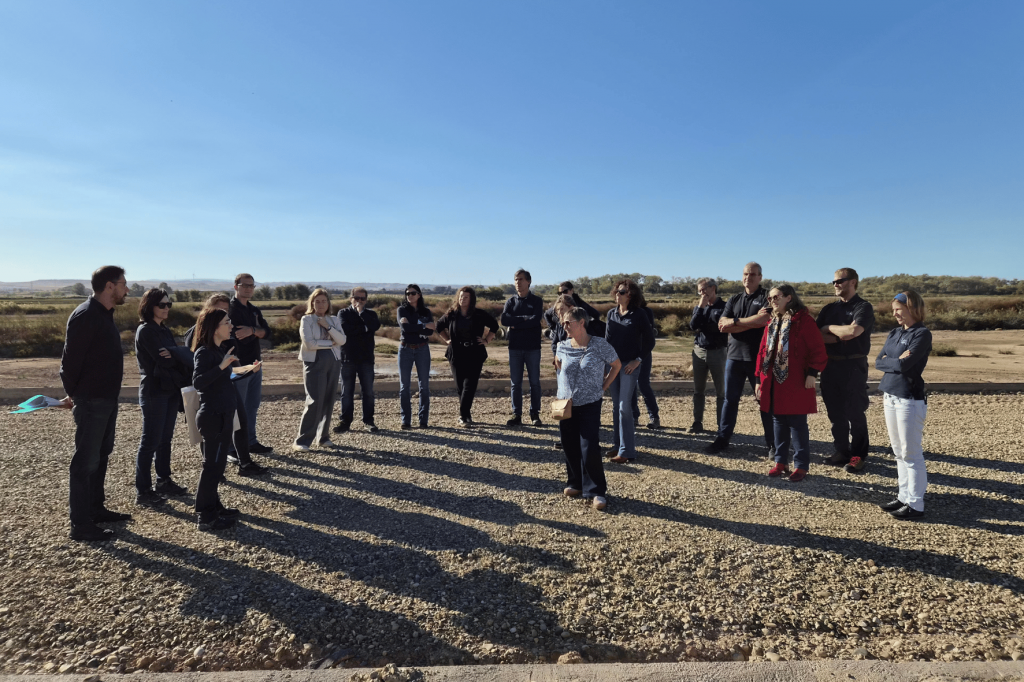
In the afternoon, the director, accompanied by the technical team, toured the projects being carried out between Osera de Ebro and Fuentes de Ebro (Zaragoza), in what is known as Zone 2 of the project. This is one of the most innovative interventions of the LIFE Ebro Resilience P1 project due to its commitment to reconciling flood risk reduction, agricultural activity, and the restoration of natural areas through Lateral Flow Buffer Zones. This measure involves the sequential implementation of temporary floodplains, a solution that could be applied in other Spanish and European river basins facing the same challenges.

In addition to reviewing the projects, one of the highlights of the event was the opportunity to engage with local stakeholders, including a meeting with the Huerta del Ebro Irrigation Community in Fuentes de Ebro and representatives from the municipal governments of Fuentes de Ebro and Quinto.

CINEA Director Visits the Osera de Ebro–Fuentes de Ebro Section
CINEA Director Visits to Meet with Mayors and the Irrigation Community
Among the performances we attended, the following stand out:
• The restoration of 27 hectares of riverine habitat by removing longitudinal levees and constructing new protective structures set back from the river channel at the Mejana del Conde and the Aguilar meander.
• The creation of a 1.4-hectare wetland, along with the removal of 1.3 hectares of exotic vegetation and the future planting, beginning in February 2027, of 12,500 native trees, including poplars and elms resistant to Dutch elm disease.
• The adaptation of a section of the irrigation system of the Huerta del Ebro de Fuentes de Ebro Irrigation District—which is buried and located away from the riverbed—to improve its performance during floods and increase the system’s efficiency.
• The implementation, currently underway, of 14 successive temporary flood areas covering 360 hectares of farmland, which make up the so-called Lateral Flow Buffer Zones (ZAFL).
The ZAFLs are one of the project’s main innovative contributions. During extreme floods, they are flooded in a controlled manner and allow the overflowing water to flow over the previously flooded land, reducing damage and erosion, facilitating subsequent drainage, and accelerating the recovery of farmland.
CINEA Director Visits the Osera de Ebro–Fuentes de Ebro Section

The implementation of these measures has been made possible thanks to the collaboration of farmers, the Huerta del Ebro Irrigation District in Fuentes de Ebro, the municipalities involved, and other local stakeholders.

CINEA Director Visits the Osera de Ebro–Fuentes de Ebro Section

A Look at Zone 1

During the technical session, the initiatives carried out between Alfaro (La Rioja) and Castejón (Navarre), where LIFE Ebro Resilience P1 is promoting nature-based solutions for adapting to flood risk.
The projects carried out in La Rioja at Soto de Alfaro and the La Roza meander; those carried out in previous years as part of the Ebro Resilience Strategy; and, finally, the measures planned for the near future at the El Señorío de Castejón meander in Navarre—together constitute what is known as the “Combined Measures Section,” a series of successive interventions that multiply their effects in reducing flood risk.

Among the projects already completed as part of the LIFE Ebro Resilience P1 program, the morphological adaptation and environmental restoration of the La Roza meander stand out, with the recovery of 22 hectares of riverine habitat, and the restoration of former branches of the Ebro River in Soto de Alfaro, which has reconnected 60 hectares of this meander with the river’s active channel.

Meeting with the CINEA Director at the CHE headquarters—technical group

European Support and Next Steps

Before the technical workshop, Aba Garrote, accompanied by Piedad Rivas López, project manager for the LIFE Program, was welcomed by institutional representatives from the partner organizations: the president of the Ebro River Basin Authority (CHE), Carlos Arrazola Martínez; the deputy assistant director of Water Protection and Risk Management at MITECO, Mónica Aparicio Martín; the Director General of Environmental Quality, Climate Change, and Water for the Government of La Rioja, María Isabel Vitoria Díez; the Director of the Aragonese Water Institute of the Government of Aragon, Eva Sierra Vinagre; and the CHE’s Water Commissioner, Miriam Pardos Duque.

The visit builds on and expands the European Commission’s monitoring of the LIFE Ebro Resilience P1 project. In 2025, CINEA representative Federico de Filippi participated in coordination meetings and visited the project’s two adaptation zones, expressing his support for its objectives and progress.

LIFE Ebro Resilience P1 is part of the Ebro Resilience Strategy, which promotes the implementation of the measures outlined in the Ebro River Basin Flood Risk Management Plan (PGRIEbro) along a 332-kilometer stretch of the river’s middle course between Logroño and La Zaida.

To build on this work, the strategy’s partners have submitted a new proposal to the LIFE 2027 call for proposals, which is currently under review by the European Commission. This new phase will include new institutional partners and new lines of action outlined in the PGRIEbro.

LIFE Ebro Resilience P1 Technical Team and CINEA Director

  • Ministerio de Transición Ecológica - Dirección General del Agua - Confederación Hidrográfica del Ebro
  • Gobierno de Aragón
  • Instituto   
  • Gobierno de La Rioja
  • Gobierno de Navarra y Gestión Ambiental de Navarra
  • Tragsa
  • Tragsatec
    The contents are the sole responsibility of the LIFE EBRO RESILIENCE P1 PROJECT and do not necessarily reflect the position of CINEA, nor is this Agency responsible for any use that may be made of the information included herein.
    English
    • English
    • Spanish
      Gestionar consentimiento
      Para ofrecer las mejores experiencias, utilizamos tecnologías como las cookies para almacenar y/o acceder a la información del dispositivo. El consentimiento de estas tecnologías nos permitirá procesar datos como el comportamiento de navegación o las identificaciones únicas en este sitio. No consentir o retirar el consentimiento, puede afectar negativamente a ciertas características y funciones.
      Funcional Always active
      El almacenamiento o acceso técnico es estrictamente necesario para el propósito legítimo de permitir el uso de un servicio específico explícitamente solicitado por el abonado o usuario, o con el único propósito de llevar a cabo la transmisión de una comunicación a través de una red de comunicaciones electrónicas.
      Preferencias
      El almacenamiento o acceso técnico es necesario para la finalidad legítima de almacenar preferencias no solicitadas por el abonado o usuario.
      Estadísticas
      El almacenamiento o acceso técnico que es utilizado exclusivamente con fines estadísticos. El almacenamiento o acceso técnico que se utiliza exclusivamente con fines estadísticos anónimos. Sin un requerimiento, el cumplimiento voluntario por parte de tu proveedor de servicios de Internet, o los registros adicionales de un tercero, la información almacenada o recuperada sólo para este propósito no se puede utilizar para identificarte.
      Marketing
      El almacenamiento o acceso técnico es necesario para crear perfiles de usuario para enviar publicidad, o para rastrear al usuario en una web o en varias web con fines de marketing similares.
      • Manage options
      • Manage services
      • Manage {vendor_count} vendors
      • Read more about these purposes
      Ver preferencias
      • {title}
      • {title}
      • {title}
      • English
      • Español (Spanish)