

Why do some river restoration projects garner widespread support while others are met with opposition? How can we learn to live with flooding? What role do communication and public participation play in river restoration?
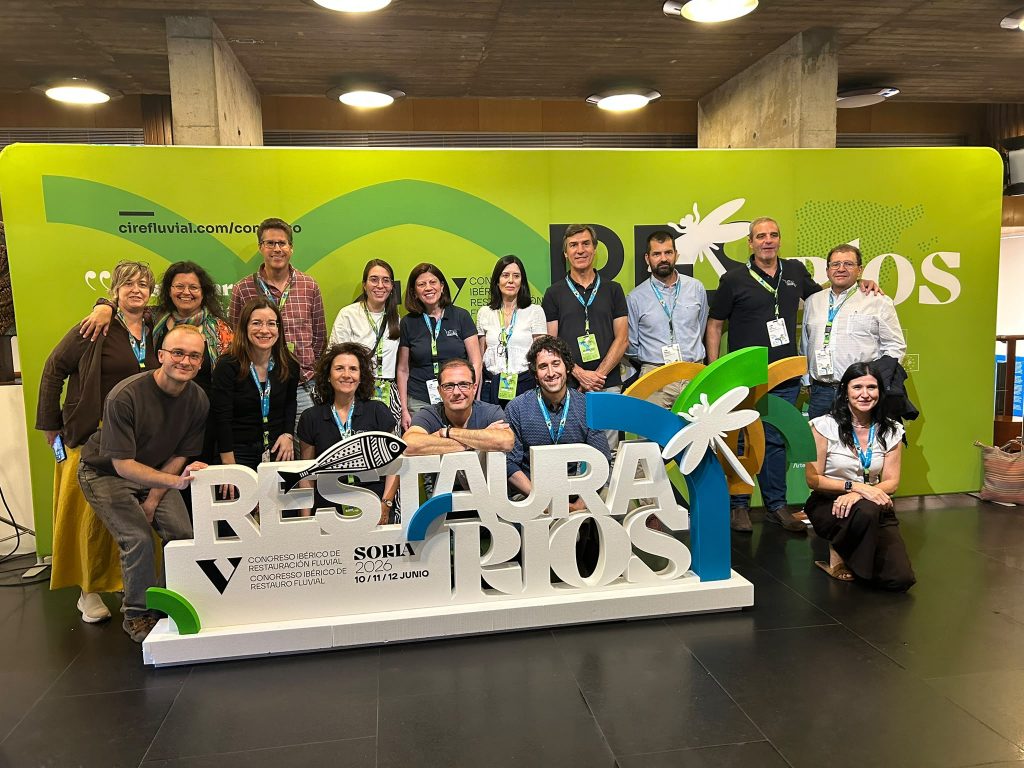
These issues were addressed at the 5th RestauraRíos Congress, held in Soria from June 10 to 12, where the LIFE Ebro Resilience P1 project shared experiences and findings that reflect an increasingly visible trend in river management: river restoration is no longer understood solely as an ecological or hydraulic issue, but also as a social one.
The event, organized by the Iberian Center for River Restoration (CIREF), the Duero River Basin Authority, the City Council of Soria, Wetlands International, and the Ministry for Ecological Transition and the Demographic Challenge, brought together specialists, government agencies, and organizations working on the restoration and sustainable management of river ecosystems.
In this context, LIFE Ebro Resilience P1 has presented various initiatives implemented in the middle reaches of the Ebro River that aim to reconcile flood risk reduction with the improvement of river health.
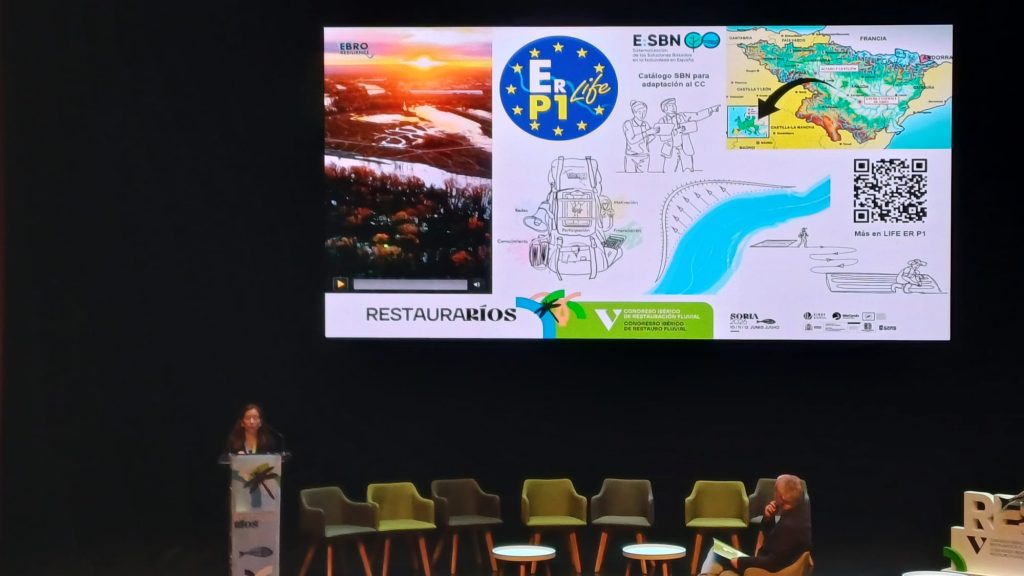
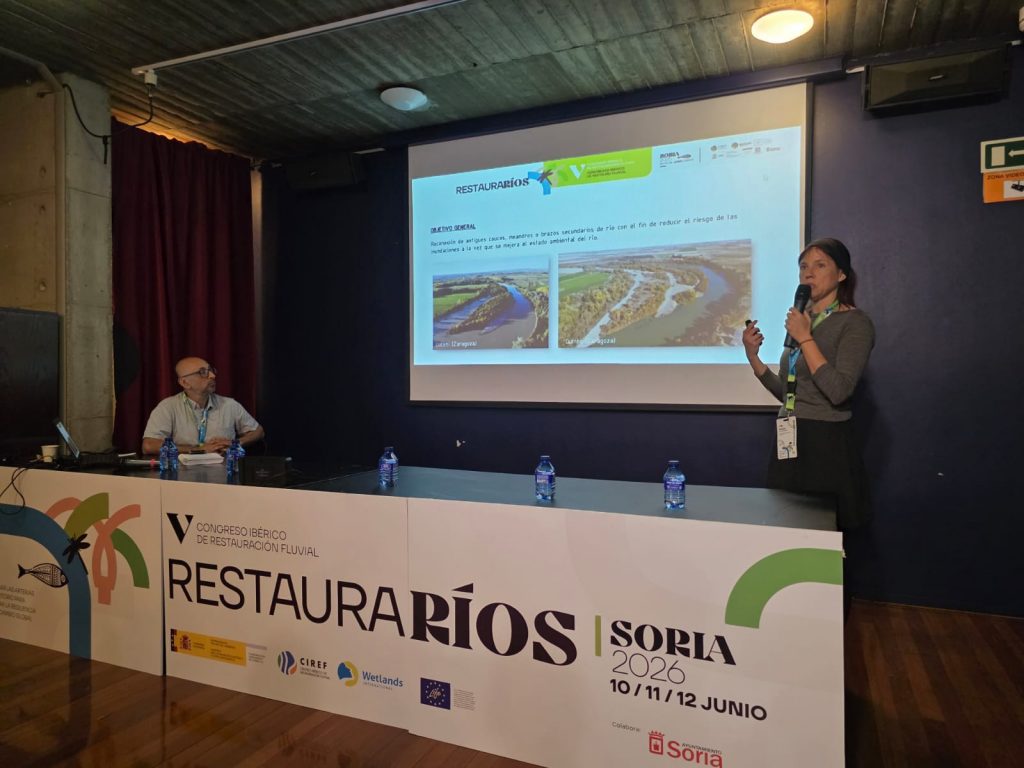
One of the key themes has been the role of nature-based solutions. Through an exhibition in the RiverPitch format by Tatiana Garza (Ebro River Basin Authority and the Ebro Resilience team), the project has demonstrated how measures such as the restoration of riverine space, the reconnection of side channels, or the creation of buffer zones can reclaim space for the river and reduce flood-related damage.
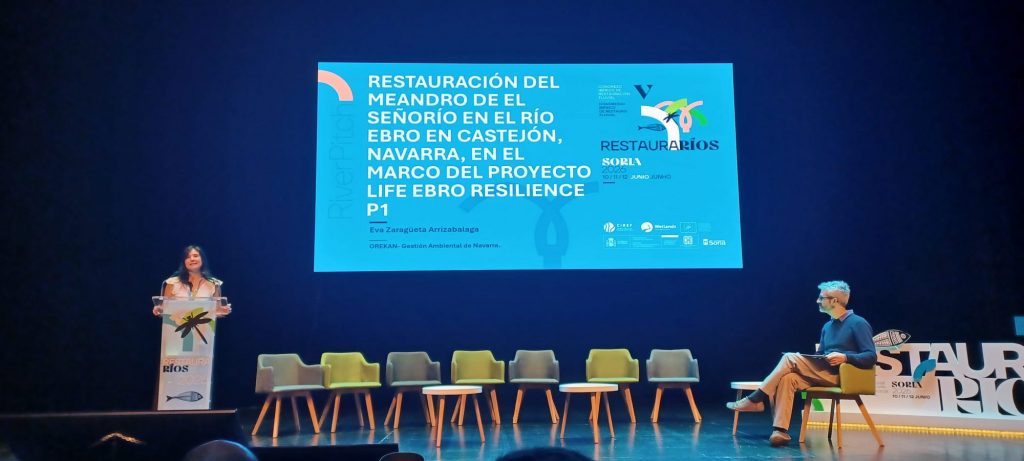
Progress has also been reported on specific river restoration projects. Among them is the restoration of the El Señorío meander in Castejón (Navarra), which aims to restore functionality to 23 hectares of riverine space by restoring the river’s natural dynamics and improving associated habitats, as presented in another RiverPitch by Eva Zaragüeta from Orekan-Gestión Ambiental de Navarra and the Ebro Resilience team.
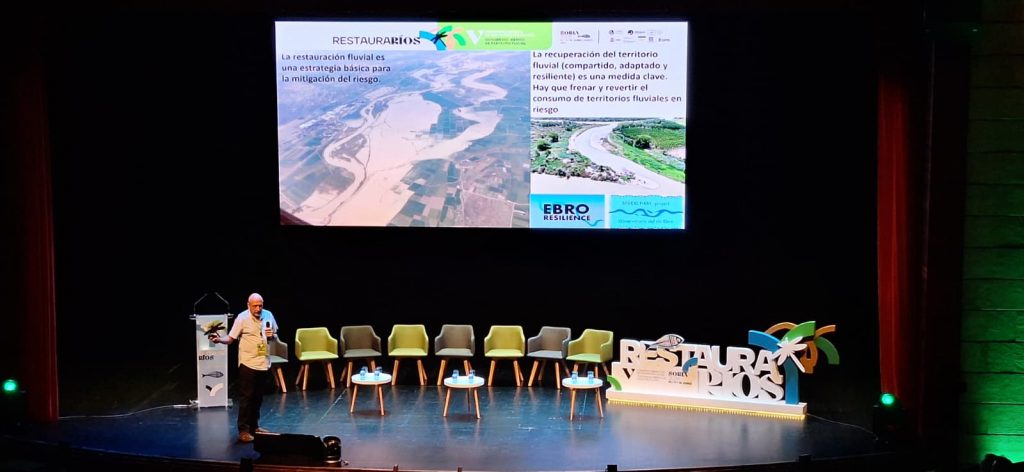
In addition, during a technical presentation by Carolina García (Ebro River Basin Authority – Ebro Resilience), the experience of permeabilizing large sediment deposits in the middle section of the Ebro River was presented; this technique combines environmental improvement with increased drainage capacity during flood events.
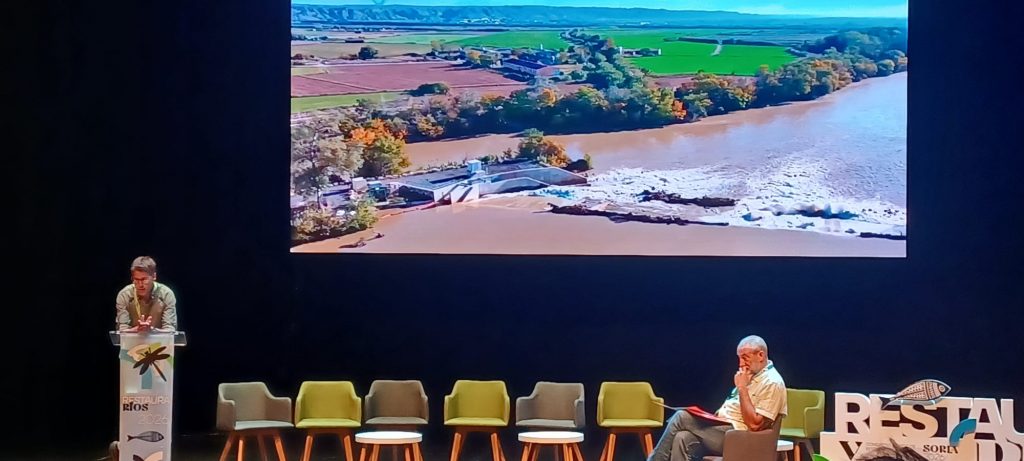
Ecological connectivity was another area addressed. The head of the CHE’s Environmental Management Division, Samuel Chopo, also a member of the Ebro Resilience team, presented the case of the fish passage at the Pina Dam, a structure designed as part of the Ebro Resilience Strategy to facilitate the movement of fish species and restore the river’s longitudinal continuity in a stretch of great ecological importance.
Beyond physical interventions, a significant portion of the contributions made by LIFE Ebro Resilience P1 has focused on social aspects. During the plenary session, Alba Ballester (TRAGSATEC), coordinator of public engagement and social capacity building for the LIFE Ebro Resilience P1 Project, reflected on the relationship between conflict, public engagement, and flood risk management, highlighting a common reality in many regions: adaptation requires social agreements and active listening within the community, in addition to technical solutions.
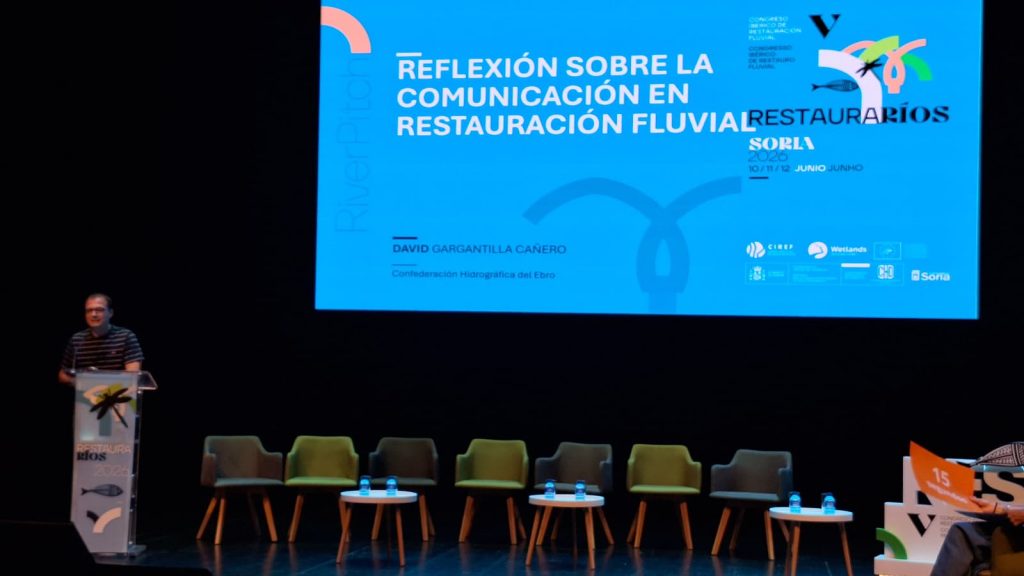
This same idea has been a recurring theme in the presentations on communication in river restoration, such as the one given by David Gargantilla of the Ebro River Basin Authority and technical coordinator of the project. Based on the project’s experience, insights were shared regarding the professionalization of communication for these projects, the development of communication plans, clear language, building trust, early engagement, and connecting with local realities—elements that are increasingly recognized as key factors in the success of such interventions.
Participation in RestauraRíos 2026 has thus made it possible to present concrete results, but also to contribute to a broader debate on the future of river restoration. A debate in which the restoration of the river’s natural processes remains fundamental, but where public understanding of those processes is equally essential for moving toward territories that are more resilient to flooding.
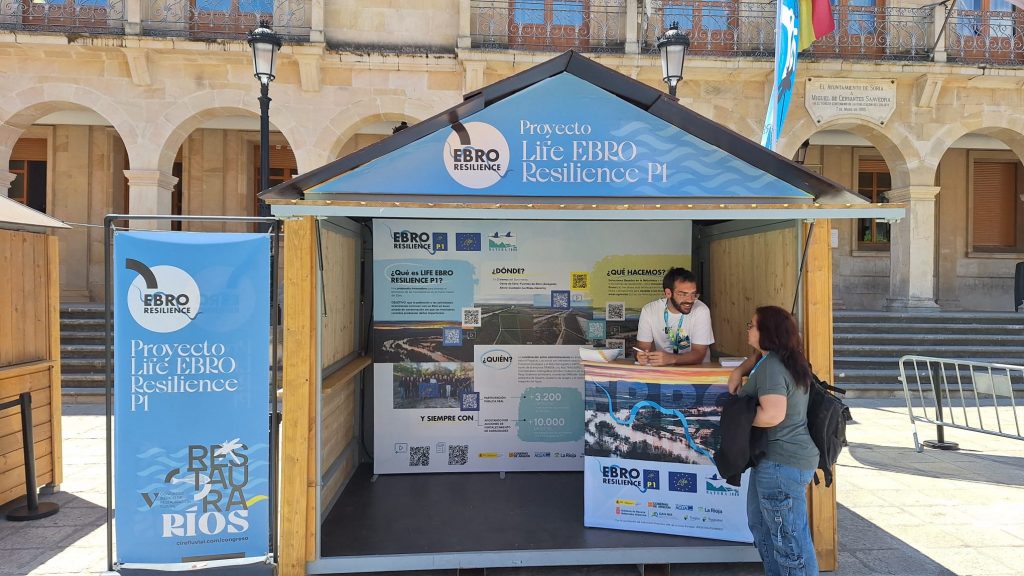
In addition, LIFE Ebro Resilience P1 participated in the exhibition area set up in downtown Soria, alongside LIFE IP Duero, offering educational materials, technical information, and activities designed to raise public awareness of river restoration.
What did we discuss at RestauraRíos 2026? People LIFE Ebro Resilience P1
VIDEO 1: Riverine environment—morphological restoration of the El Señorío meander (Castejón, Navarre); VIDEO 2: Communication and river restoration; VIDEO 3: Restoring river dynamics, reopening river branches; VIDEO 4: Resolving conflict; VIDEO 5: Nature-Based Solutions; VIDEO 6: Collaboration with Local Governments; VIDEO 7: Coordination Among Partners; VIDEO 8: Public Outreach: What Is Flood Risk?
About LIFE Ebro Resilience P1
The Project is made up of the Ministry for Ecological Transition and the Demographic Challenge (MITECO), through the Ebro Hydrographic Confederation (CHE) and the public companies TRAGSA and TRAGSATEC; the governments of La Rioja; Navarra, through Orekan – Environmental Management of Navarra and Aragon, together with the Aragonese Water Institute, with the support of the LIFE financial instrument of the European Commission.
.