


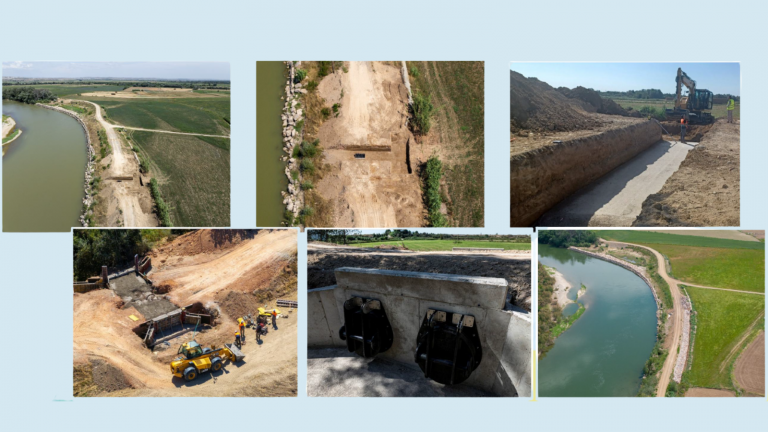
The primary sector is one of the main actors of the territory in the middle stretch of the Ebro, where agriculture has marked, in many municipalities, the economic rhythm and has shaped the landscape. Within the framework of the LIFE Ebro Resilience P1 Project, this sector has gone from being one of the parties most exposed to the effects of floods to being an active and essential part in the definition of adaptation measures that seek to make the viability of farms compatible with river dynamics.
In the intervention sections of Osera de Ebro – Fuentes de Ebro (Zaragoza) and Alfaro (La Rioja) – Castejón (Navarra) LIFE Ebro Resilience P1 is advancing in the actions aimed at a better coexistence between the river, riparian activity and the improvement of river ecosystems.
A landscape shaped by the irrigated land and the river
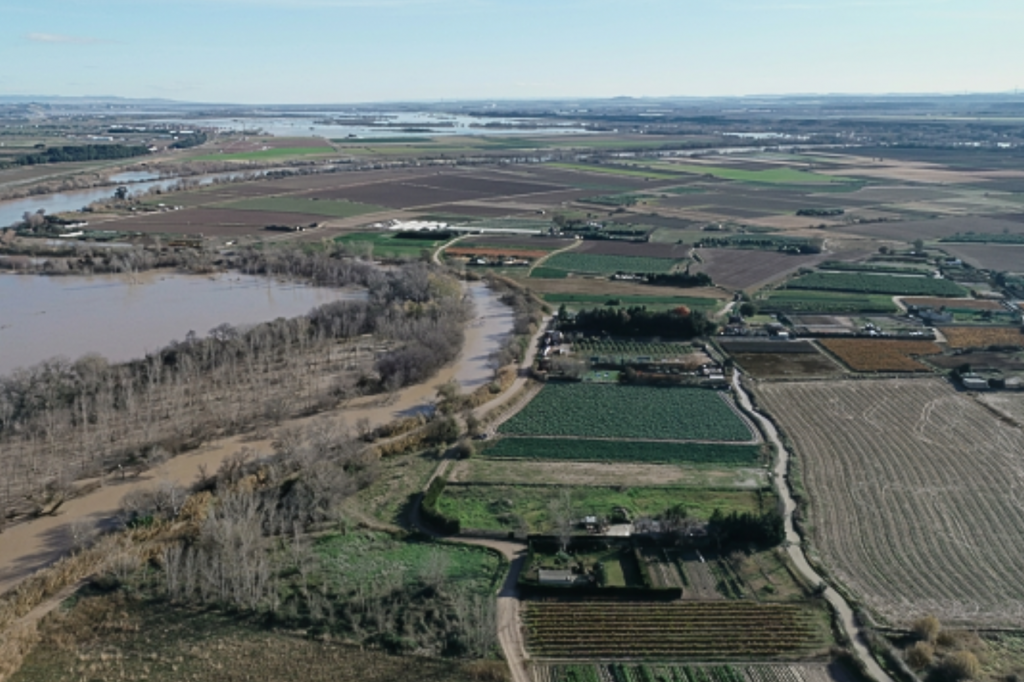
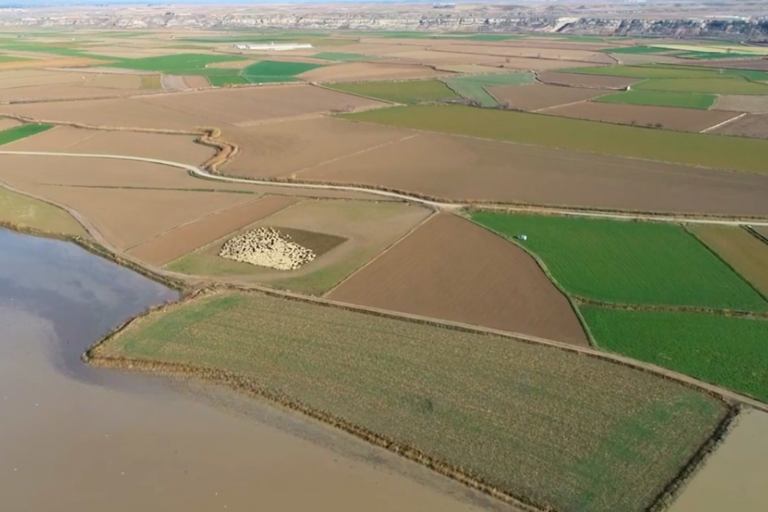
In the Aragonese section between Osera de Ebro and Fuentes de Ebro (Zaragoza), the current landscape reflects this close relationship between the river and agriculture. The historical irrigation systems, irrigation ditches, agricultural roads and cultivated plots make up a territory where agricultural activity continues to be an essential element for the local economy and the maintenance of population and employment.
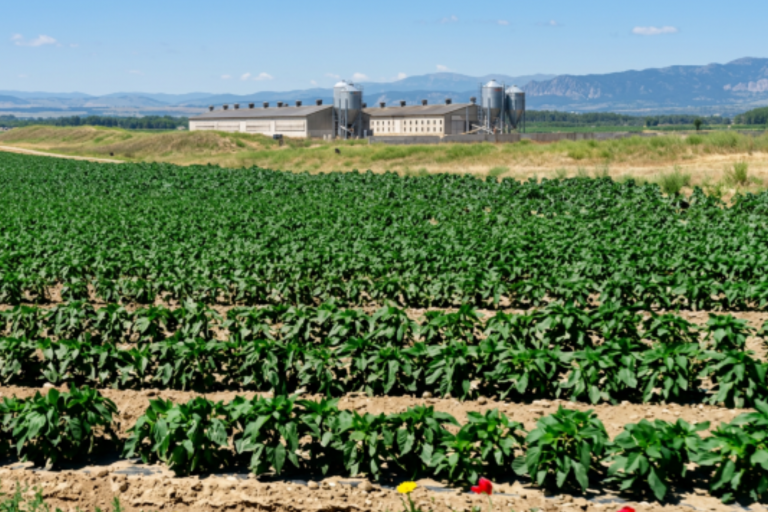
Crops such as corn, alfalfa, cereals and fodder are part of a production model closely linked to water and the river dynamics of the Ebro. A territory that, in addition, historically coexists with floods and with the challenges derived from the periodic flooding of the river.
In this context, the Lateral Flow Buffer Zones (LFBZ) are being built in the Osera-Fuentes section. This technical solution consists of:
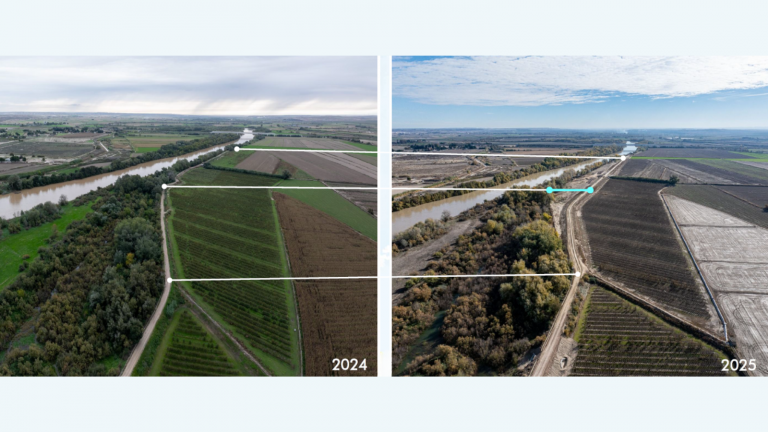
In this same section, in addition, narrowing of the river has been solved, recovering space for the river, a total of 23 hectares in the Mejana del Conde and the Meandro de Aguilar.
River restoration and space reclamation
In the section between Alfaro and Castejón, the objective is the improvement of 500 hectares of agricultural land together with the recovery of space for the river. Technical advances include the following:
This area is one of the largest agri-food corridors in the Ebro Valley. Irrigated agriculture and the associated processing industry have given rise to an important economic fabric linked to horticultural, canning and agro-industrial production.
The fertility of the Ebro meadows and the availability of water have allowed the development of crops of high productive value and a powerful economic activity linked to the agri-food sector. At the same time, the recurrent exposure to floods has historically conditioned the occupation of the territory and the organization of agricultural uses.
Consensus as a management tool
The implementation of these measures is based on the direct participation of the territory, with the primary sector clearly represented. Since the end of 2022, co-creation groups and a Conflict Transformation Group have been active, where farmers and ranchers are present, together with the rest of the sectors and actors involved in the riverbank and in flood management.
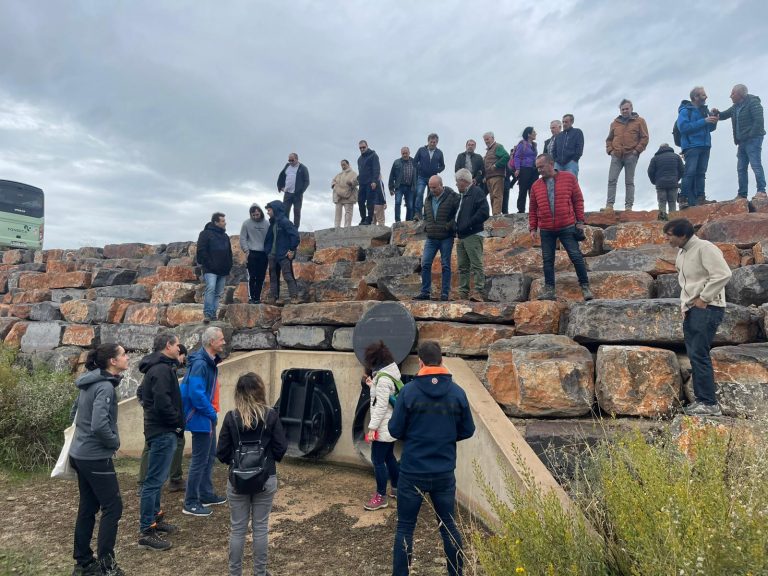
Consensus with local councils and irrigation communities has been the prerequisite for defining the actions, reinforced by field visits and technical information sessions for owners and tenants. This model seeks to reduce social vulnerability through capacity building, with the understanding that those who live and work on the riverbanks are fundamental to the resilience of the territory.
About LIFE Ebro Resilience P1
The Project is made up of the Ministry for Ecological Transition and the Demographic Challenge (MITECO), through the Ebro Hydrographic Confederation (CHE) and the public companies TRAGSA and TRAGSATEC; the governments of La Rioja; Navarra, through Orekan – Environmental Management of Navarra and Aragon, together with the Aragonese Water Institute, with the support of the LIFE financial instrument of the European Commission.