
LIFE Ebro Resilience P1 territory: the importance of the primary sector and the commitment to adaptationLIFE Ebro Resilience P1 territory: the importance of the primary sector and the commitment to adaptationLIFE Ebro Resilience P1 territory: the importance of the primary sector and the commitment to adaptationLIFE Ebro Resilience P1 territory: the importance of the primary sector and the commitment to adaptation
  • STRATEGY
    • Background
    • The Strategy
    • Lines of action
    • Entities
  • JOIN US!
    • Informative Days
    • Participatory Workshops
    • Participation and LIFE capabilities
  • PROGRESS MADE
  • PROYECT LIFE P1
    • The project
    • Objetives
    • Progress LIFE Ebro Resilience P1
    • Actions
    • Newsletters and information resources
    • Documents and materials
    • Beneficiaries
    • LIFE Programme
  • NEWS
  • CONTACT
  • Tramo 7
    • Ebro en Alcalá de Ebro y Remolinos
  • Tramo 8
    • Ebro en Cabañas de Ebro
  • Tramo 9
    • Ebro en Torres de Berrellén y Sobradiel
  • Tramo 12
    • Ebro en Osera de Ebro y Fuentes de Ebro
  • Tramo 14
    • Ebro en el Burgo de Ebro
English
  • Spanish
Search
Generic filters
Exact matches only
  • Inicio
  • Life
  • LIFE Ebro Resilience P1 territory: the importance of the primary sector and the commitment to adaptation

LIFE Ebro Resilience P1 territory: the importance of the primary sector and the commitment to adaptation

1 June, 2026
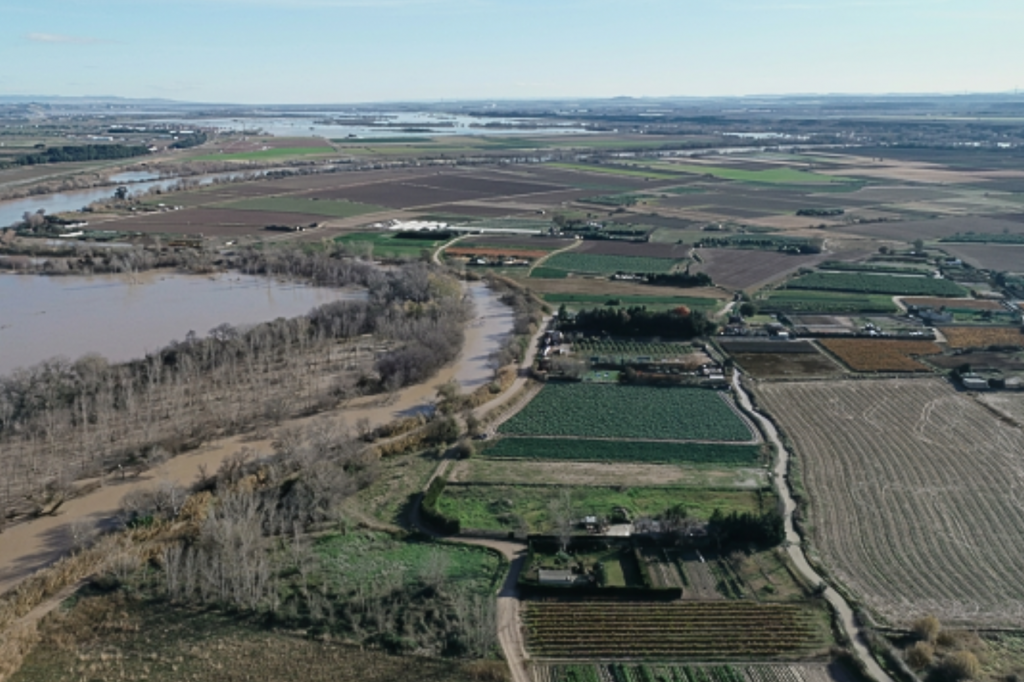
Cultivated fields in the middle stretch of the Ebro. Drone view.

Drone view of cultivated fields in the middle reaches of the Ebro River.

The primary sector is one of the main actors of the territory in the middle stretch of the Ebro, where agriculture has marked, in many municipalities, the economic rhythm and has shaped the landscape. Within the framework of the LIFE Ebro Resilience P1 Project, this sector has gone from being one of the parties most exposed to the effects of floods to being an active and essential part in the definition of adaptation measures that seek to make the viability of farms compatible with river dynamics.

In the intervention sections of Osera de Ebro – Fuentes de Ebro (Zaragoza) and Alfaro (La Rioja) – Castejón (Navarra) LIFE Ebro Resilience P1 is advancing in the actions aimed at a better coexistence between the river, riparian activity and the improvement of river ecosystems.

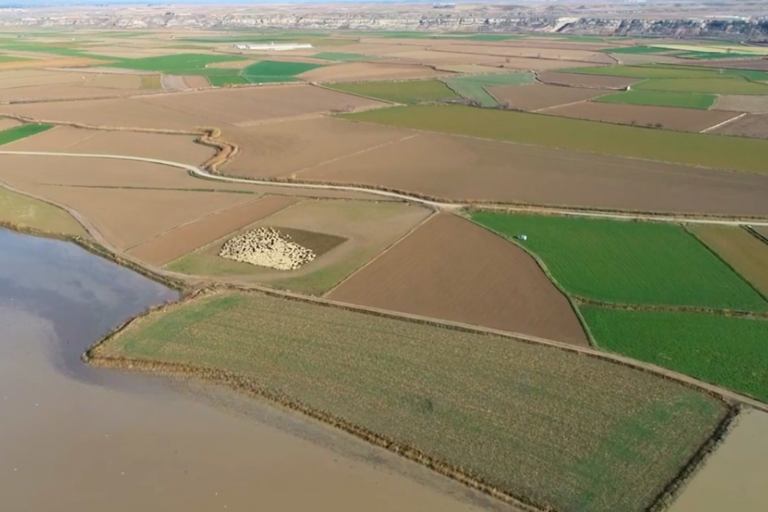
crop fields and sheep flocks in the middle reaches of the Ebro River.

A landscape shaped by the irrigated land and the river

In the Aragonese section between Osera de Ebro and Fuentes de Ebro (Zaragoza), the current landscape reflects this close relationship between the river and agriculture. The historical irrigation systems, irrigation ditches, agricultural roads and cultivated plots make up a territory where agricultural activity continues to be an essential element for the local economy and the maintenance of population and employment.

Crops such as corn, alfalfa, cereals and fodder are part of a production model closely linked to water and the river dynamics of the Ebro. A territory that, in addition, historically coexists with floods and with the challenges derived from the periodic flooding of the river.

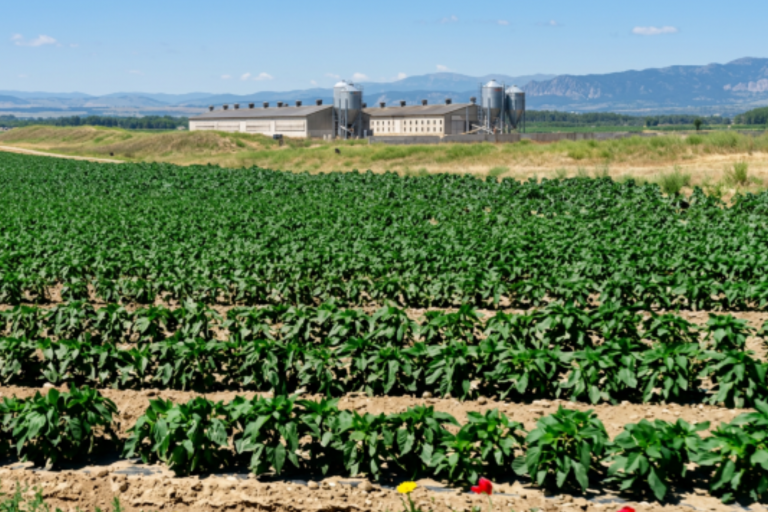
Crops in the middle reaches of the Ebro

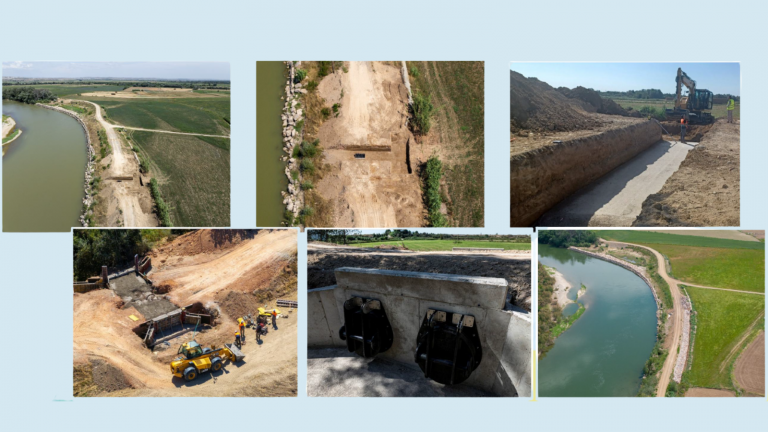
In this context, the Lateral Flow Buffer Zones (LFBZ) are being built in the Osera-Fuentes section. This technical solution consists of:

  • Affected area 630 hectares: Adaptation and direct reduction of the risk of flooding of 350 hectares of intensive crop farms.
  • Operation: Creation of 14 flood zones that are pre-flooded in a controlled manner before the levees overflow, generating “water cushions” that reduce erosion and pressure on infrastructure.

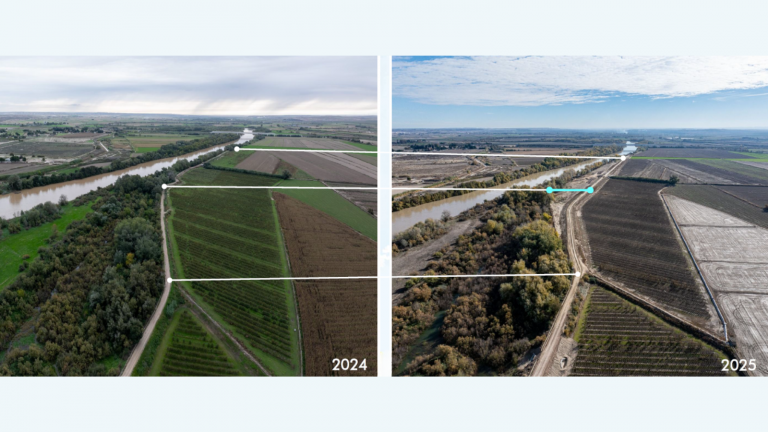
In this same section, in addition, narrowing of the river has been solved, recovering space for the river, a total of 23 hectares in the Mejana del Conde and the Meandro de Aguilar.

Retrenchment of defenses in Mejana del Conde. Comparative photo 2024 and 2025
Recovery of river space. Retraction of the defense that narrowed the channel in the Mejana del Conde. Comparison 2024-2025
Photographic composition of the works carried out for the adaptation of the Lateral Flow Buffer Zones.

River restoration and space reclamation

In the section between Alfaro and Castejón, the objective is the improvement of 500 hectares of agricultural land together with the recovery of space for the river. Technical advances include the following:

  • Meander of La Roza (Alfaro): Recovery of 22 hectares as a fluvial space and planting of 4,650 specimens of riparian species to imitate the natural growth of the vegetation.
  • Soto de Alfaro: Reopening of river branches in an area of 60 hectares to allow the natural irrigation of the forest and recover its dynamics.
  • El Señorío Meander (Castejón): Removal of 1.3 km of perimeter dike to return 23 hectares to the riverbed, facilitating ecological corridors and natural revegetation.

This area is one of the largest agri-food corridors in the Ebro Valley. Irrigated agriculture and the associated processing industry have given rise to an important economic fabric linked to horticultural, canning and agro-industrial production.

The fertility of the Ebro meadows and the availability of water have allowed the development of crops of high productive value and a powerful economic activity linked to the agri-food sector. At the same time, the recurrent exposure to floods has historically conditioned the occupation of the territory and the organization of agricultural uses.

Consensus as a management tool

The implementation of these measures is based on the direct participation of the territory, with the primary sector clearly represented. Since the end of 2022, co-creation groups and a Conflict Transformation Group have been active, where farmers and ranchers are present, together with the rest of the sectors and actors involved in the riverbank and in flood management.

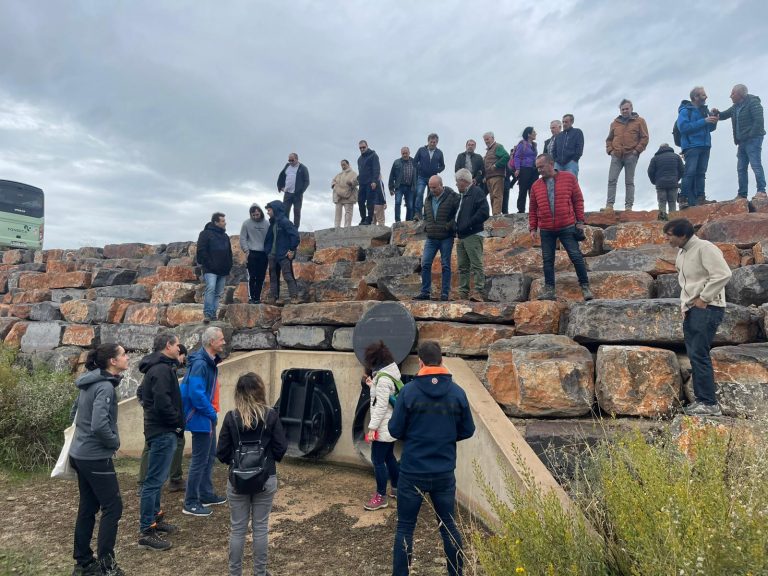
Consensus with local councils and irrigation communities has been the prerequisite for defining the actions, reinforced by field visits and technical information sessions for owners and tenants. This model seeks to reduce social vulnerability through capacity building, with the understanding that those who live and work on the riverbanks are fundamental to the resilience of the territory.

Farmers from Navarre visit the actions carried out in the Mejana de la Cruz in Alagón (Zaragoza) for adaptation

About LIFE Ebro Resilience P1

The Project is made up of the Ministry for Ecological Transition and the Demographic Challenge (MITECO), through the Ebro Hydrographic Confederation (CHE) and the public companies TRAGSA and TRAGSATEC; the governments of La Rioja; Navarra, through Orekan – Environmental Management of Navarra and Aragon, together with the Aragonese Water Institute, with the support of the LIFE financial instrument of the European Commission.


  • Ministerio de Transición Ecológica - Dirección General del Agua - Confederación Hidrográfica del Ebro
  • Gobierno de Aragón
  • Instituto   
  • Gobierno de La Rioja
  • Gobierno de Navarra y Gestión Ambiental de Navarra
  • Tragsa
  • Tragsatec
    Los contenidos son responsabilidad exclusiva del PROYECTO LIFE EBRO RESILIENCE P1 y no reflejan necesariamente la posición de CINEA, ni esta Agencia es responsable del uso que pueda hacerse de la información aquí incluida.
    English
    • English
    • Spanish
      Gestionar consentimiento
      Para ofrecer las mejores experiencias, utilizamos tecnologías como las cookies para almacenar y/o acceder a la información del dispositivo. El consentimiento de estas tecnologías nos permitirá procesar datos como el comportamiento de navegación o las identificaciones únicas en este sitio. No consentir o retirar el consentimiento, puede afectar negativamente a ciertas características y funciones.
      Funcional Always active
      El almacenamiento o acceso técnico es estrictamente necesario para el propósito legítimo de permitir el uso de un servicio específico explícitamente solicitado por el abonado o usuario, o con el único propósito de llevar a cabo la transmisión de una comunicación a través de una red de comunicaciones electrónicas.
      Preferencias
      El almacenamiento o acceso técnico es necesario para la finalidad legítima de almacenar preferencias no solicitadas por el abonado o usuario.
      Estadísticas
      El almacenamiento o acceso técnico que es utilizado exclusivamente con fines estadísticos. El almacenamiento o acceso técnico que se utiliza exclusivamente con fines estadísticos anónimos. Sin un requerimiento, el cumplimiento voluntario por parte de tu proveedor de servicios de Internet, o los registros adicionales de un tercero, la información almacenada o recuperada sólo para este propósito no se puede utilizar para identificarte.
      Marketing
      El almacenamiento o acceso técnico es necesario para crear perfiles de usuario para enviar publicidad, o para rastrear al usuario en una web o en varias web con fines de marketing similares.
      • Manage options
      • Manage services
      • Manage {vendor_count} vendors
      • Read more about these purposes
      Ver preferencias
      • {title}
      • {title}
      • {title}
      • English
      • Español (Spanish)