

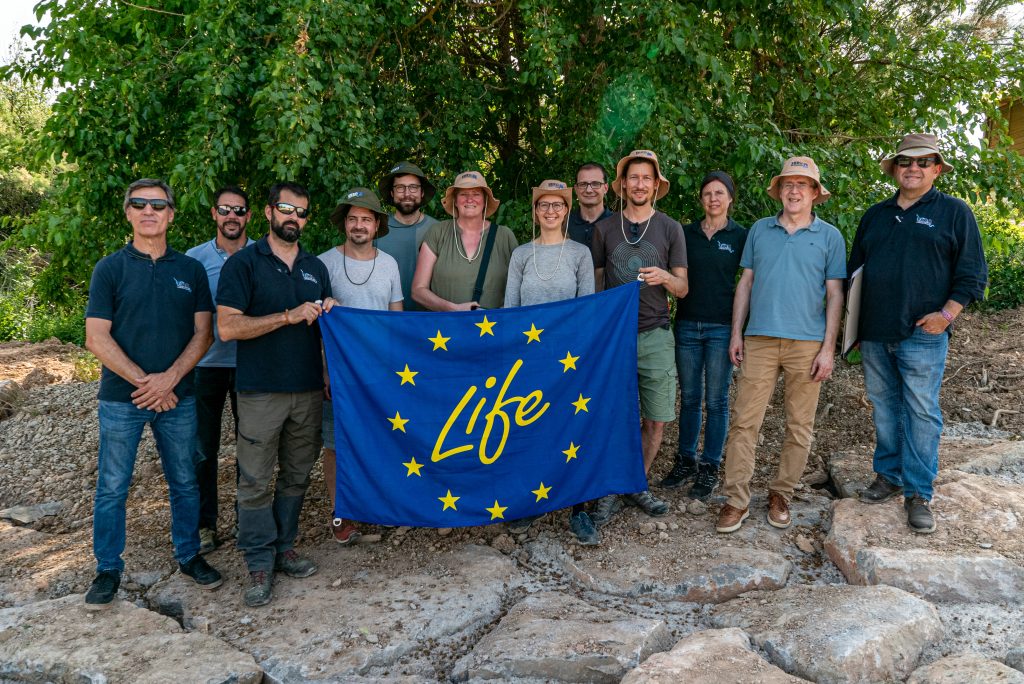
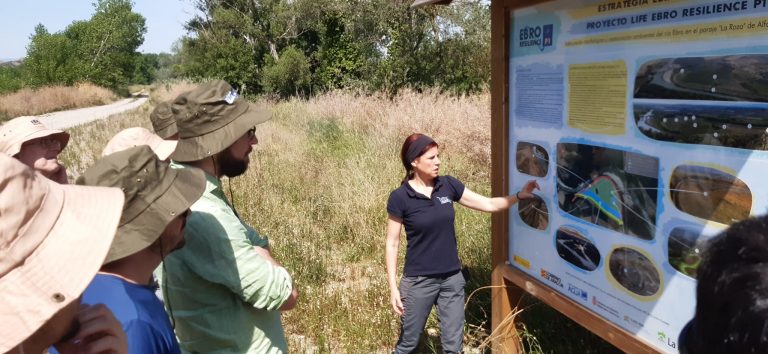
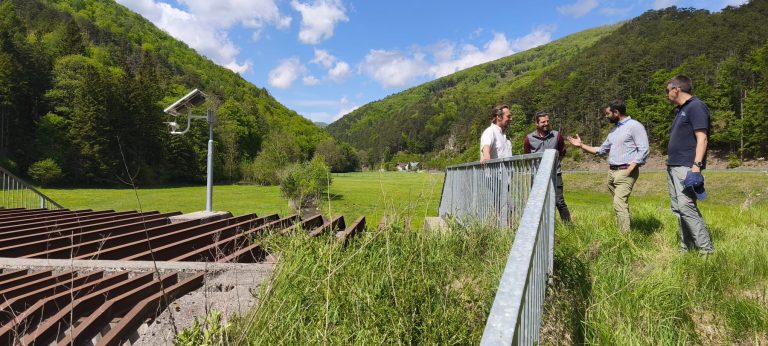
The LIFE Ebro Resilience P1 project continues to expand its international collaboration network with the visit to Spain of a delegation from the Austrian project LIFE IP IRIS, a European benchmark in river restoration and integrated river basin planning. This visit is part of the networking line of the project, which promotes technical exchange with national and international initiatives to improve the effectiveness of actions in the middle Ebro.
The Austrian delegation arrives in Zaragoza after the meeting held in early May in Vienna, where the LIFE Ebro Resilience P1 team participated in the General Assembly of the European Geosciences Union (EGU 2026) and held a first technical exchange with the IRIS project. That visit allowed to know some actions that Austria is developing in the Danube basin and opened the door to this second phase of the exchange in the middle section of the Ebro.
Six experts in river engineering, risk zoning, basin planning, river morphology and flood risk management from both the Federal Ministry and several federal states responsible for pilot basins of the IRIS project traveled here.
Visit to the Ebro Resilience territory
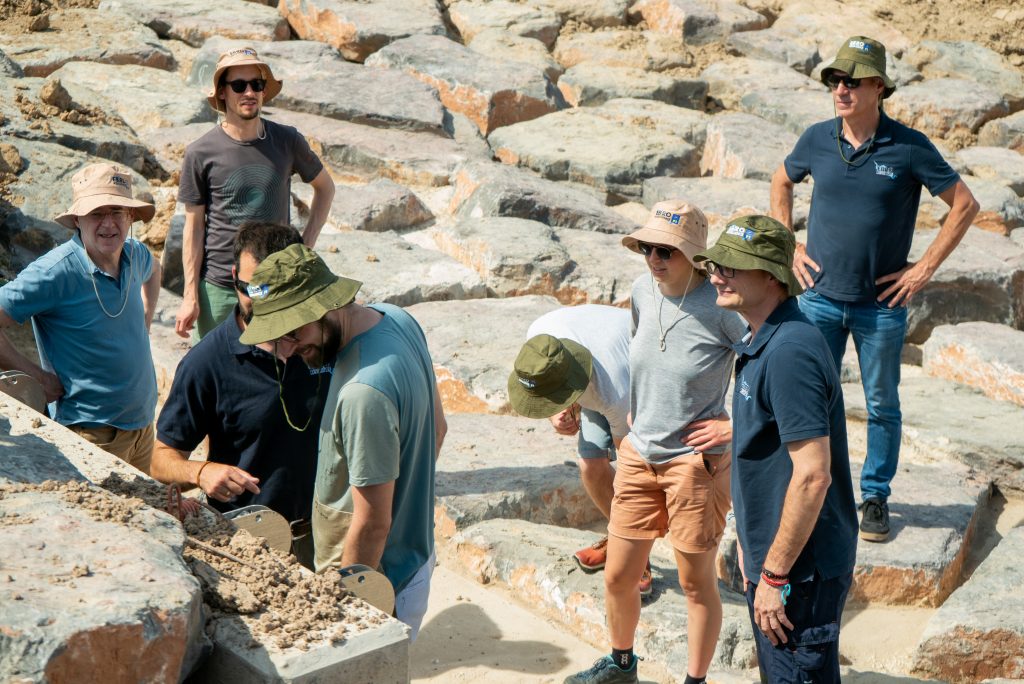
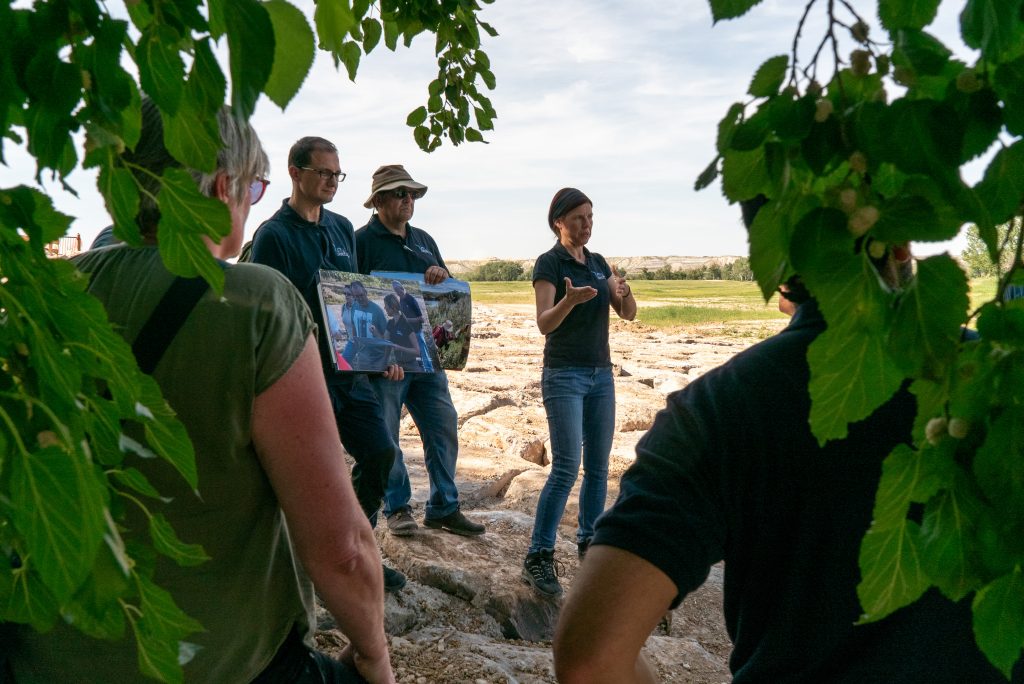
During two days they were able to tour the intervention areas and learn about the characteristics of the middle stretch of the Ebro and the commitment to the application of nature-based solutions to reduce the risk of flooding in this highly recurrent area.
The technical visit began on May 27 with a visit to the LIFE Ebro Resilience P1 pilot action, the Lateral Flow Buffer Zones (LFZ), in the Osera de Ebro – Fuentes de Ebro (Zaragoza) section, an innovative measure for the adaptation of agricultural areas to flooding that the project recently presented at the EGU 2026 in Vienna. This section also includes the elimination of the narrowing of the Ebro River and the adaptation of an irrigation infrastructure.
On the 28th, the team traveled to Alfaro (La Rioja) to visit the works of the combined actions section, mainly the recovery of river space in the Meandro de La Roza and the future intervention in the meander of Castejón (Navarra).
These visits make it possible to analyze solutions applied in the middle reaches of the Ebro basin and to compare them with the Central European approaches developed by Austria in its basins, thus reinforcing the technical exchange between the two projects.
Iris: reference in river planning
The project LIFE IP IRIS Austria (Integrated River Solutions) project is a nine-year national program funded by the European Union. is a nine-year national program funded by the European Union with a budget of 16.5 million euros. It aims to ecologically restore Austrian rivers and increase their resilience by integrating flood protection with new water planning methods.
The Federal Ministry of Agriculture, Regions and Water Management, six Länder, the state-owned company Viadonau and the Federal Environment Agency.
The project operates in eight pilot areas totaling more than 600 kilometers of riversapplying the GE-RM APPROACHapproach, which combines restoration, risk management and inter-administrative coordination.
Knowledge transfer Ebro Resilience
The visit of the IRIS project and the participation in the EGU 2026 consolidate the European dimension of the LIFE Ebro Resilience P1, which combines adaptation, mitigation, river space recovery, local participation and capacity building measures to improve the resilience of the middle reaches of the Ebro.
The project is promoted by the Ministry for Ecological Transition and the Demographic Challenge (MITECO), through the Ebro Hydrographic Confederation (CHE) and the public companies TRAGSA and TRAGSATEC; the governments of La Rioja, Navarra -through Orekan-Gestión Ambiental de Navarra- and Aragón, together with the Aragonese Water Institute, with the support of the European Union’s LIFE financial instrument.