

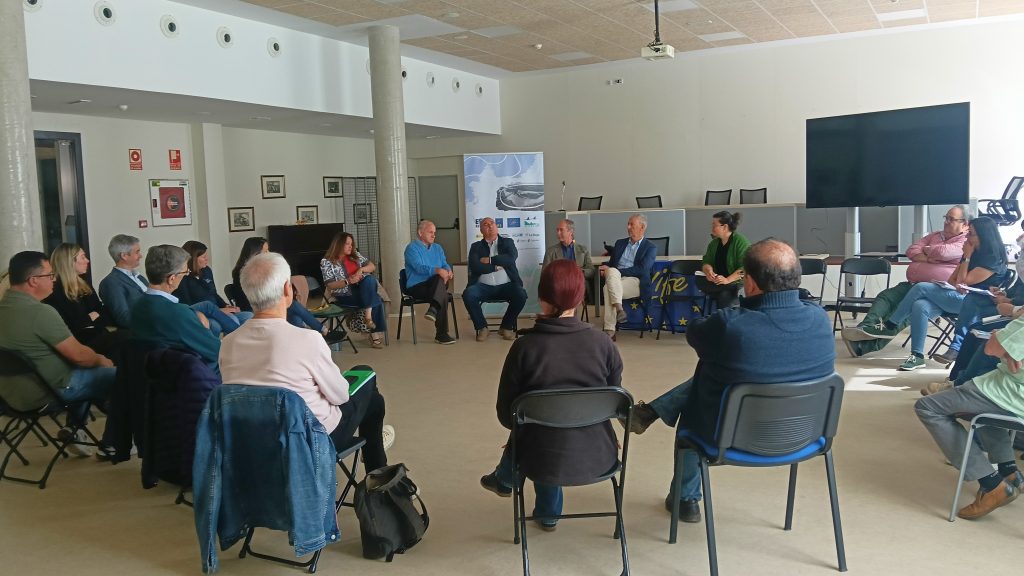
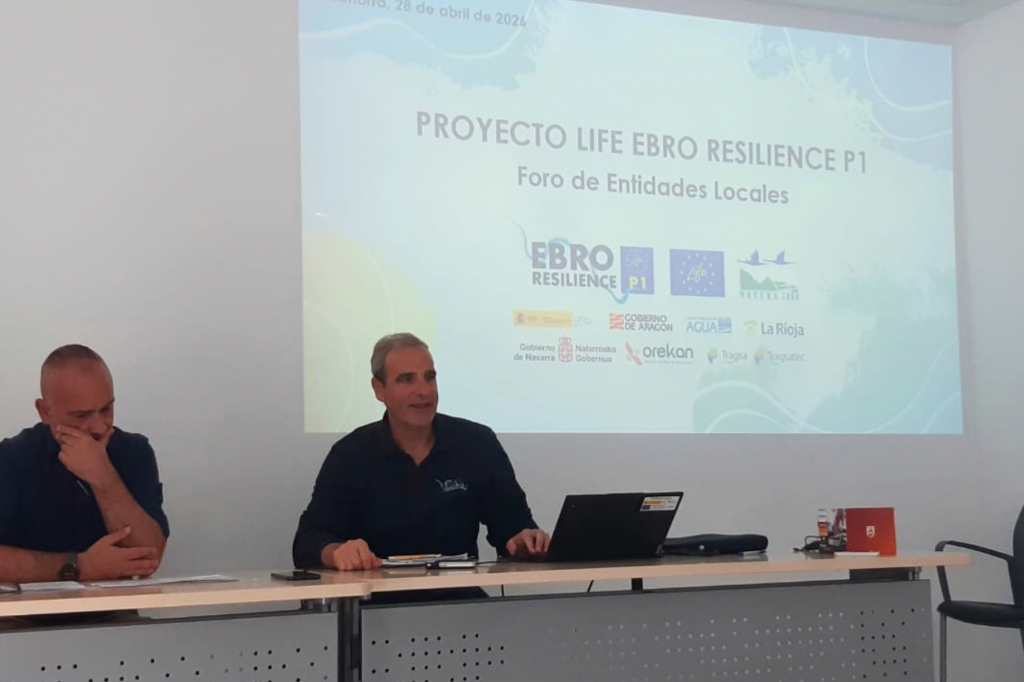
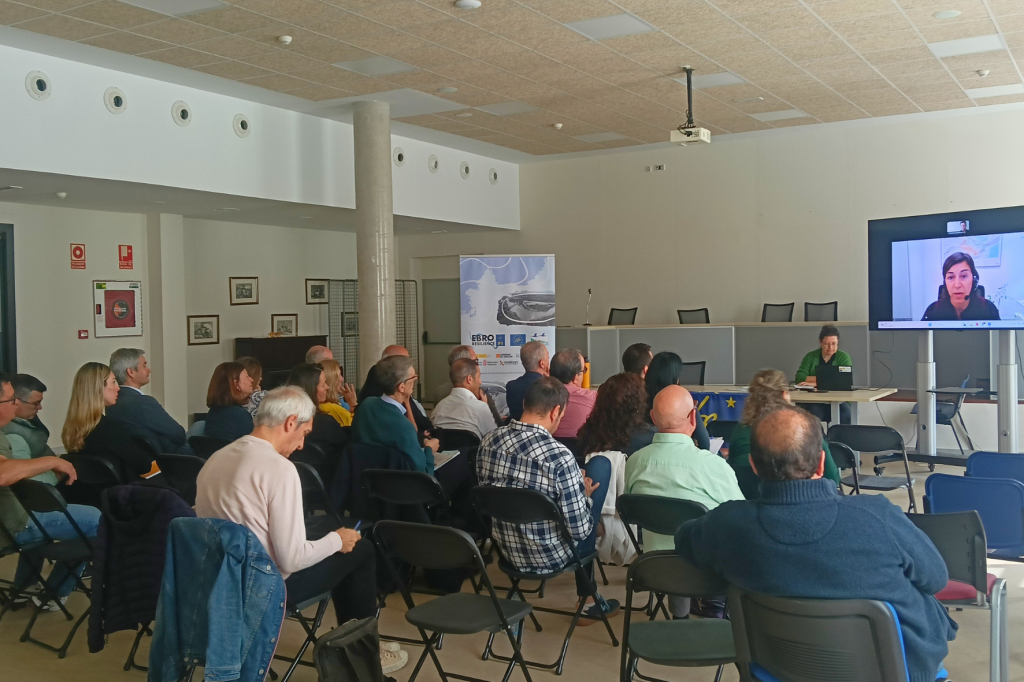
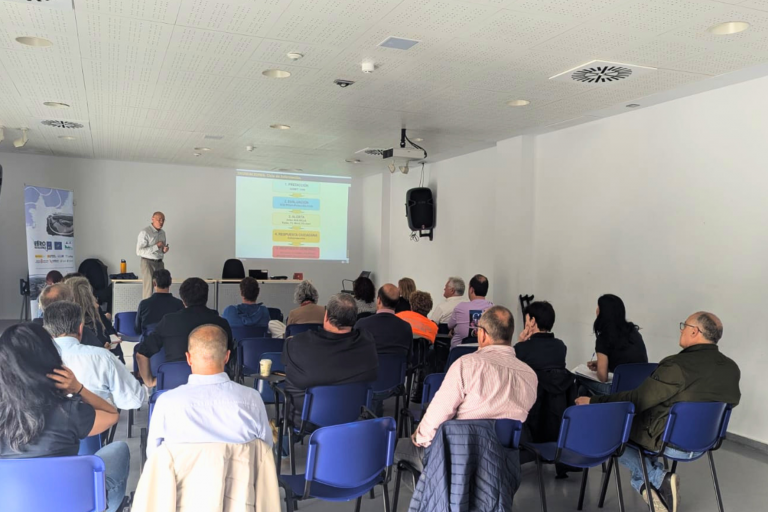
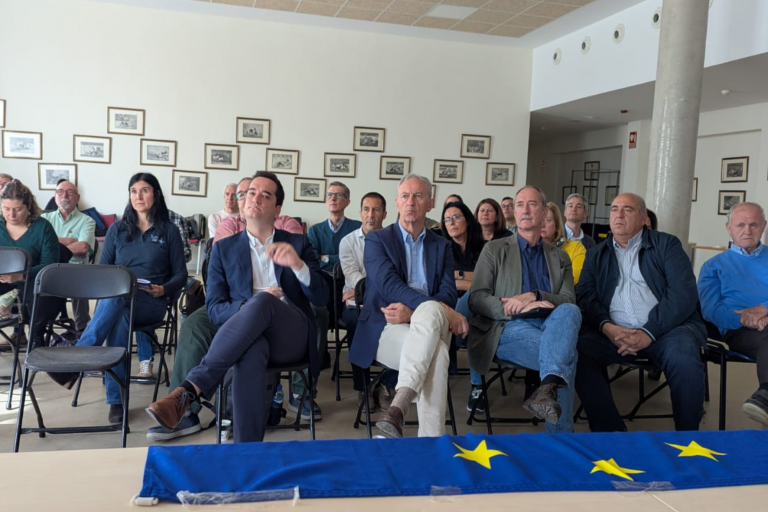
The two new sessions of the LIFE Ebro Resilience P1 Local Entities Forum, held on April 28 in Calahorra (La Rioja) and on May 5 in Pina de Ebro (Zaragoza), have focused on Information and Communication Systems in flood emergency situations, a key area to improve preparedness and response to Ebro floods.
Through technical presentations, practical examples and direct exchange between municipalities and administrations, both days have coincided in highlighting the importance of reinforcing the culture of self-protection in the riverside population.
Knowing the risk, knowing how to act and understanding the measures that protect us has been identified as an essential element for the proper functioning of warning systems and to support the work of the administrations.
In this sense, the need to promote self-protection campaigns aimed at both the general population and the school public was stressed, as well as the need to promote “living plans”, which means that municipal flood plans should incorporate continuous learning and the annual review of procedures.
This common approach has framed two sessions with complementary contents, which have allowed the municipalities to share real experiences, resolve doubts and advance in coordinated criteria. The Forum, which has already held previous meetings, among others in Alfaro (La Rioja), Fuentes de Ebro and Quinto (Zaragoza), continues to consolidate itself as a space for exchange with local managers and technicians.
Calahorra: land-use planning, urban planning and technical criteria
The session held in Calahorra brought together the municipalities of Agoncillo, Calahorra and Rincón de Soto (La Rioja), together with San Adrián, Andosilla, Sartaguda, Lodosa, Peralta, Funes and Arguedas (Navarra).
The presentations included contributions from the Civil Protection services of La Rioja and Navarra, the Automatic Hydrological Information System (SAIH) of the Ebro Hydrographic Confederation, Orekan-Environmental Management of Navarra and the Town Council of Funes, whose mayor, Ignacio Domínguez, presented the town as a case study of the application of municipal flood plans.
The debate focused on how land use and urban planning condition exposure to risk, on the definition of activities permitted or not permitted in the vicinity of watercourses and on the need for rigorous data for decision-making. Coordination between administrations and clarity in procedures were aspects especially valued by the participants.
Pina de Ebro: information, communication and early warning
In Pina de Ebro, the conference brought together a representation of Aragonese municipalities, with Utebo, Remolinos, Boquiñeni, Fuentes de Ebro, Quinto, Pina de Ebro, Cinco Olivas and Escatrón, together with the Comarca Ribera Baja del Ebro. The interventions of the Government of Aragon through its Civil Protection Service and the Ebro Hydrographic Confederation, with the Automatic Hydrological Information System (SAIHEbro) allowed to analyze the role of information systems, communication in emergencies and the importance of clear and coordinated messages.
From Navarra traveled from Orekan – Gestión Ambiental, the mayor of Peralta, Juan Carlos Castillo Ezpeleta, and the councilman of Funes, Patxi Celorrio, who contributed their experience in the development of municipal flood risk management plans and in the operation of the Early Warning System of Navarra, offering practical examples of how anticipation and direct communication with citizens improve local response.
The LIFE Ebro Resilience P1 Local Entities Forum is a proposal for social capacity building and exchange that brings together riverside municipalities, administrations and technical entities to share experiences and resolve doubts. Through thematic sessions, the Forum promotes technical exchange.
The project partners – Government of La Rioja, Government of Navarra, Government of Aragón, Ebro Hydrographic Confederation and Tragsa Group – reaffirmed their commitment to this exchange process, which enables rigorous information to be transferred to the territory, learning to be shared, social capacities to be strengthened and progress to be made towards dynamic municipal plans, capable of incorporating continuous improvements.
LIFE Ebro Resilience P1 is supported by the European Union’s LIFE financial instrument.