


Within the framework of the LIFE Ebro Resilience P1 Project, the recovery of river space and the restoration of riparian forests are fundamental. And we highlight this on the International Day of Forests, which is celebrated every year on March 21.
This year, the United Nations International Day of Forests focuses on the relationship between forests and economies, reminding us that forest ecosystems not only sustain biodiversity, but also generate opportunities, well-being and security for the territories. In the Ebro Valley, this connection is especially visible in the riparian forests, true allies against floods and key spaces for local development.
The groves: nature that protects and dynamizes the territory
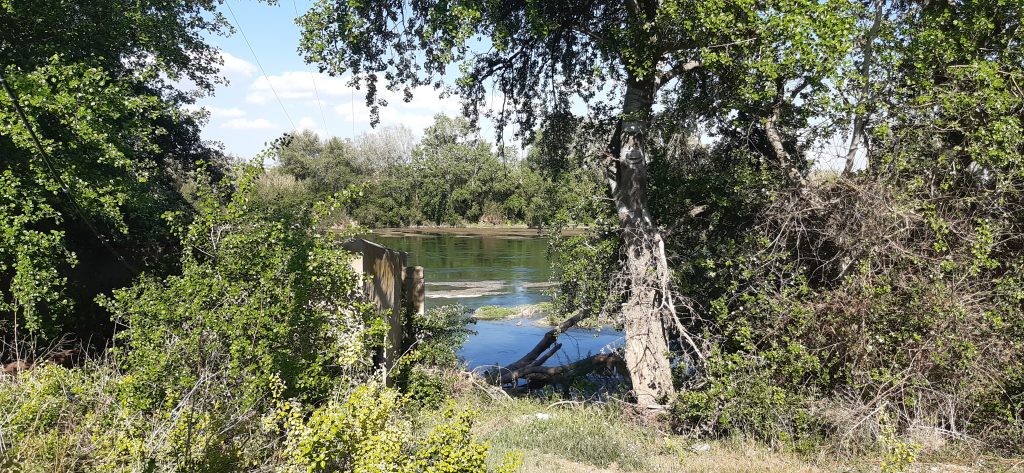
River forests act as natural buffers during floods, reducing water velocity, retaining sediments and reducing erosion. This ecological function translates into direct benefits for the population, as it helps to minimize damage and accelerate recovery after flood events.
But their value does not stop there. The Ebro groves are also areas of high tourist interest, wildlife observation points, green corridors for hiking and cycling, and identifying landscapes that strengthen the local economy linked to nature.
ILIFE Ebro Resilience P1: an intervention already carried out in the meander of La Roza (Alfaro, La Rioja)
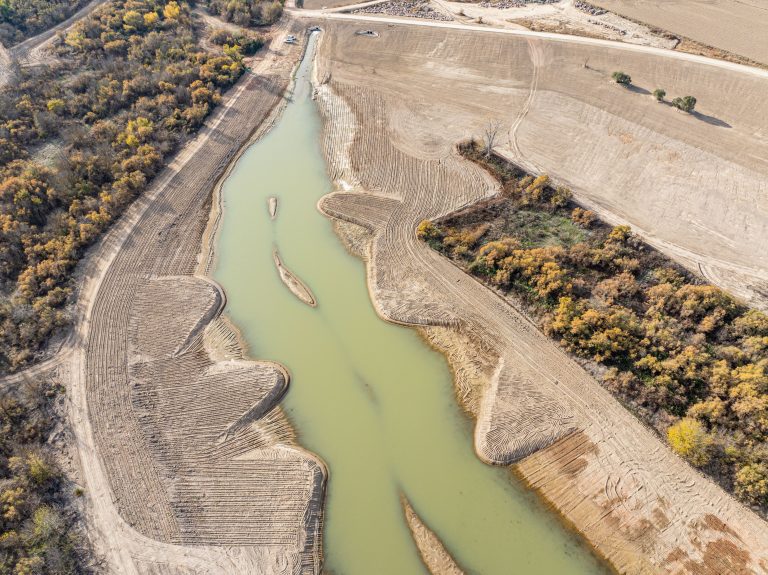
Environmental restoration has already been completed in La Roza, with the planting of 4,650 specimens of riparian species on 12 hectares. The project has recovered 22 hectares of river plain, removing dykes that constricted the river and creating a relief channel that improves river dynamics.
The new ash groves, poplar groves and wetlands are integrated into the Natura 2000 Network, reinforcing the protection of this enclave and its value as a natural area open to visitors.
And an intervention in process: Osera de Ebro – Fuentes de Ebro (Zaragoza).
In this section, an environmental restoration project has already been defined which will allow the renaturalization of 23 hectares recovered for the river after the defenses were set back. It will be planted with 12,500 native specimens – poplars, ashes, willows, elms resistant to graphiosis, tamarisk, roses, blackberries and other species typical of the Mediterranean riverside – distributed in mosaics adapted to the river dynamics.
These plantations will favor the regeneration of the undergrowth, expand the riparian habitats and reinforce the ecological connectivity of the Ebro corridor. In addition, a new 1.4 hectare wetland has been created, increasing biodiversity and natural water and sediment storage capacity.
A territory of high ecological and social value
The actions of the project are developed in a particularly sensitive and valuable environment, linked to protected areas such as:
These enclaves form a unique ecological corridor, where river restoration not only protects against flooding, but also promotes biodiversity, nature tourism and the cultural identity of the territory.
LIFE Ebro Resilience P1 Project
The LIFE Ebro Resilience P1 Project (LIFE20 ENV/ES/00327), approved by the European Commission in the LIFE 2020 call, covers La Rioja, Navarra and Aragón, has a duration of six years and a total budget of 13.3 million euros, 55% co-financed by the European Union.