

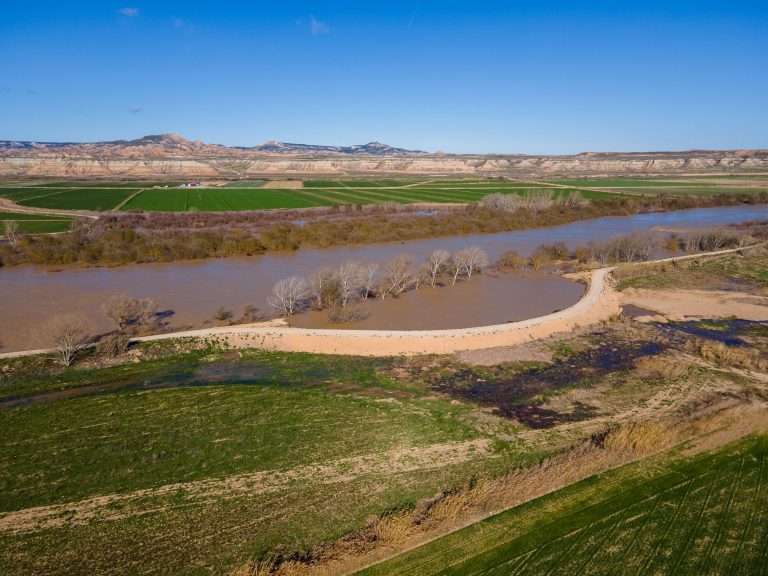
This February 2 we celebrate World Wetlands Day, a date that commemorates the Ramsar Convention of 1971. However, this year we want to invite you to see these ecosystems from a different perspective: they are not just landscapes to protect, but intelligent tools and “natural technology” that allow us to coexist with the dynamics of our rivers.
Within the framework of the Ebro Resilience Strategy and the LIFE Ebro Resilience P1 project, wetlands have become benchmarks for Nature-based Solutions (NBS).
Three milestones in the middle stretch of the Ebro River
Through these interventions, spaces have been created and recovered that act as authentic “shields” against floods:
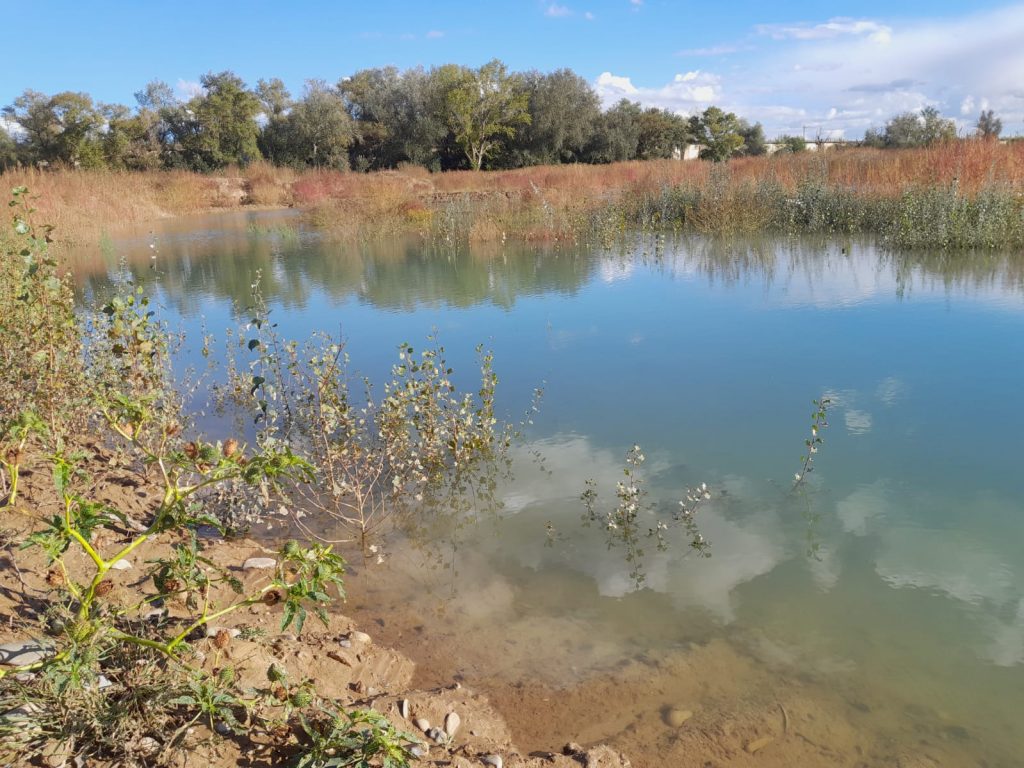
La Nava Wetland (Alfaro, La Rioja): created in 2020, this area is an example of how river restoration can generate specific habitats, such as those designed for the European mink. Its construction included a design of “beaches” with very steep slopes to facilitate access for wildlife and vertical sections for nesting of the sapper flycatcher.
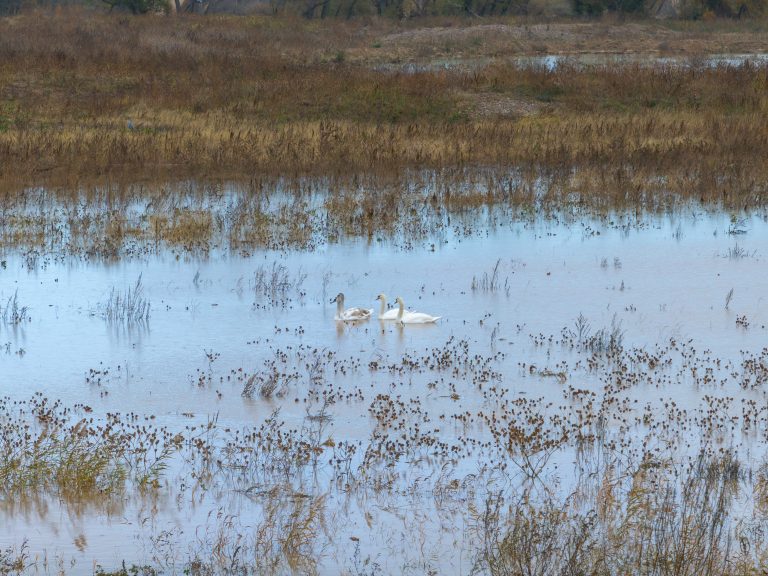
2. La Roza Wetland (Alfaro, La Rioja): integrated in 2023 within a morphological adaptation that recovered 22 hectares of river space, this wetland communicates directly with the water table of the river. This guarantees a constant sheet of water that favors biodiversity in an area protected by the Natura 2000 Network.
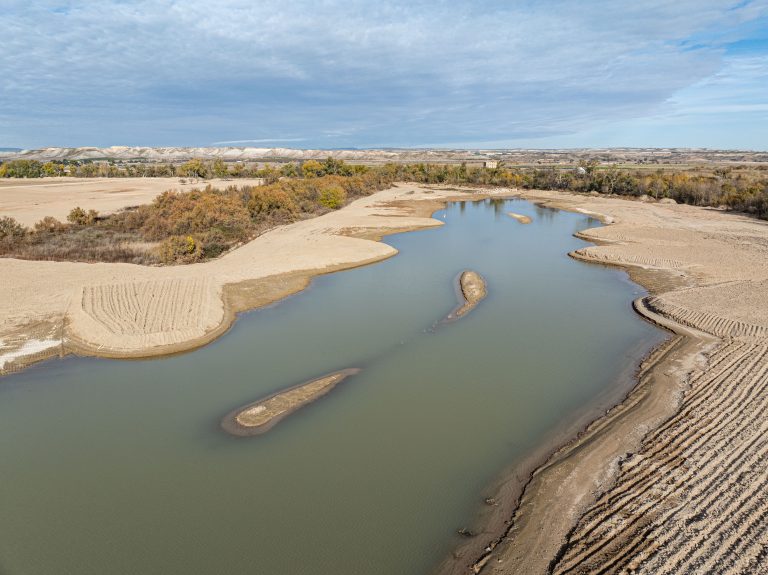
3. Wetland in the Meandro de Aguilar (Osera de Ebro – Fuentes de Ebro, Zaragoza): this is the most recent part of the project, completed at the end of 2025. With an area of 1.4 hectares, this wetland not only improves biodiversity, but also reinforces the natural capacity of the land to store water and sediments. Its surroundings will be renaturalized by planting 12,500 native trees, including poplar and elm trees resistant to graphiosis.
The innovation of the “Lobes”: wetlands against flood
One of the most original and pioneering solutions are the Lobes, wetlands against flood , hydraulic defenses that take advantage of the river’s own erosion on the banks. Instead of repairing a broken defense with the classic method, a cell is created that functions as a wetland on the edge, in some cases, temporary, in others, permanent.
Benefits of wetlands
Wetlands are much more than standing water. They are vital ecosystem services:
Project and Strategy
Ebro Resilience is a general strategy for the adaptation and mitigation of flood risk in the entire middle stretch of the Ebro, from Logroño to La Zaida, in Zaragoza.
The LIFE Ebro Resilience P1 Project, which has the financial support of the LIFE Program of the European Commission, is part of the Strategy and is an innovative proposal to deal with the phenomenon of flooding in the middle stretch of the Ebro, with a clear objective for the future: that the population and economic activities coexist with an Ebro in a good state of conservation without the inevitable floods causing significant damage.
Its partners are the Ministry for Ecological Transition and the Demographic Challenge (MITECO), through the Ebro Hydrographic Confederation (CHE) and the public companies TRAGSA and TRAGSATEC; the governments of La Rioja, Navarra, through Orekan- Environmental Management of Navarra and Aragon and the Aragonese Water Institute.