Checking compliance with objectives: work on monitoring ecological statusChecking compliance with objectives: work on monitoring ecological statusChecking compliance with objectives: work on monitoring ecological statusChecking compliance with objectives: work on monitoring ecological status
  • STRATEGY
    • Background
    • The Strategy
    • Lines of action
    • Entities
  • JOIN US!
    • Informative Days
    • Participatory Workshops
    • Participation and LIFE capabilities
  • PROGRESS MADE
  • PROYECT LIFE P1
    • The project
    • Objetives
    • Progress LIFE Ebro Resilience P1
    • Actions
    • Newsletters and information resources
    • Documents and materials
    • Beneficiaries
    • LIFE Programme
  • NEWS
  • CONTACT
  • Tramo 7
    • Ebro en Alcalá de Ebro y Remolinos
  • Tramo 8
    • Ebro en Cabañas de Ebro
  • Tramo 9
    • Ebro en Torres de Berrellén y Sobradiel
  • Tramo 12
    • Ebro en Osera de Ebro y Fuentes de Ebro
  • Tramo 14
    • Ebro en el Burgo de Ebro
English
  • Spanish
Search
Generic filters
Exact matches only
  • Inicio
  • Life
  • Checking compliance with objectives: work on monitoring ecological status

Checking compliance with objectives: work on monitoring ecological status

23 January, 2026
Monitoring of the ecological status of the LIFE Ebro Resilience P1 project.

Monitoring of the ecological status of the LIFE Ebro Resilience P1 project.

Through action C1 Environmental Monitoring, the project carries out a technical, continuous and rigorous follow-up to check whether the interventions are meeting the planned objectives. To this end, it periodically carries out data collection campaigns, evaluation of indicators and status analysis.

In addition, if deviations from the expected results are observed, these actions facilitate the implementation of corrective actions.

To define the pre-intervention status of the action areas, a data collection was carried out in February 2023, which has made it possible to determine the starting point.

Monitoring consists of analyzing how the river and its ecosystems respond to the measures applied: morphological restoration, creation of wetlands, setting back of defenses, improvement of riparian vegetation and other actions in which Nature-Based Solutions (NBS) are applied. The aim is to help populations and ecosystems to coexist more safely and sustainably with floods.

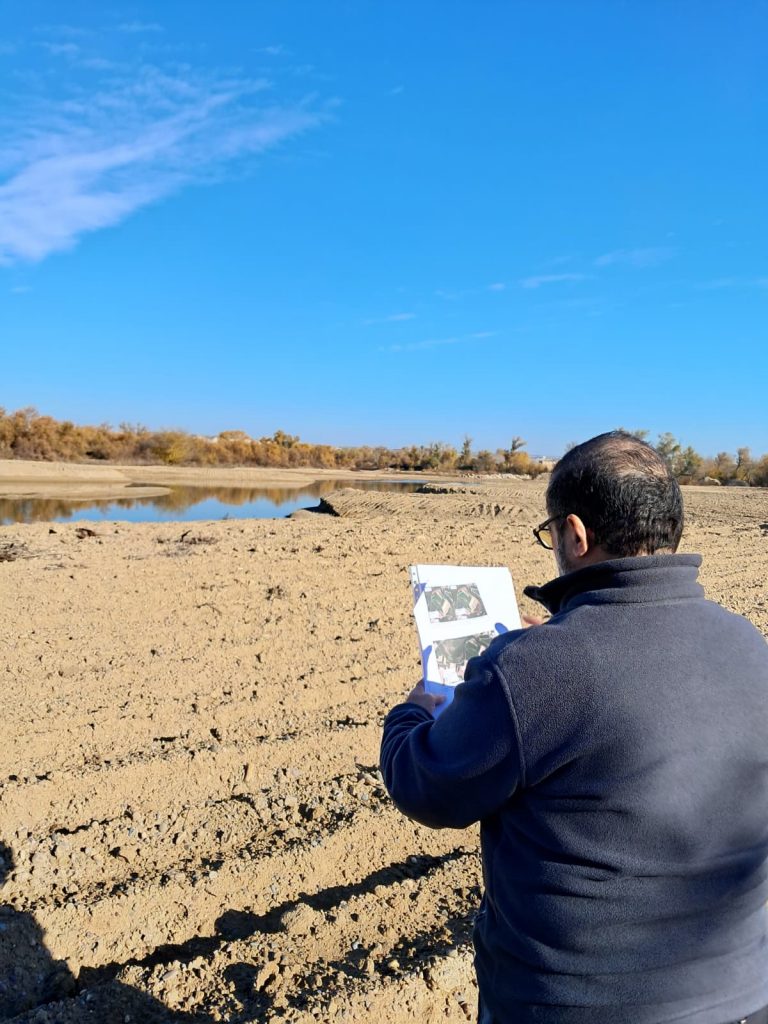
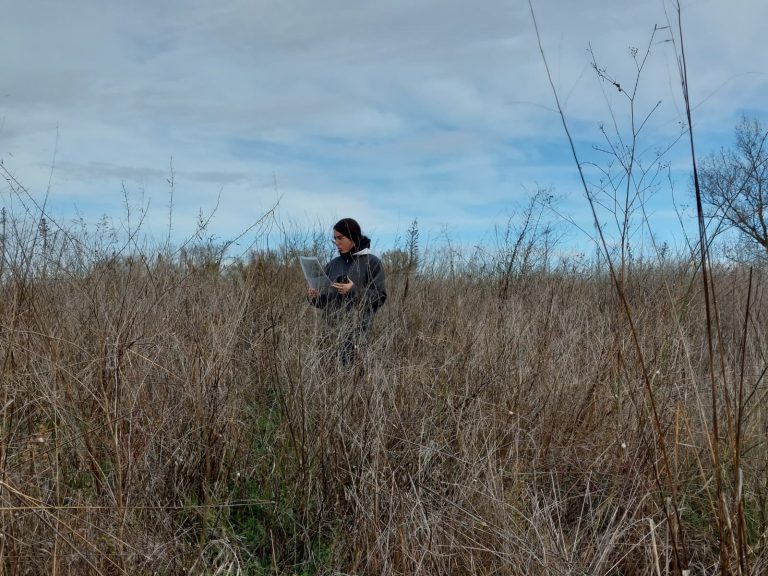
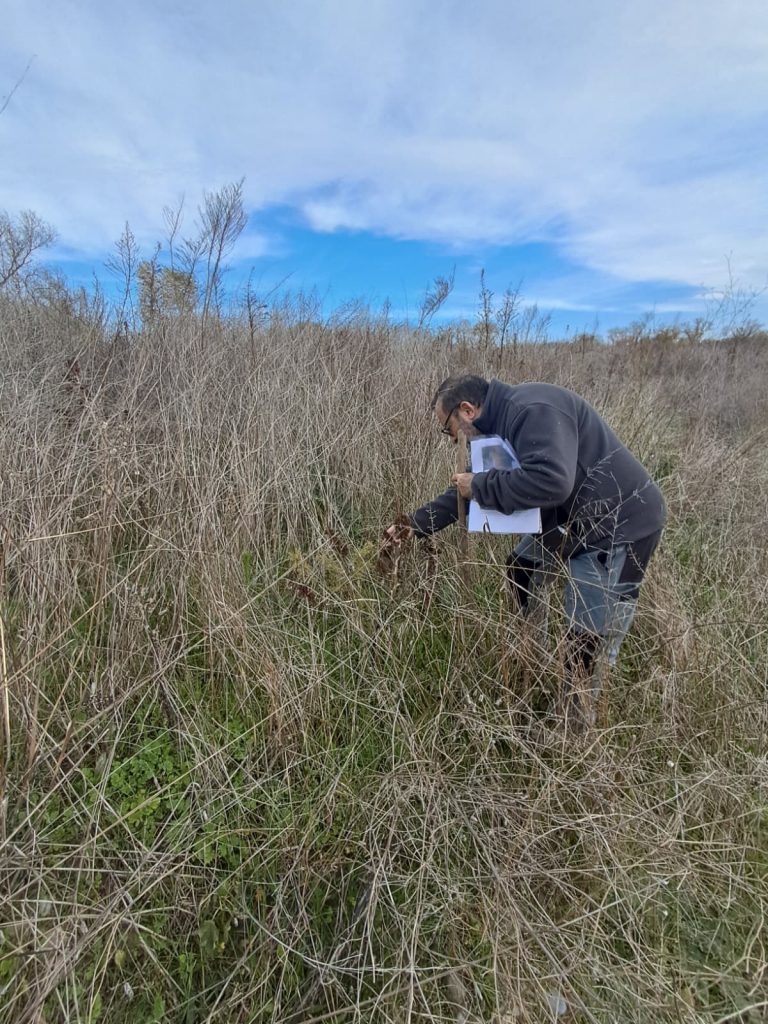
Field work Monitoring of ecological status

This action evaluates the impact of the measures through hydrological, ecological and morphological indicators.

  • Hydrological: flows, water levels and flow velocity during flood episodes.
  • Ecological: presence of key species, elimination of exotic species, condition of riparian vegetation, ecosystem connectivity.
  • Morphological: sedimentation, channel width, fluvial dynamics and evolution of new fluvial spaces.

Among the interventions evaluated were:

  • Morphological adaptation of the Ebro riverbed: reopening of old branches, recovery of fluvial space by eliminating and recessing defenses, construction of relief channels.
  • Environmental restoration of disturbed areas: renaturalization and reforestation, elimination of exotic plant species, creation of new wetlands, improvement of biodiversity by increasing and diversifying habitats.
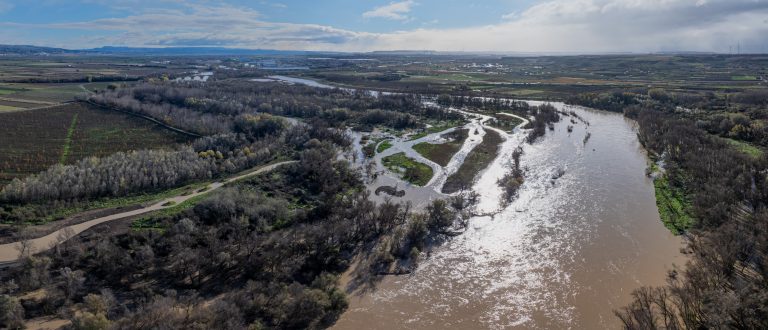
Soto de Alfaro arms recovered to improve the functionality of the meander. Image during the floods of December 2024.

Tools such as GIS mapping, hydraulic models and field data collection are used for this purpose.

Field work carried out in December 2025

After the initial data collection, ecological monitoring is carried out every six months. During the past month of December, visits were made and data were collected in different areas of the project, which are currently being analyzed. The monitoring team went to zone 1 of the Project, to the meanders of La Roza and Soto de Alfaro in Alfaro, La Rioja, and to the meander of El Señorío in Castejón, Navarra. Data were also taken in Zone 2, in the mejana del Conde and the meander of Aguilar, in the Osera de Ebro – Fuentes de Ebro section (Zaragoza).

Monitoring of ecological status

Towards a more resilient and healthier Ebro

The expected results of this monitoring process include:

  • Increased resilience of the territory: reduction of the impact of floods on the population and economic activities.
  • Improvement of the ecological state of the river: recovery of habitats, increased biodiversity and greater river connectivity.
  • Sustainable management adapted to climate change: consolidation of models based on Nature-Based Solutions.
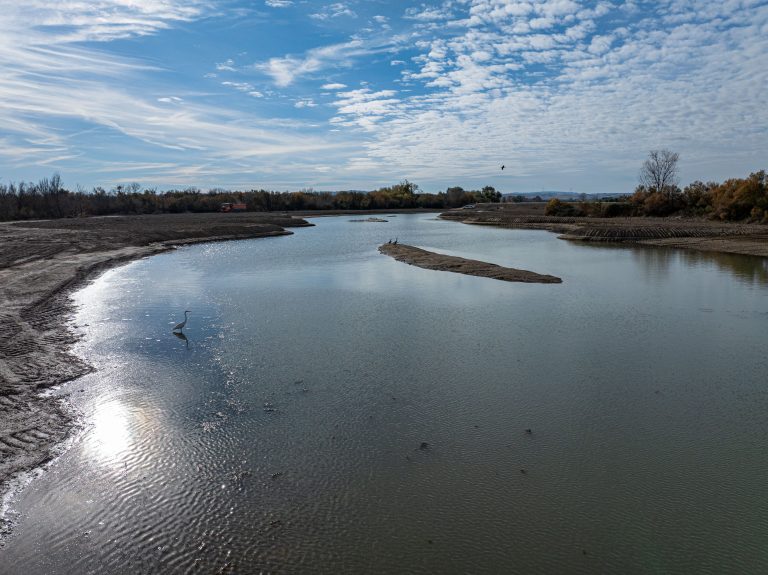
New wetland in Soto de Aguilar (Osera de Ebro - Fuentes de Ebro). November 2025

LIFE Project

The LIFE Ebro Resilience P1 Project (LIFE20 ENV/ES/00327), approved by the European Commission in the LIFE 2020 call, covers three autonomous communities (La Rioja, Navarra and Aragón), has a duration of 6 years and a total budget of 13,310,350 €, with 55% European funding.

This project is also an example of institutional coordination and cooperation in the intervention section, being its partners the Ministry for Ecological Transition and Demographic Challenge (MITECO), through its companies TRAGSA and TRAGSATEC; Ebro Hydrographic Confederation; Government of La Rioja; Government of Navarra, through Orekan – Environmental Management of Navarra; Government of Aragon and the Aragonese Water Institute.


  • Ministerio de Transición Ecológica - Dirección General del Agua - Confederación Hidrográfica del Ebro
  • Gobierno de Aragón
  • Instituto   
  • Gobierno de La Rioja
  • Gobierno de Navarra y Gestión Ambiental de Navarra
  • Tragsa
  • Tragsatec
    English
    • English
    • Spanish
      • English
      • Español (Spanish)