

In its interest in reaching all audiences, generating greater social knowledge of floods and nature-based solutions for adaptation to flood risk and also in its commitment to report to the riparian society the progress and the real situation of the actions in the territory, the LIFE Ebro Resilience P1 Project has been accompanied from the beginning of its activity by an important audiovisual production.
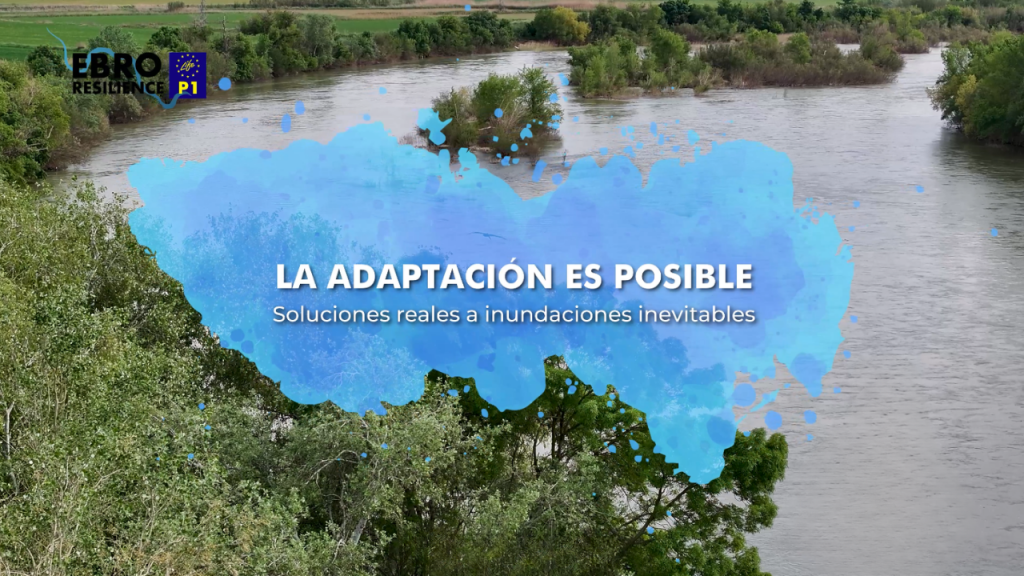
The audiovisual production has been a crucial tool in the promotion of participation and the confidence of the interested sectors of the riverbank. Following this line, the video “Adaptation is possible: real solutions to unavoidable floods in the Osera de Ebro – Fuentes de Ebro section“ was presented .
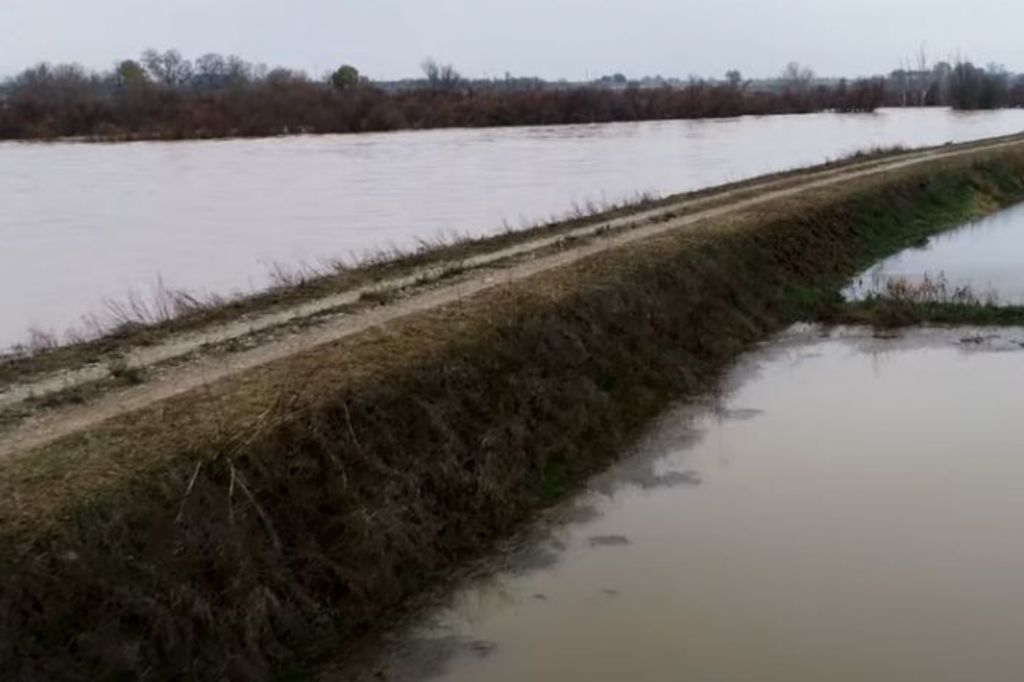
Floods cannot be avoided in this stretch, where the system of motes that channel the river may break at different points. The aim of the proposals is to avoid uncontrolled breakage, which is what generates the erosion effect, through adaptation measures.
Problems and solutions
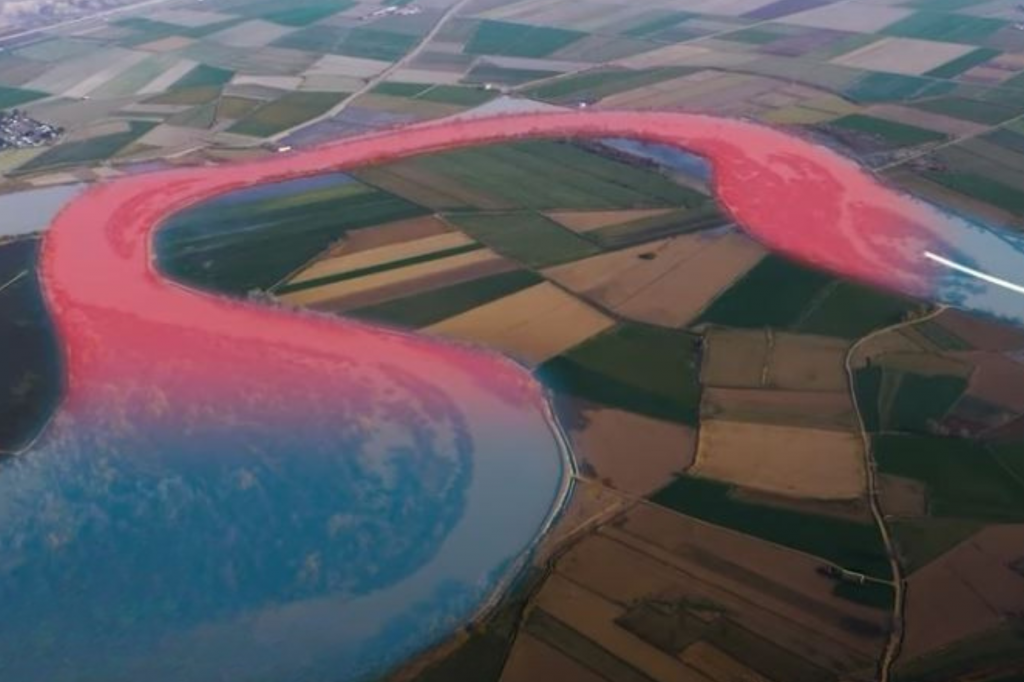
The Ebro River has been channeled, creating “funnels” in the section between Osera and Fuentes de Ebro. These narrowings do not allow the passage of 1800 m³ per second that do flow through the riverbed on average at other points, causing the water to overflow the defenses or “motas” and occupy the farmland .
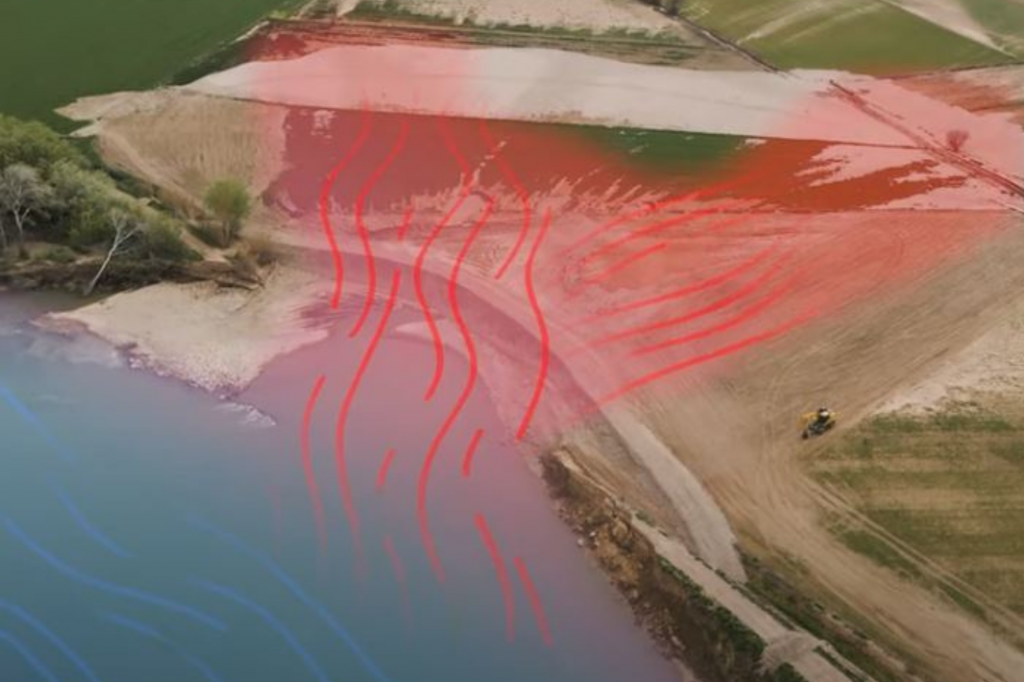
The uncontrolled breakage of the mottles generates gaps that sweep with great speed and erosive power, causing sinkholes and the expansion of gravels.
In addition, the “mote effect” occurs , where the water is retained behind the defense, generating uncontrolled margin flooding.
To mitigate this problem, the proposed solution is the adaptation of this entire surface to flooding, considering that the river will always overflow the motes if the narrowings are not corrected.
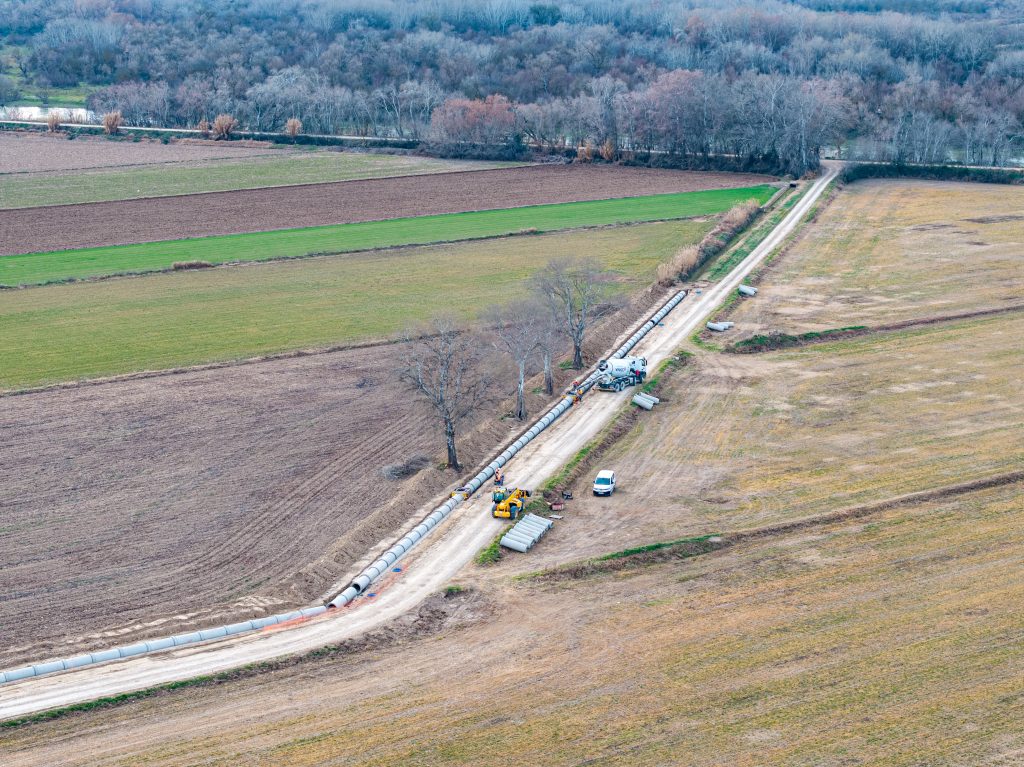
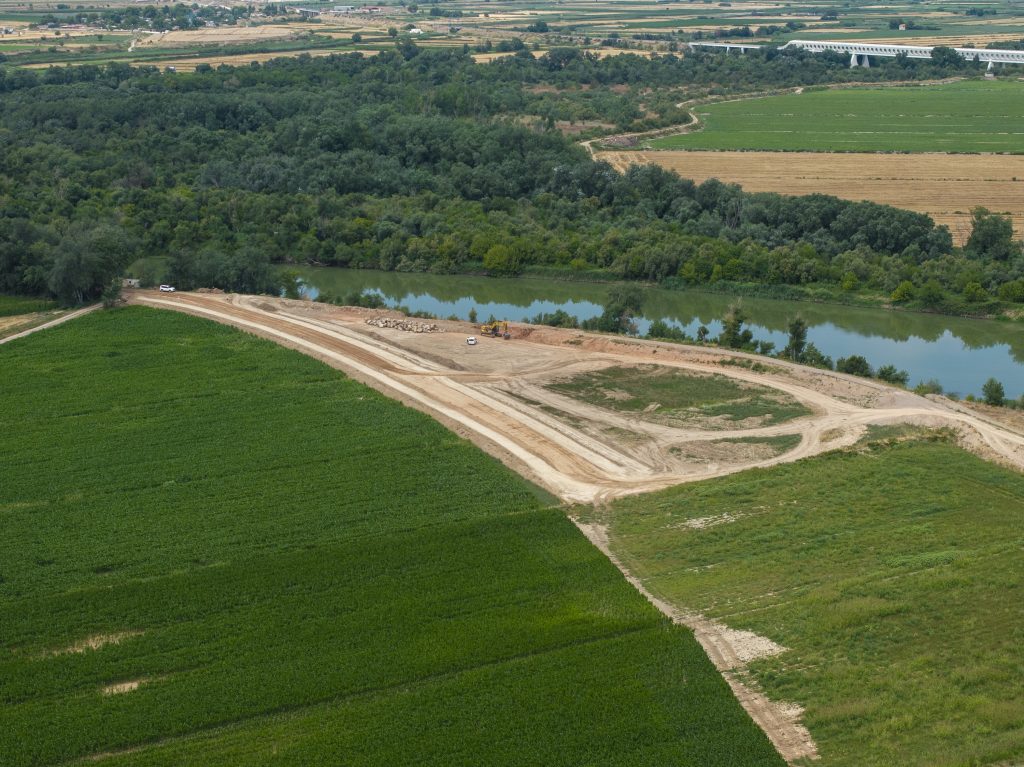
The first phase of this adaptation involves the recessing of the mota (relocation of the defenses farther away from the riverbed), placing the first recess in the Mejana del Conde and the second in the Aguilar meander. With these actions, the river is rectified, allowing a flow of 200 m3 more to pass through the river in this section.
Subsequent to this first phase of setback, work will progress in a second phase of the project. This second phase will focus on the creation of lateral flow buffer zones based on the concept of concatenating areas of temporary flooding that are pre-flooded moments before the flood, creating water cushions on the land, reducing the effect of erosion on crops and damage to infrastructure.
LIFE Project
The LIFE Ebro Resilience P1 Project (LIFE20 ENV/ES/00327), approved by the European Commission in the LIFE 2020 call, covers three autonomous communities (La Rioja, Navarra and Aragón), has a duration of 6 years and a total budget of 13,310,350 €, with 55% European funding.
This project is also an example of institutional coordination and cooperation in the intervention section, its partners being the Ministry for Ecological Transition and Demographic Challenge (MITECO), through its companies TRAGSA and TRAGSATEC; the Ebro Hydrographic Confederation; the Government of La Rioja; the Government of Navarra, through Gestión Ambiental de Navarra, S.A. (GAN-NIK); the Government of Aragón and the Aragonese Water Institute.