

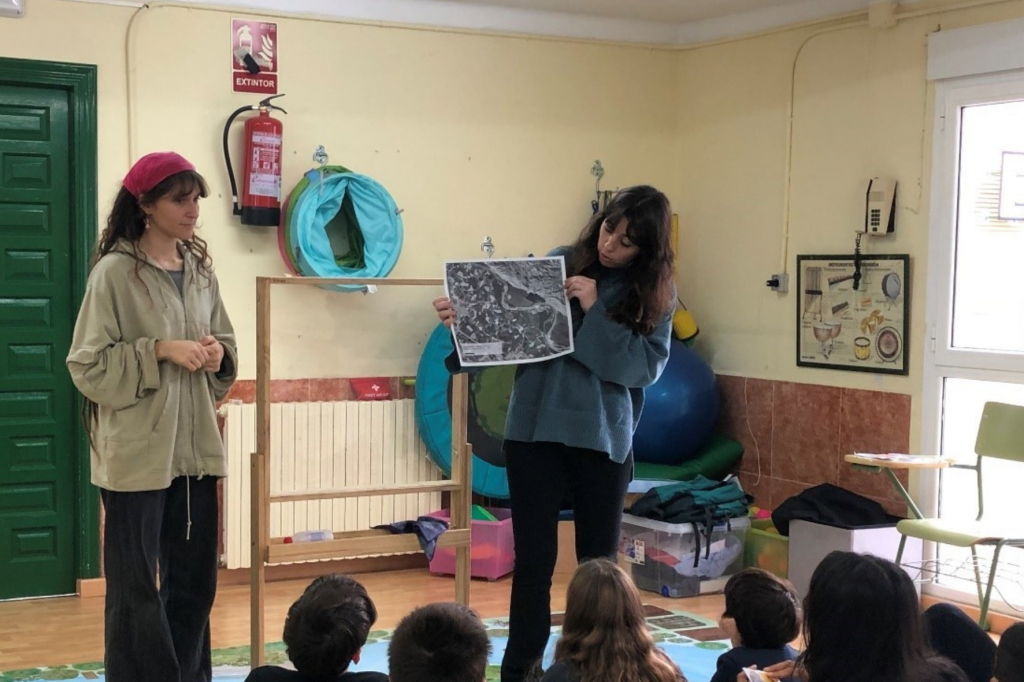
This year 2025, the project has launched an informative exhibition, accompanied by specific activities for primary school children, which has already visited 19 schools in the municipalities in the intervention areas of the LIFE Ebro Resilience P1 Project and others located in the middle stretch of the Ebro.
The objective: to bring the little ones closer to the reality of the Ebro River, which is part of their landscape and their lives, and also for them to understand and assimilate the concept of flood risk and learn how we can adapt to the river’s floods.
The exhibition is installed in each center and the students go through it to carry out fun and educational sessions that include different activities for students from 1st to 3rd grade of Primary School and from 4th to 6th grade of Primary School.
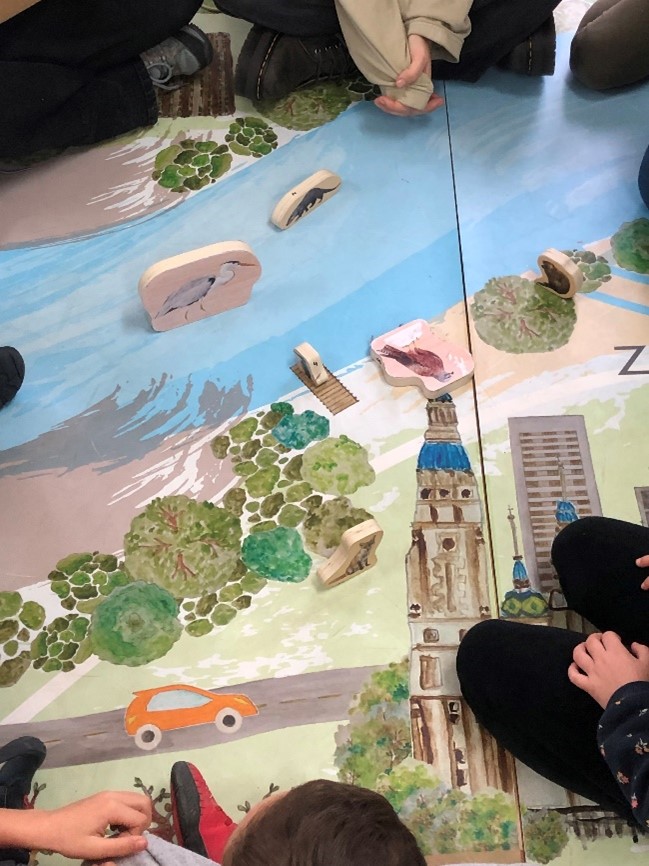
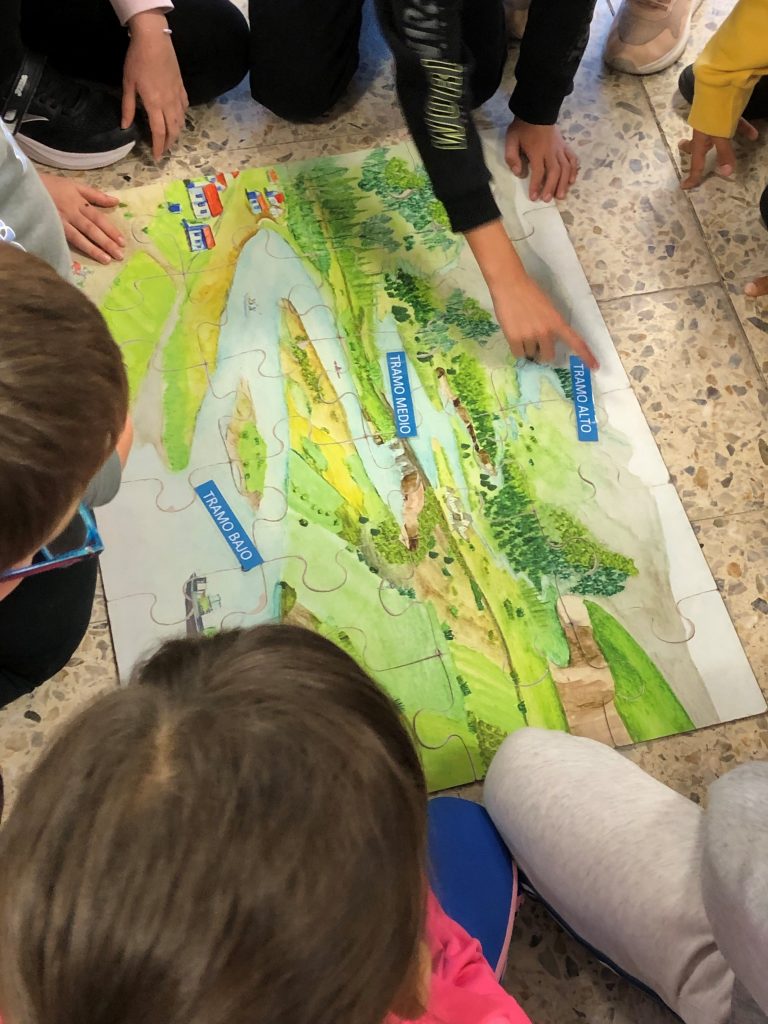
A vinyl carpet follows the course of the Ebro River and leads us between interactive panels and game stations or blocks dedicated to the water cycle; the sections of a river; ecosystems (learning about non-fish fauna); the evolution of rivers (rivers change over time), a block that works with orthophotos of their municipalities and floods (what they are, what are their consequences).
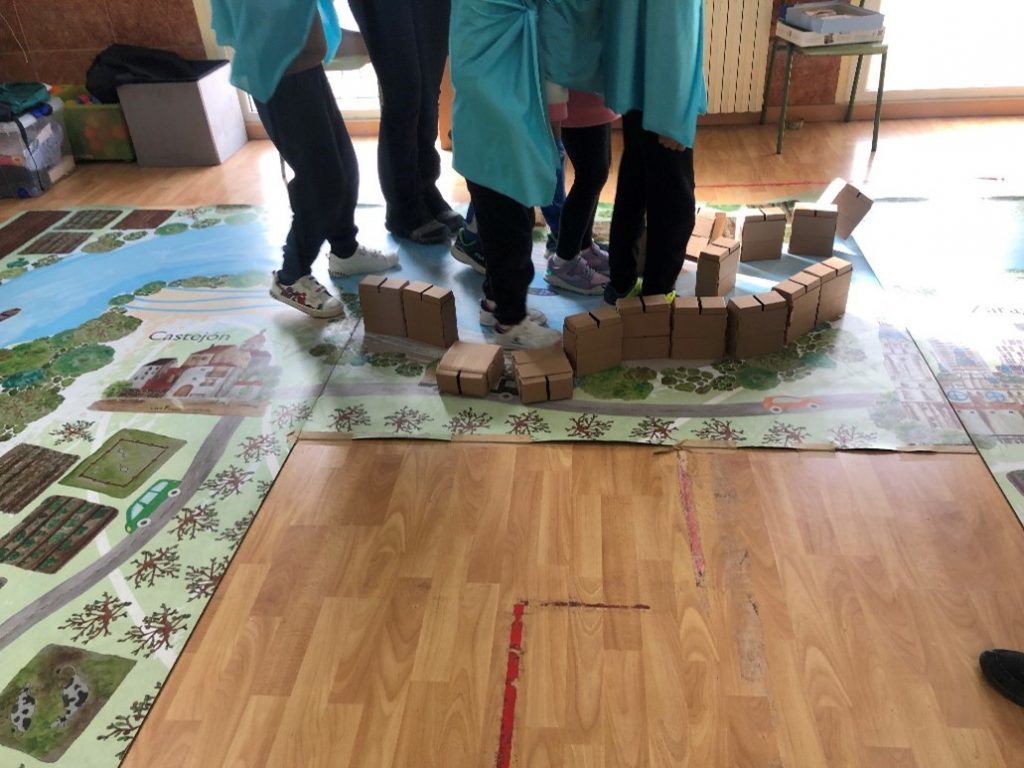
Depending on the course, it concludes either with a theatrical performance in which the children become rivers flowing between defenses, so they understand in a very visual way what the river space is or, for older children, with a board game. Inundable.
These activities have visited schools in Alfaro, Lardero (La Rioja); Milagro, San Adrián, Cadreíta, Castejón, Lodosa, Tudela (Navarra); Novillas, Pradilla de Ebro, Torres de Berrellén, Mallén, Santa Engracia, Zaragoza, Nuez de Ebro, Villafranca, Osera de Ebro, Fuentes de Ebro, Pina de Ebro (Zaragoza).
More materials and activities
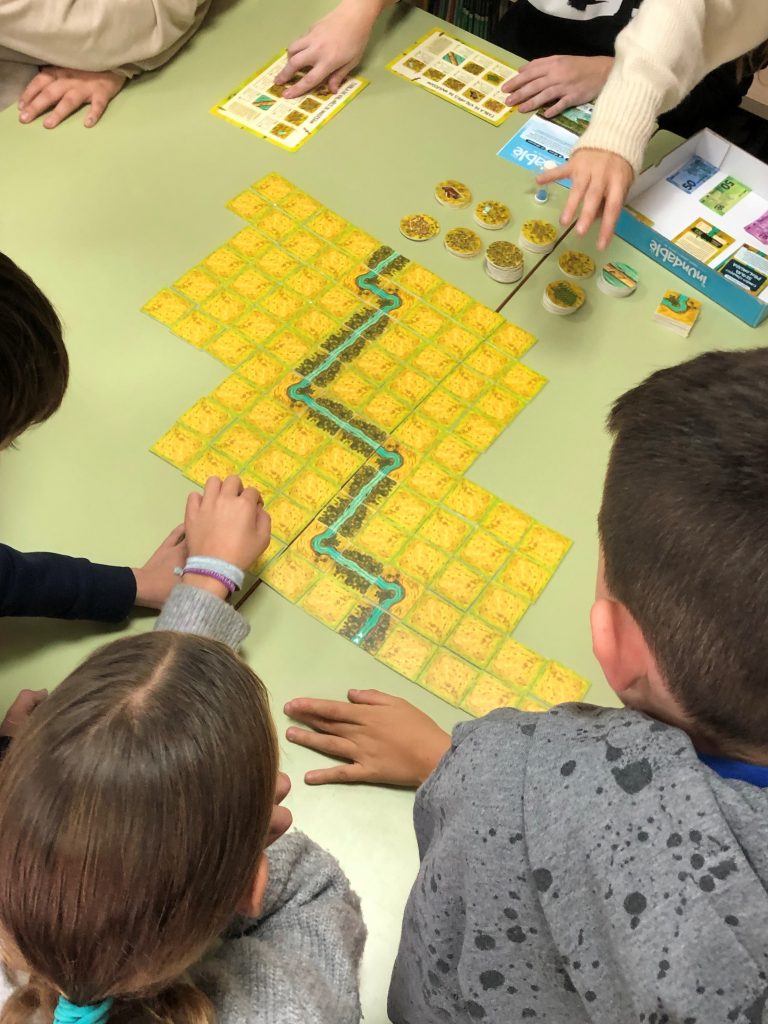
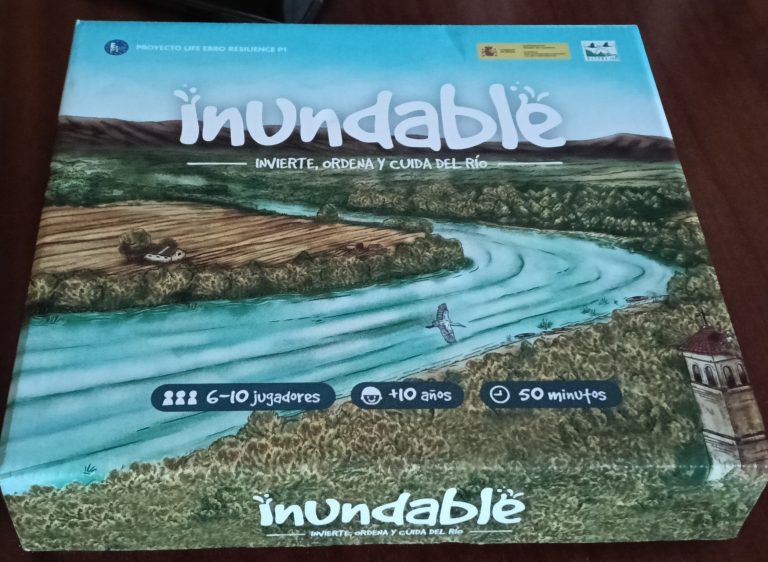
One of the most recent materials to be incorporated is the board game Inundable for the third cycle of primary school and first year of ESO to deal with flood risk, management measures and the concept of land-use planning.
It is a strategy game, in which the teams build and define the river and through situation cards a game context is generated. During the game, elements typical of the banks of the Ebro are placed: towns, industries, agricultural and livestock farms, groves, and they are exposed to the river’s floods.
Its playability, objectives and concepts have passed the test of the co-creation groups, spaces of participation that count with the presence of teachers, environmental educators, technical profiles…
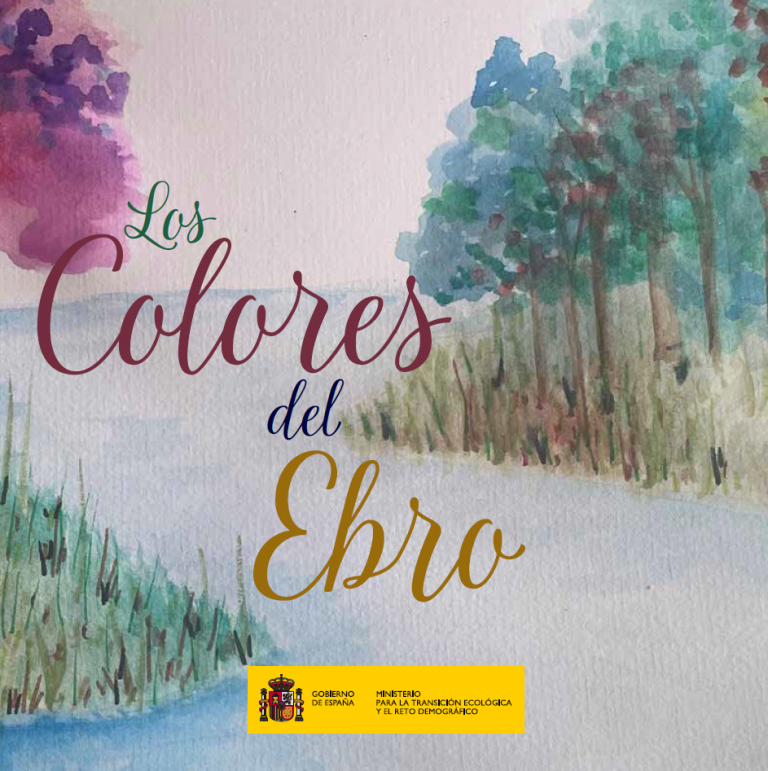
Another of the most outstanding is the story The Colors of the Ebro mainly aimed at primary school students in the intervention areas and with the little drop Orbe as the main character, it narrates the adventure of the water cycle and presents a guide of activities mainly aimed at the second cycle of kindergarten and the first cycle of primary school.
The book includes a section of activities that are added to the proposals of the educational units that have been prepared for all schools in the Ebro Resilience territory.
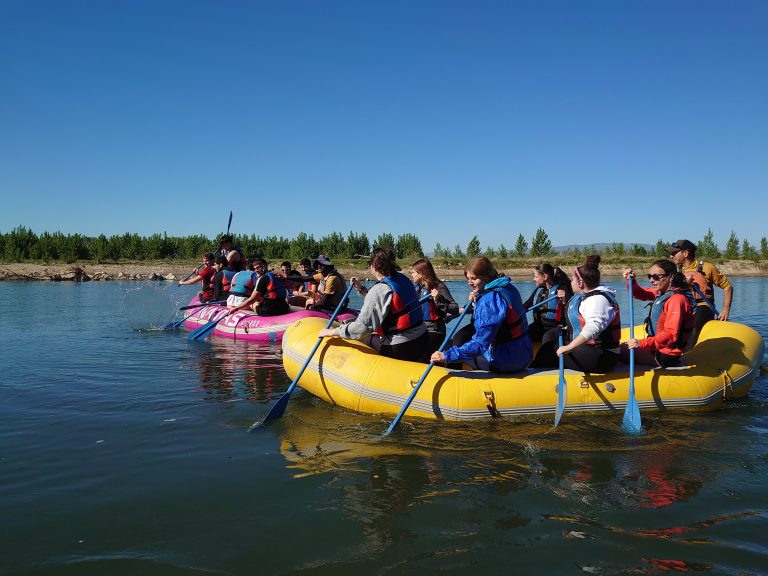
Together with these materials, one of the activities with the greatest impact are the interpretative descents aimed at secondary school students in the municipalities where the LIFE Ebro Resilience P1 Project intervenes.
These descents include informative and educational stops with educational materials on flora, fauna and games on land management. Students from high schools such as Gonzalo de Berceo de Alfaro and IESO Castejón have already participated in these experiences.
Working with the education sector
The LIFE Ebro Resilience P1 Project, committed to improving the knowledge and resilience of the riparian population against flood risk, has developed this wide range of informative and educational materials aimed at different audiences, with special attention to the educational sector.
These actions are part of a social capacity building plan aimed at improving knowledge of the flood phenomenon, promoting self-protection and creating spaces for participation.
In this context, training sessions for teachers on floods and Ebro Resilience actions are also being carried out. This training combines online sessions on the flood phenomenon and face-to-face sessions, with special emphasis on interpretive descents to learn about the river from the inside.
Didactic units
To support the teaching work, didactic units that identify basic contents related to flood risk management have been developed and are available for consultation on the website www.ebroresilience.com.
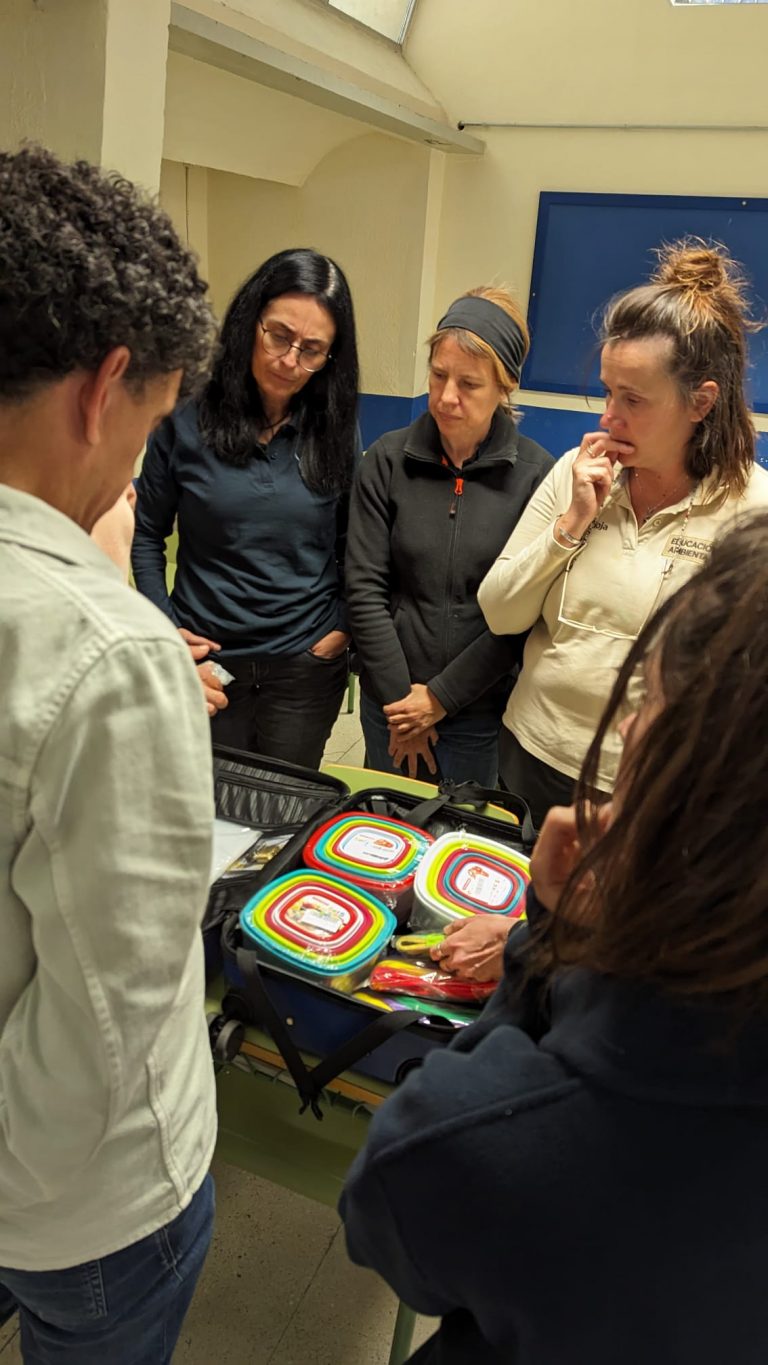
These units are complemented with educational kits, adapted to the needs of each educational level (kindergarten, primary and secondary) and reviewed with the participation of the riparian population, the teaching sector and environmental educators in the co-creation groups. These suitcases contain all the materials necessary to carry out the proposed educational activities.
If you have any questions about these materials, please contact us at lifeebroresiliencep1-participacion@tragsa.es.
Project
The LIFE Ebro Resilience P1 Project, which has the financial support of the LIFE Program of the European Commission, is an innovative proposal to address the phenomenon of flooding in the middle stretch of the Ebro, with a clear objective for the future: that the population and economic activities coexist with an Ebro in a good state of conservation without the inevitable floods causing significant damage.
Its partners are the Ministry for Ecological Transition and the Demographic Challenge (MITECO), through the Ebro Hydrographic Confederation (CHE) and the public companies TRAGSA and TRAGSATEC; the governments of La Rioja, Navarra, through Orekan- Environmental Management of Navarra and Aragon and the Aragonese Water Institute.