

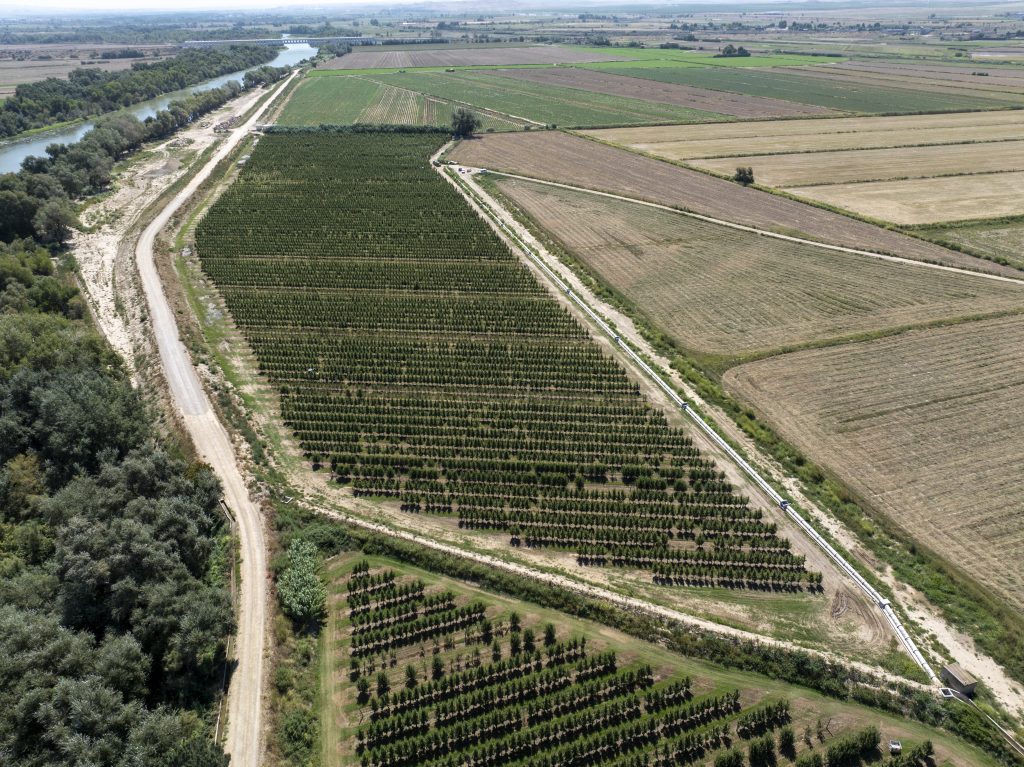
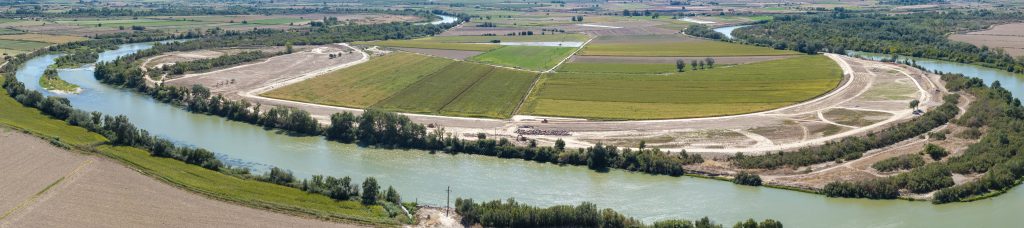
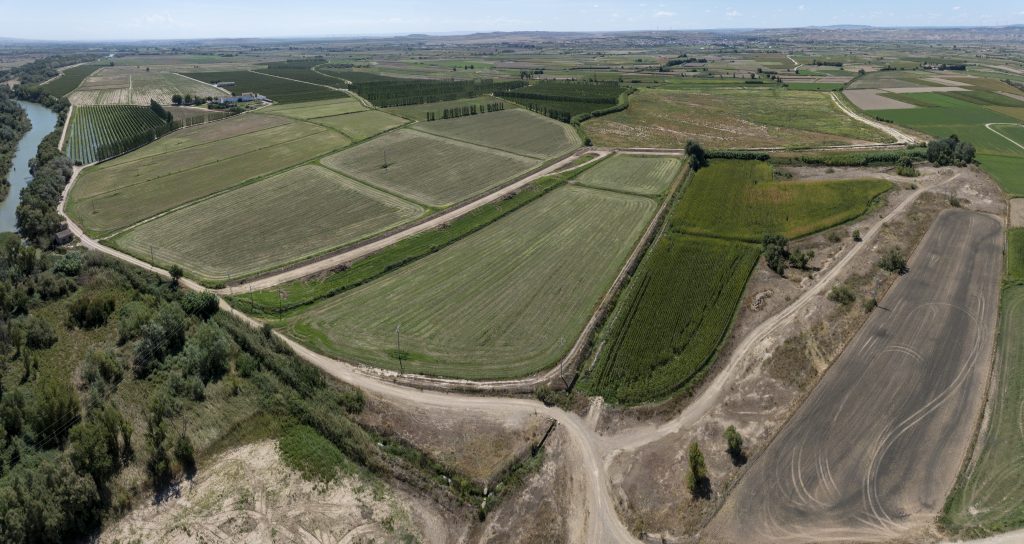
The Ebro adds 23 hectares to its natural flood plain by solving the narrowing of the river at two points, Mejana del Conde and Meandro de Aguilar in the Osera de Ebro – Fuentes de Ebro section (Zaragoza).
The setting back of longitudinal protections (motes), moving them away from the river, has been one of the main actions of Phase 1 of the “Improving resilience to floods in the Ebro” intervention of the LIFE Ebro Resilience P1 Project, with a budget of 3 million euros, which has been implemented by the Ebro Hydrographic Confederation (CHE), through the public company TRAGSA (both partners of the Project).
It has also meant the creation of a new wetland in this recovered space, where, in addition, an environmental restoration intervention will be carried out by the Government of Aragon, another example of coordinated actions between public administrations.
As in all Ebro Resilience interventions, the participation of the interested sectors, especially in this case that of the farmers, led by the Irrigation Community of the Huerta del Ebro, as well as the consensus with the City Councils of Osera de Ebro and Fuentes de Ebro, have been crucial for the development of the adaptation proposal promoted by the LIFE financial instrument of the European Commission.
In parallel to this intervention, the execution of PHASE 2 is also progressing, which focuses on one of the reference and pioneering interventions of the LIFE Ebro Resilience P1 Project: the creation of Lateral Flow Buffer Zones (LFZ) that aim to reduce the risk of flooding in 630 hectares of crops on the right bank of the Ebro.
The works executed during Phase 1 were as follows:
Lateral flow buffer zones
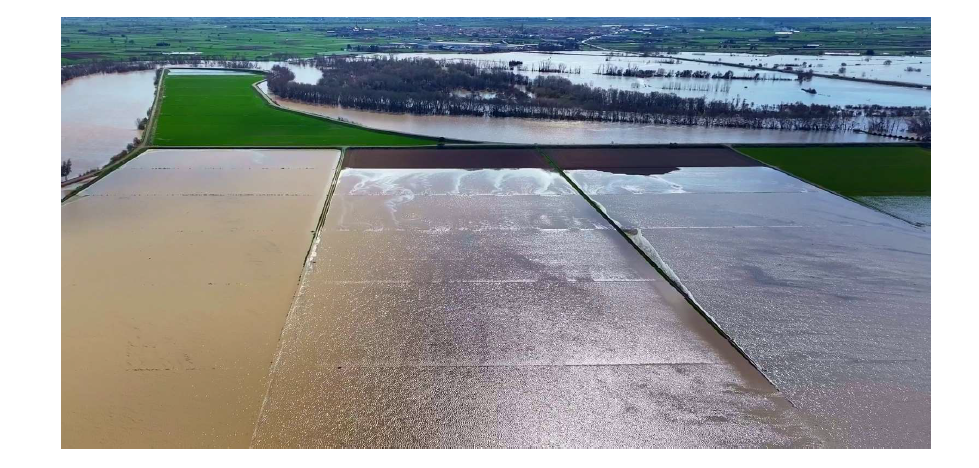
Phase 2 includes the most innovative intervention, the proposal of the ZAFL: the creation of a succession of 14 temporary flood zones that will function as “water cushions” during extraordinary floods.
It applies the concept of adaptation and seeks to give the river space when it needs it in order to avoid greater impacts. The ZAFLs compartmentalize the cultivable area, an area of action 11.30 km long and 630 hectares, into cells that will be pre-flooded in a controlled manner during episodes of Ebro flooding. The water thus passes over water and, as it does not impact on rigid elements and surfaces, damage and erosion are reduced.
The execution consists of the creation of water inlet points through the lowering of the dips (17 lowerings in total); the conditioning of roads and ditches for the closures of these buffer zones (15 closures in total) and the reinforcement of the areas where the water will pass through (ditch casing, protection of road slopes and riprap cordons).
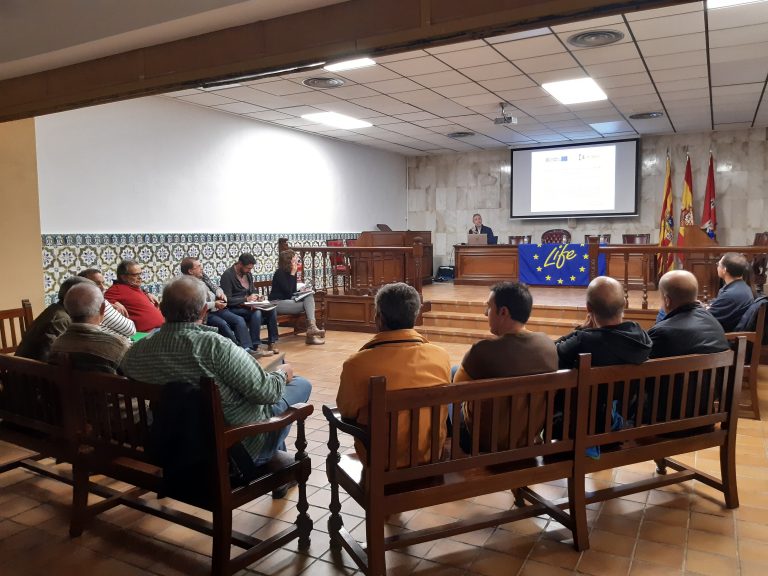
In the commitment to public participation, the deliberative process began in 2021 and intensified at the end of 2022 with the creation of a stable participation group between technicians, municipal representatives and representatives of the Irrigation Community.
In addition, other actions have been carried out such as field visits, guided tours with stakeholders and the general population, a public session on buffer zones and field visits to explain in the field the so-called lateral flow buffer zones to owners or lessees of plots bordering roads or irrigation infrastructure.
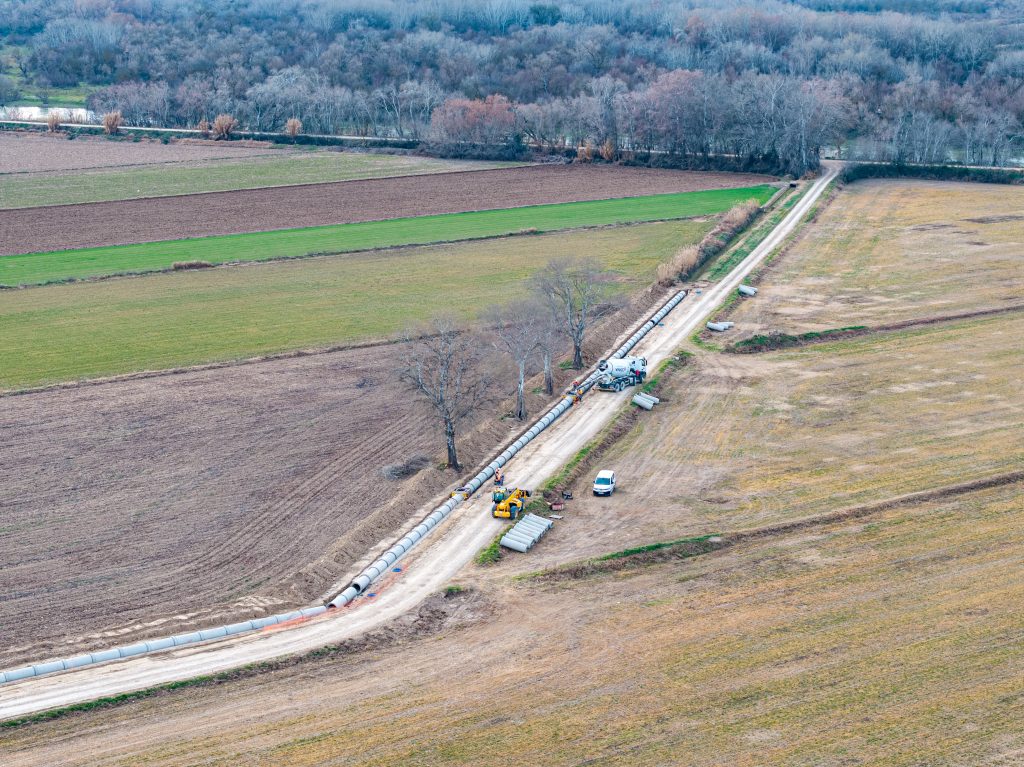
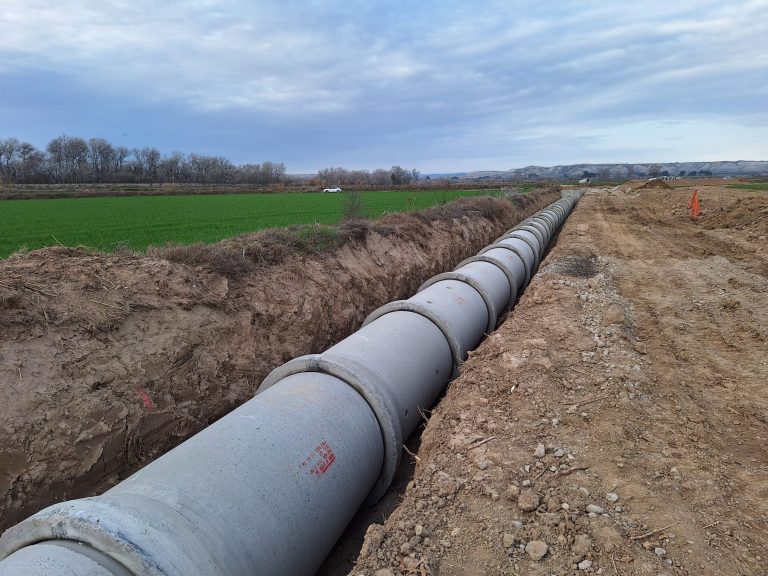
Together with these two phases, in the Osera – Fuentes section, another LIFE Ebro Resilience P1 intervention is also being carried out by the Government of Aragon, the adaptation of the irrigation system of the Huerta del Ebro Irrigation Community (Fuentes de Ebro). This action, which is already in its second phase of works, consists of the replacement of an existing irrigation ditch with a new underground pipe further away from the riverbed. This will reduce the impact and the cuts that occurred when the defenses were breached.
LIFE Project
The LIFE Ebro Resilience P1 Project (LIFE20 ENV/ES/00327), approved by the European Commission in the LIFE 2020 call, covers three autonomous communities (La Rioja, Navarra and Aragón), has a duration of 6 years and a total budget of 13,310,350 €, with 55% European funding.
This project is also an example of institutional coordination and cooperation in the intervention section, being its partners the Ministry for Ecological Transition and Demographic Challenge (MITECO), through its companies TRAGSA and TRAGSATEC; Ebro Hydrographic Confederation; Government of La Rioja; Government of Navarra, through Orekan – Environmental Management of Navarra, Government of Aragon and the Aragonese Water Institute.