

The Ebro Resilience Strategy and the LIFE Ebro Resilience P1 Project were presented this week at one of the main scientific-technical forums related to water management, the Water Engineering Conference held from 21-24 in Zaragoza.
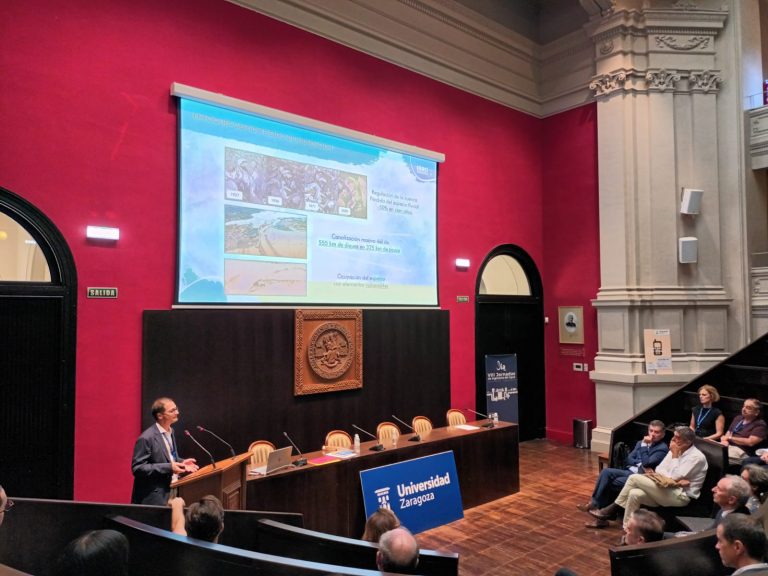
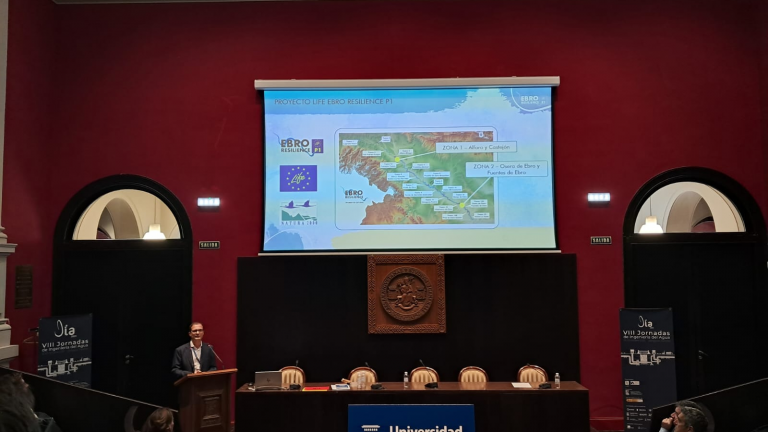
Adaptation to flood risk in the middle stretch of the Ebro was the protagonist of one of the main sessions of the plenary of the Conference on October 23, through the presentation of David Gargantilla, head of Service at the Ebro Hydrographic Confederation (CHE) and technical coordinator of the LIFE Ebro Resilience P1 Project.
Innovative actions, the commitment to the recovery of river space, nature-based solutions, the involvement of the local population and administrative coordination are the main aspects of the project that were discussed. Regarding the latter, the participation of the Ministry for Ecological Transition and Demographic Challenge (MITECO), through its companies TRAGSA and TRAGSATEC; the CHE; the Government of La Rioja; the Government of Navarra, through Orekan – Environmental Management of Navarra, the Government of Aragón and the Aragonese Water Institute, as partners of the LIFE Project, was recalled.
The LIFE Ebro Resilience P1 Project (LIFE20 ENV/ES/00327), approved by the European Commission in the LIFE 2020 call, covers three autonomous communities (La Rioja, Navarra and Aragón), has a duration of 6 years and a total budget of 13,310,350 €, with 55% European funding.
The LIFE Project is part of the Ebro Resilience Strategy, which includes all the measures of the Flood Risk Management Plan for the middle stretch of the Ebro, specifically between Logroño and La Zaida (Zaragoza).
In the plenary, the Ebro Resilience proposal shared space with other topics on river basin management in a monographic session framed in the commemoration of the centenary of the CHE. These sessions sought to reflect on the changes in the paradigm of water management in Spain, promoting an interdisciplinary approach that combines engineering, technology, digitalization and nature-based measures.
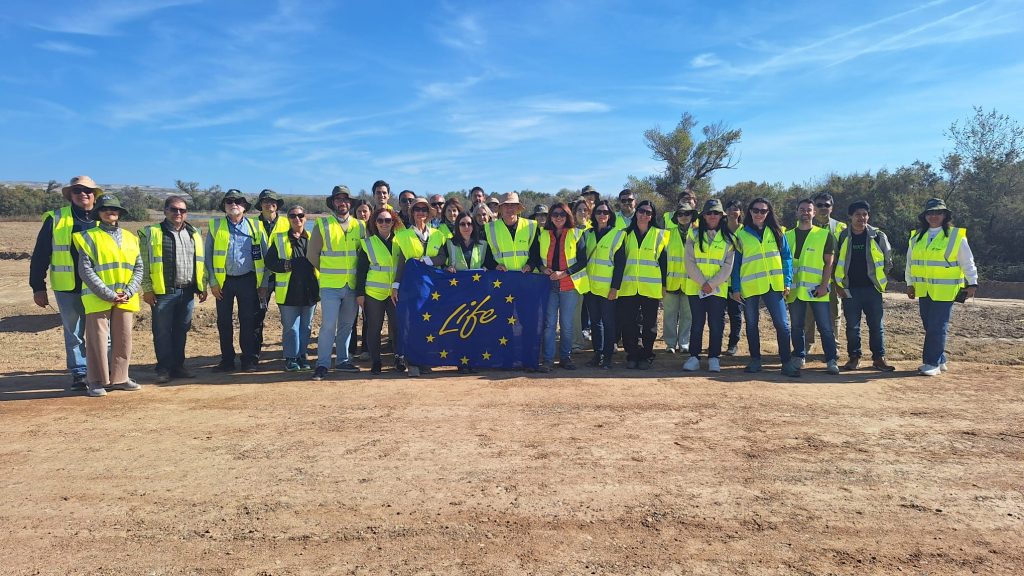
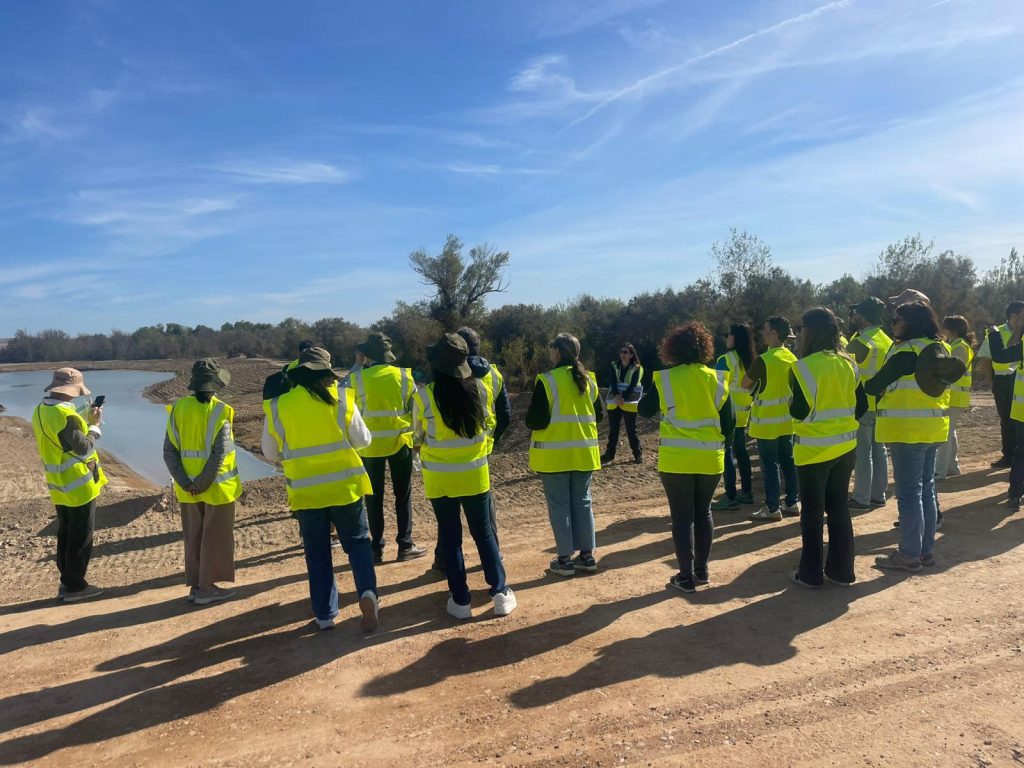
Along with the presentation in the program of the Conference, the LIFE Ebro Resilience P1 Project has also been protagonist in the technical visit of October 24 to the works for the improvement of flood resilience in the section Osera de Ebro – Fuentes de Ebro (Zaragoza).
The participants went to Zone 2 of the LIFE Project, where a pilot project is being developed that has allowed the recovery of 23 hectares of river space by reclaiming defenses and will include environmental restoration and the implementation of lateral flow buffer zones, a pre-flood area to reduce damage to agricultural farms.
Water Engineering Conference
The Jornadas de Ingeniería del Agua (JIA) are biennial scientific-technical meetings that bring together national and international experts in the field of water management.
Its main objective is to promote the exchange of knowledge between universities, business and government, addressing topics such as hydrology, water management, hydraulic structures and their relationship with the Sustainable Development Goals.
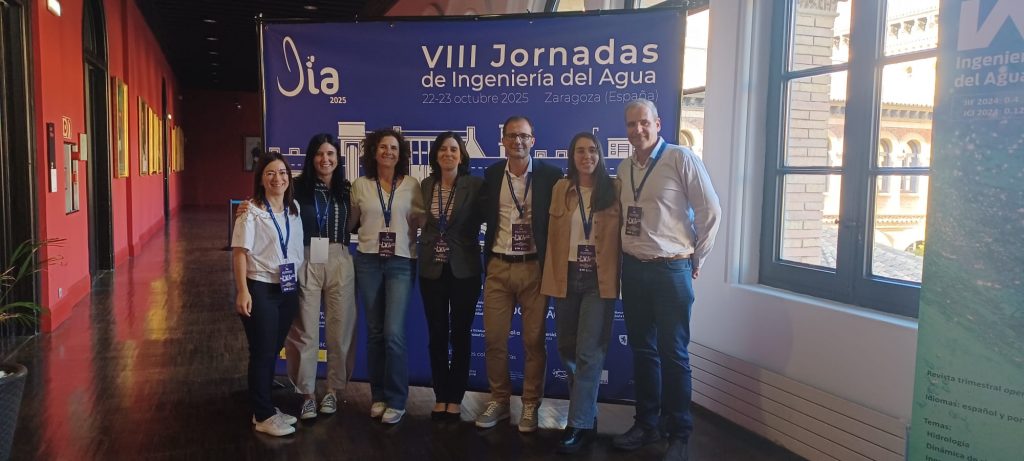
The 2025 edition, the eighth since its creation in 2009, was held in the auditorium of the University of Zaragoza, organized by the Hydraulic and Environmental Engineering Group (GIHA) of the Polytechnic University School of La Almunia, with the support of entities such as the University of Zaragoza, the Hydrographic Confederation of the Ebro, the Aragonese Water Institute and the City Council of Zaragoza.