

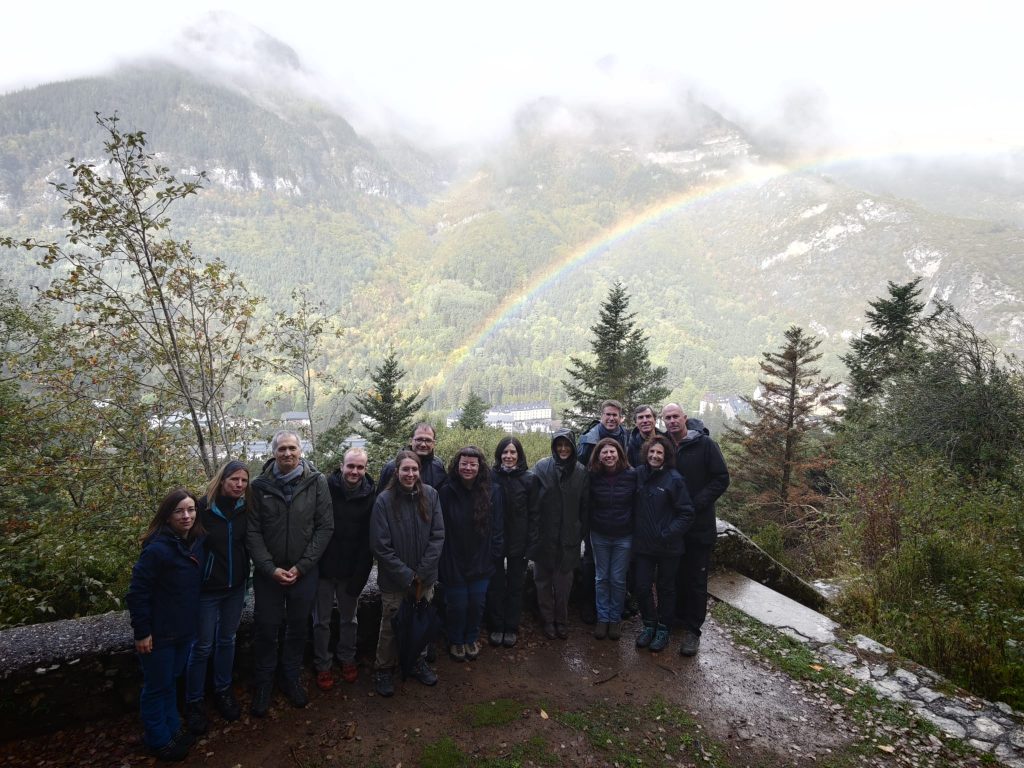
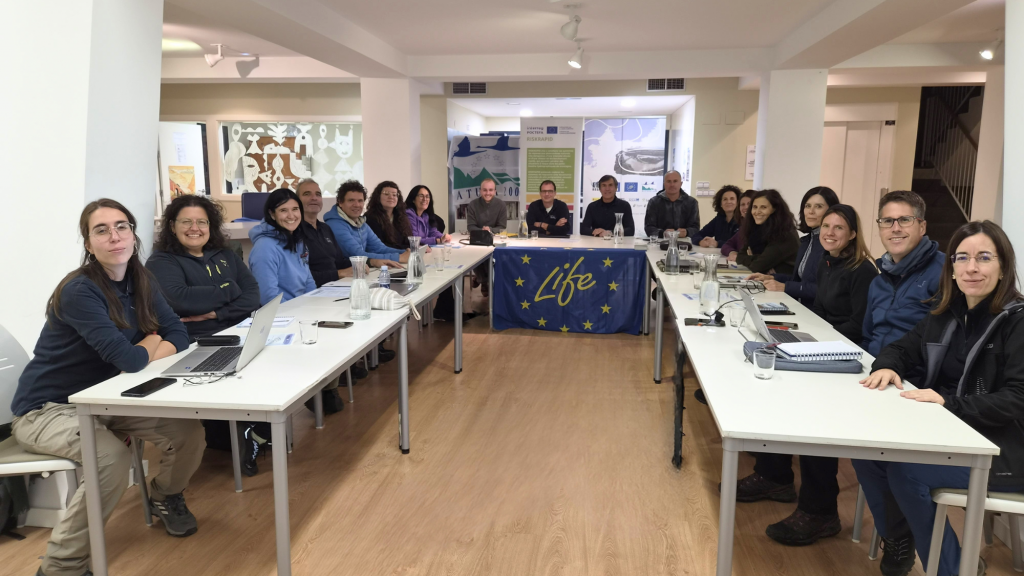
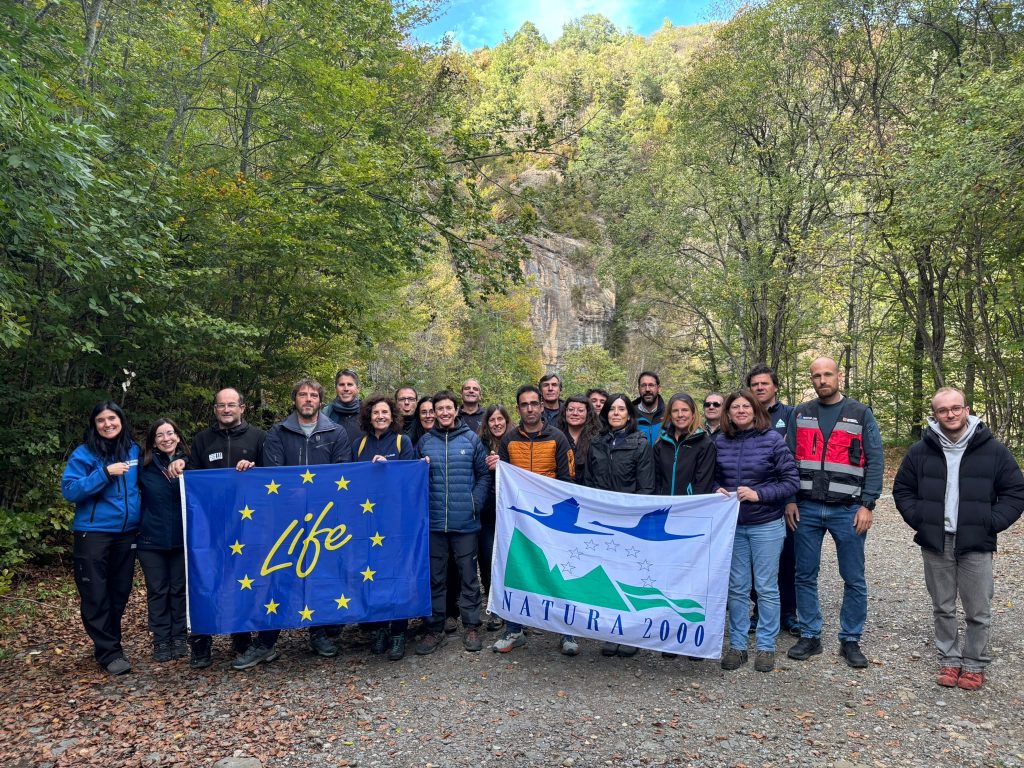
From October 21 to 23, the technical team from LIFE Ebro Resilience P1 participated in a technical meeting with partners from the RISKRAPID project , an initiative with which it shares participating organizations and objectives related to reducing risk and increasing resilience in the face of extreme natural events.
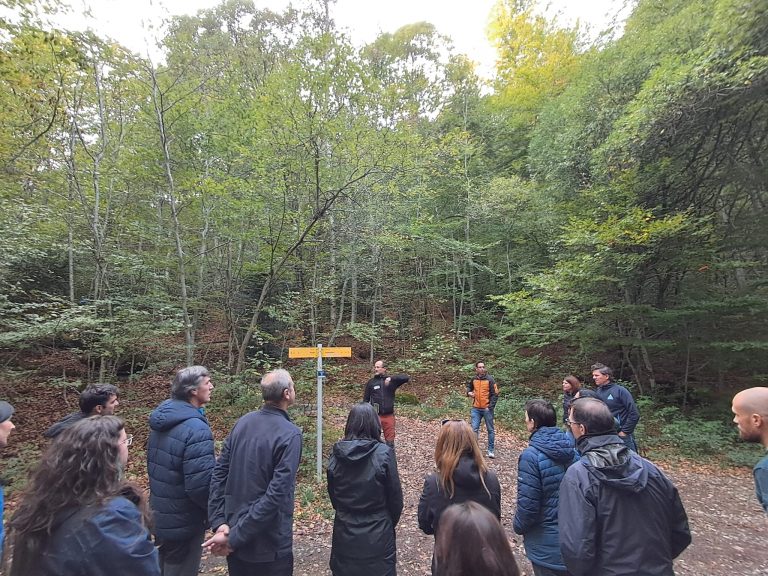
The exchange took the LIFE Ebro Resilience P1 group to various locations in the Pyrenees between Spain and France and was held in conjunction with the biannual coordination meetings of Ebro Resilience: its technical working groups and its management committee.
Review of Actions
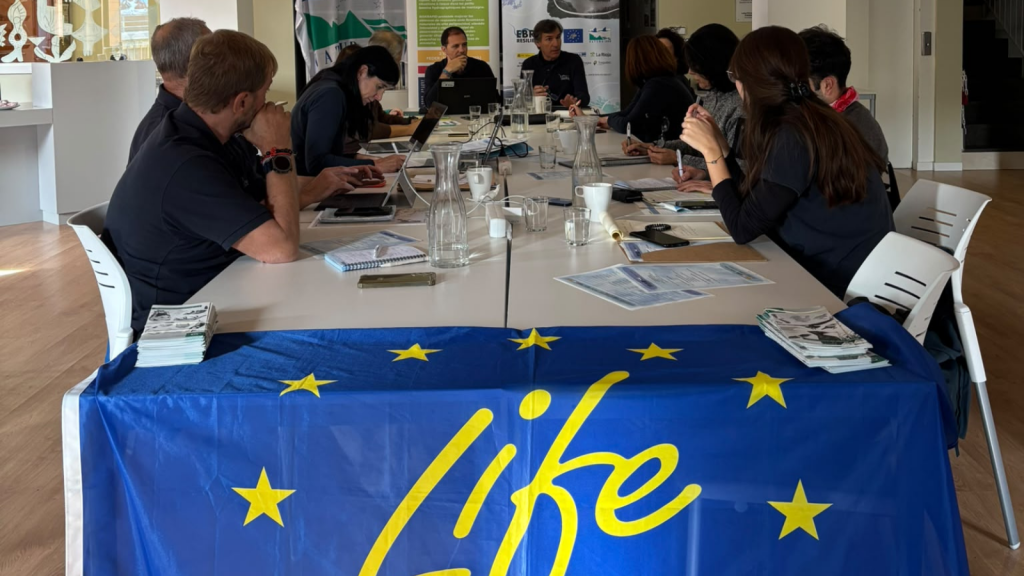
The working groups are dedicated to sharing updates on the status of actions across the project’s various strands and reviewing compliance with indicators together with the relevant technical staff.
For its part, the Management Committee has reviewed the proper implementation of the actions and is monitoring all administrative and financial aspects of the project, which is making progress on its flood risk adaptation measures in the middle section of the Ebro River.
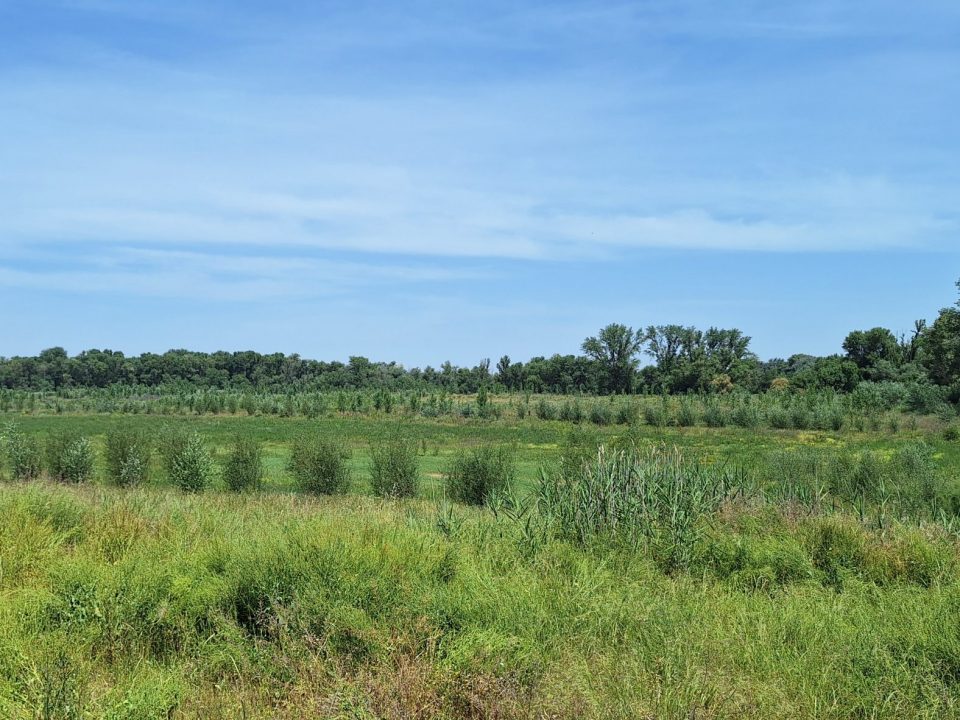
In Zone 1, on the Alfaro (La Rioja)–Castejón (Navarre) section, the morphological modification and environmental restoration work on the La Roza Meander and the reopening of old river branches in the Soto de Alfaro. In addition, work is scheduled to begin shortly on the restoration of the El Señorío meander in Castejón.
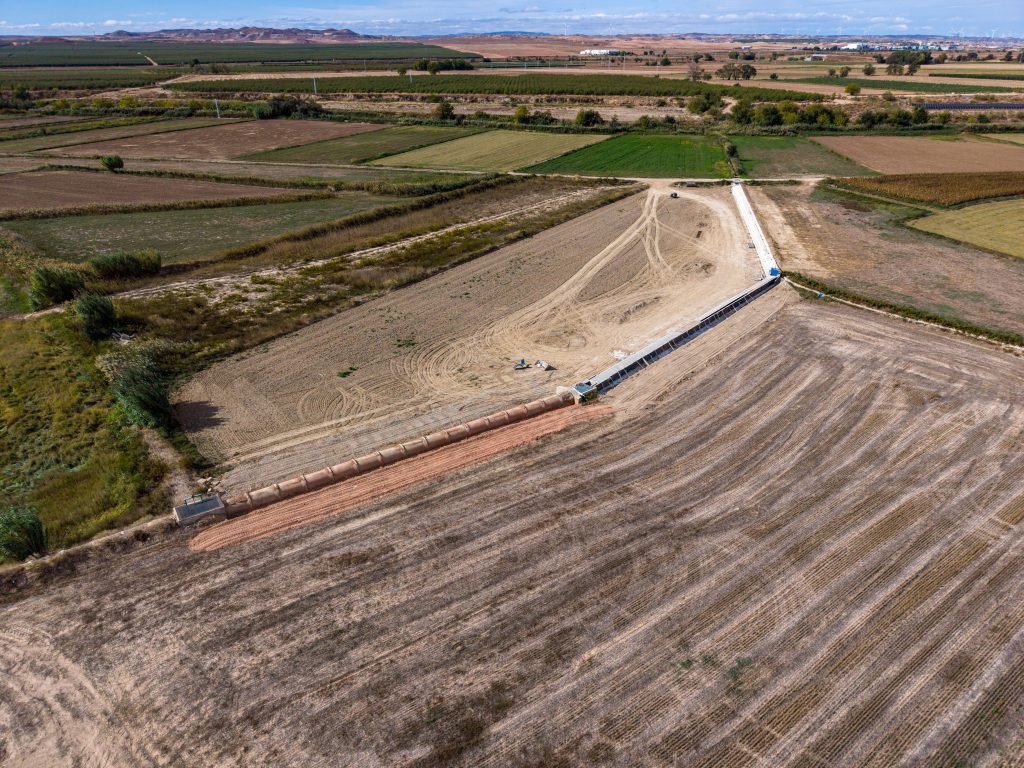
Meanwhile, in Zone 2, the section in Zaragoza between Osera de Ebro and Fuentes de Ebro is also well underway, with the restoration of 23 hectares of river habitat in the Aguilar Meander and the Mejana del Conde, the adaptation of the irrigation system of the Huerta del Ebro Irrigation District in Fuentes de Ebro. Added to this is the adaptation of agricultural land with Lateral Flow Buffer Zones , which are in the final stages of implementation.
All the partners are represented on this committee, just as they are in the technical working groups: the Ministry of Ecological Transition and Demographic Challenge, the Ebro River Basin Authority, the Government of La Rioja, the Government of Navarre (through the public company Gestión Ambiental de Navarra), the Government of Aragon, the Aragonese Water Institute, and the public company TRAGSA and its subsidiary TRAGSATEC.
Exchange
The LIFE Ebro Resilience P1 project has kicked off the year with a series of intensive exchanges with other projects. In addition to this cross-border meeting, the project recently organized a trip to the Austrian river basins where the LIFE IRIS project is being implemented, as well as a visit by the LIFE IP Duero technical team to the project areas along the Ebro River.
These meetings provide an opportunity for regions facing different challenges to share experiences, identify best practices, and promote the transfer of knowledge among projects funded by the European Union.
The partnership with RISKRAPID is primarily carried out through the joint participation of the Government of Aragon and Orekan Gestión Ambiental, both of which are part of both LIFE Ebro Resilience P1 and RISKRAPID. The latter project is led by the Pirineos-Pyrénées EGTC and also involves the National Museum of Natural Sciences (MNCN-CSIC), the Pyrénées-Atlantiques Departmental Fire and Rescue Service (SDIS 64), and the Hautes-Pyrénées Departmental Fire and Rescue Service (SDIS 65).
This project aims to improve the prevention and management of rapidly evolving natural hazards, such as flash floods, avalanches, and rockfalls, through the development of advanced monitoring, early warning, and decision-support systems.
Although RISKRAPID and LIFE Ebro Resilience P1 operate in different geographical contexts, they share the goal of increasing resilience to extreme events.
RISKRAPID focuses its work on small mountain watersheds and Pyrenean ravines, where torrential events can develop very rapidly, whereas LIFE Ebro Resilience P1 addresses flood risk management in the middle reaches of the Ebro River, a high-flow river system with distinct characteristics.
Despite these differences, both are working to improve the region’s ability to anticipate, prepare for, and adapt to natural events capable of having significant impacts on the population, infrastructure, and economic activities. As a result, the meeting provided an opportunity to exchange knowledge on methodologies, monitoring tools, and early warning systems that share principles applicable to flood risk adaptation in any region.
Visit
The RISKRAPID project is being carried out under the Interreg POCTEFA 2021–2027 program, a European Union territorial cooperation instrument that promotes joint efforts among regions in Spain, France, and Andorra. Thanks to support from the European Regional Development Fund (ERDF), RISKRAPID will promote initiatives aimed at strengthening the protection of the population and infrastructure against natural hazards in the Pyrenees region, while also fostering the exchange of information and coordination between government agencies and organizations on both sides of the border.
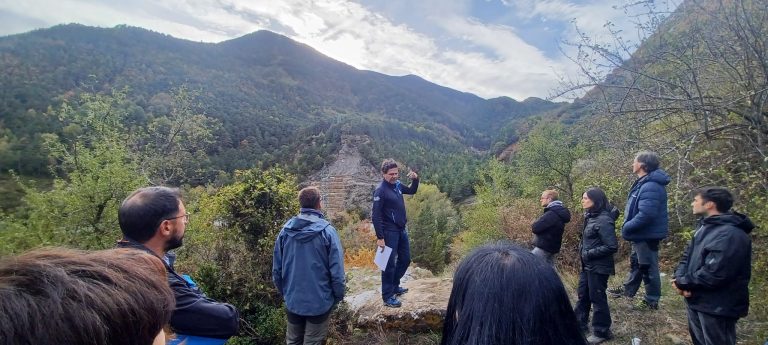
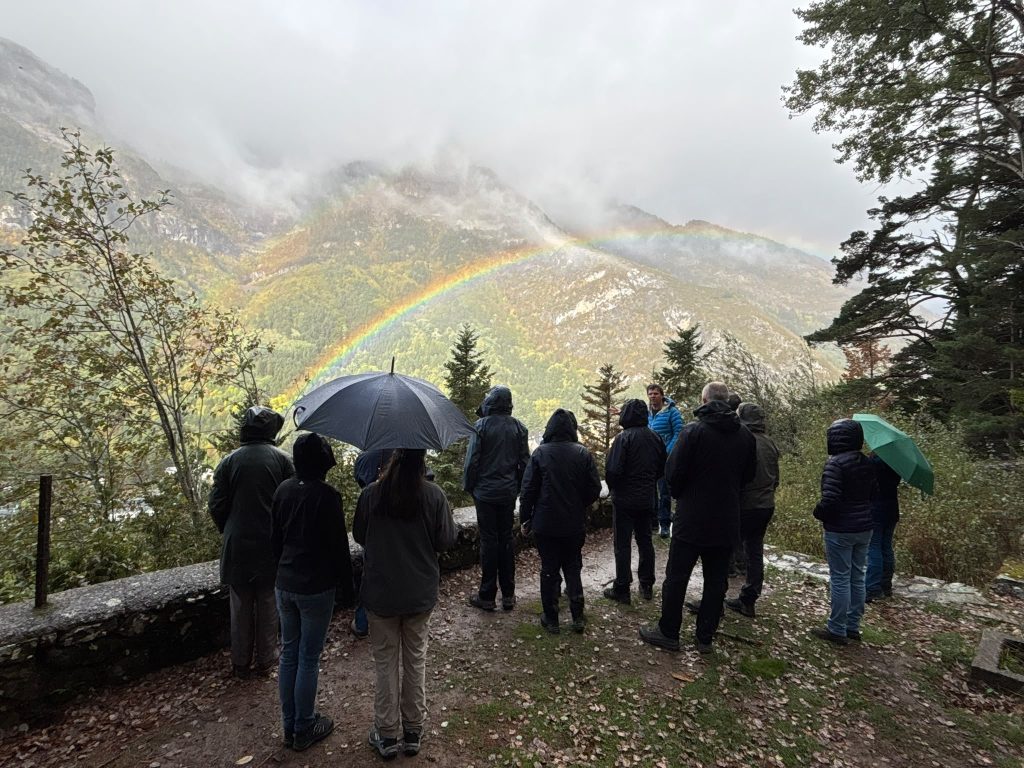
As part of the meeting, participants took part in several technical visits to projects carried out through cross-border cooperation and European funding. The program provided an opportunity to see firsthand interventions carried out by the Government of Aragon and other Pyrenean partners in the area of natural risk management, including the work at the Gorgol ravine, linked to the RISKRAPID project; the Santa Elena slope, where nature-based solutions were implemented as part of the PHUSICOS project; and the Estiviellas and Aguaré ravines, where repair and improvement work has been carried out on defenses, dikes, and channels designed to protect against avalanches.
The visit also included the Ossau Valley and the Bious-Gabas and Bitet gorges, where participants will learn about avalanche protection systems and other measures to guard against natural hazards that protect the French RD-934 highway, as well as various risk monitoring and management initiatives carried out through European projects.
These sites illustrate the continuity of cross-border cooperation in the Pyrenees, ranging from initiatives such as INTURPYR—which established a cross-border network of canyons for safe canyoning—to more recent projects such as RISKRAPID, SECURUS, SECURUS-2, and HERMES, which aim to strengthen the region’s resilience in the face of increasingly complex natural hazards.
LIFE Ebro Resilience P1
The LIFE Ebro Resilience P1 project (LIFE20 ENV/ES/00327) is funded by the European Union’s LIFE Program and aims to help reduce the impacts of flood risk in the middle section of the Ebro River.
The project is being carried out in La Rioja, Navarre, and Aragon and brings together the Ministry for Ecological Transition and the Demographic Challenge, through the Ebro River Basin Authority, TRAGSA, and TRAGSATEC; the Government of La Rioja; the Government of Navarre, through OREKAN—Environmental Management of Navarre; the Government of Aragon; and the Aragonese Water Institute.