

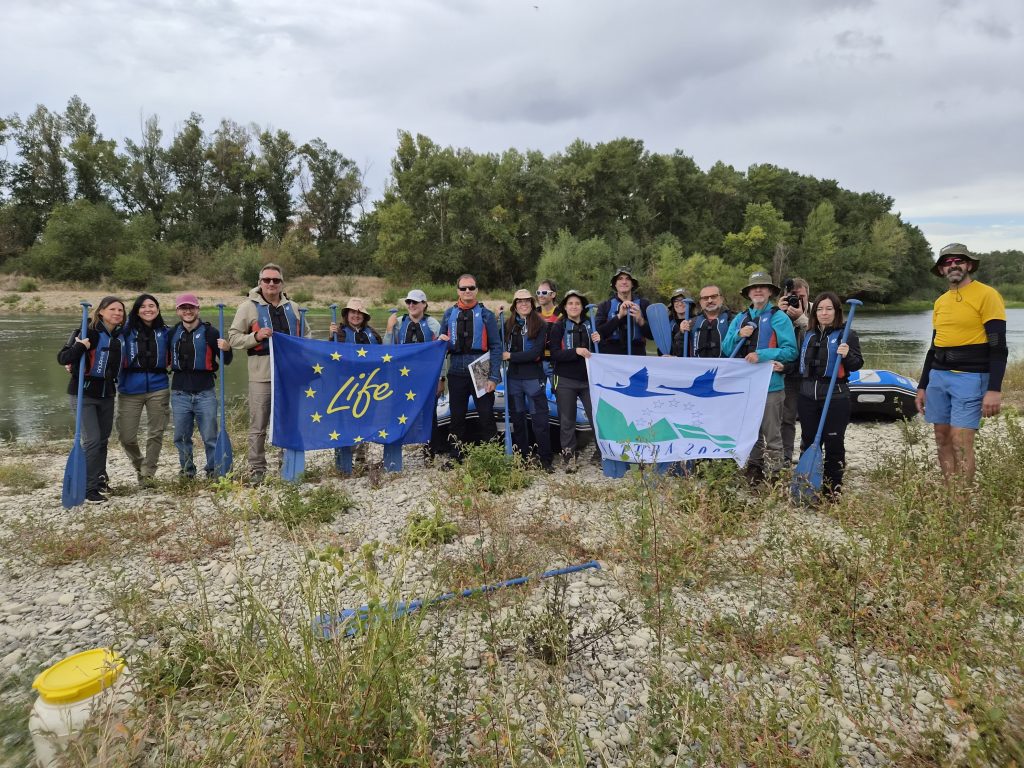
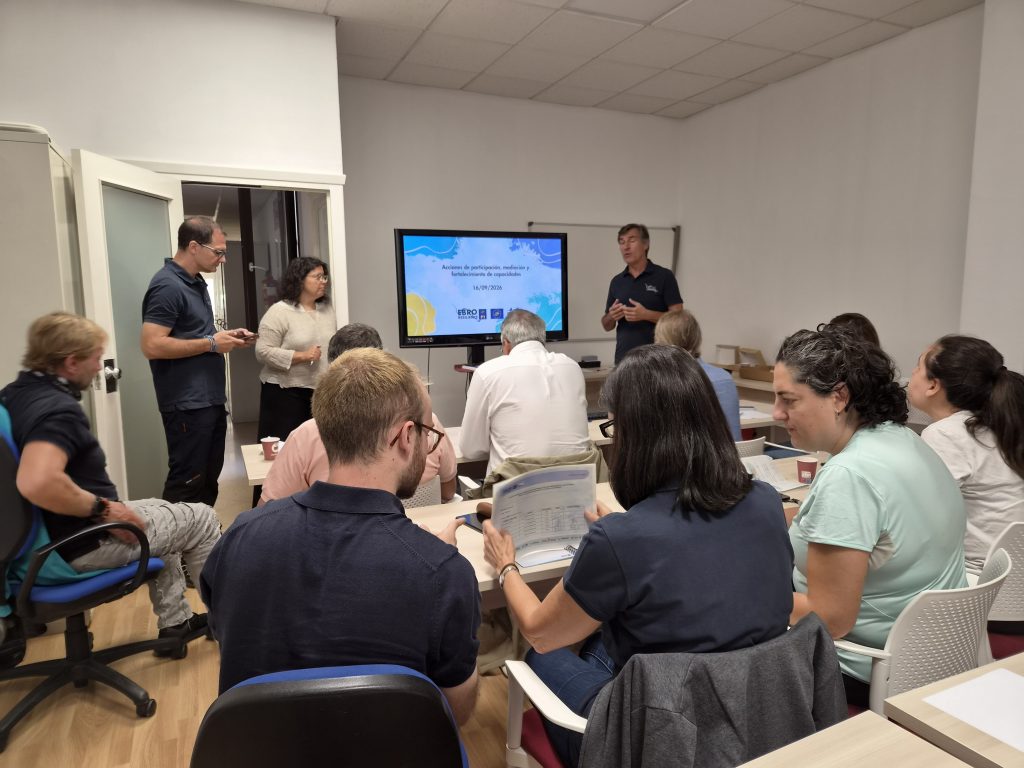
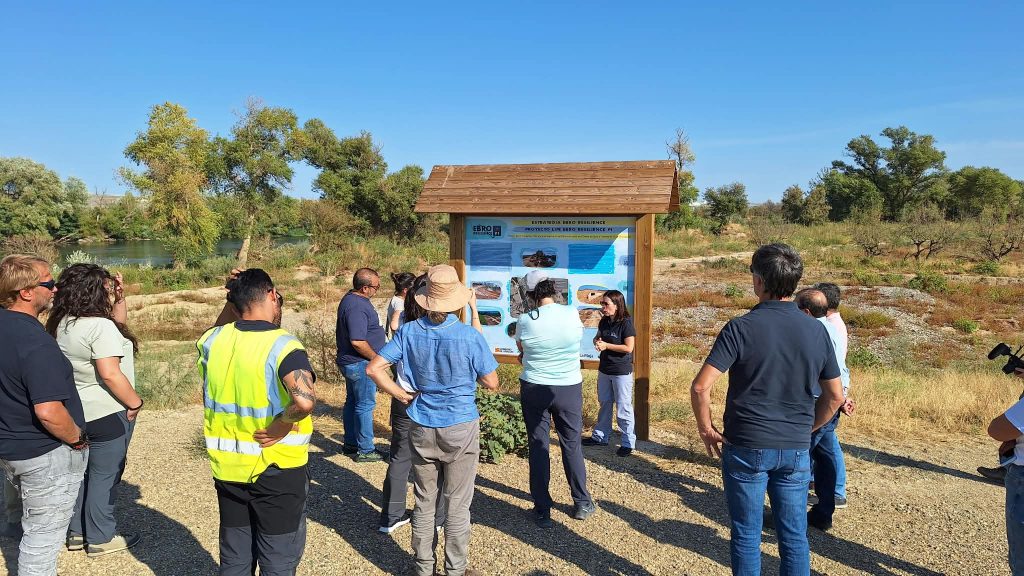
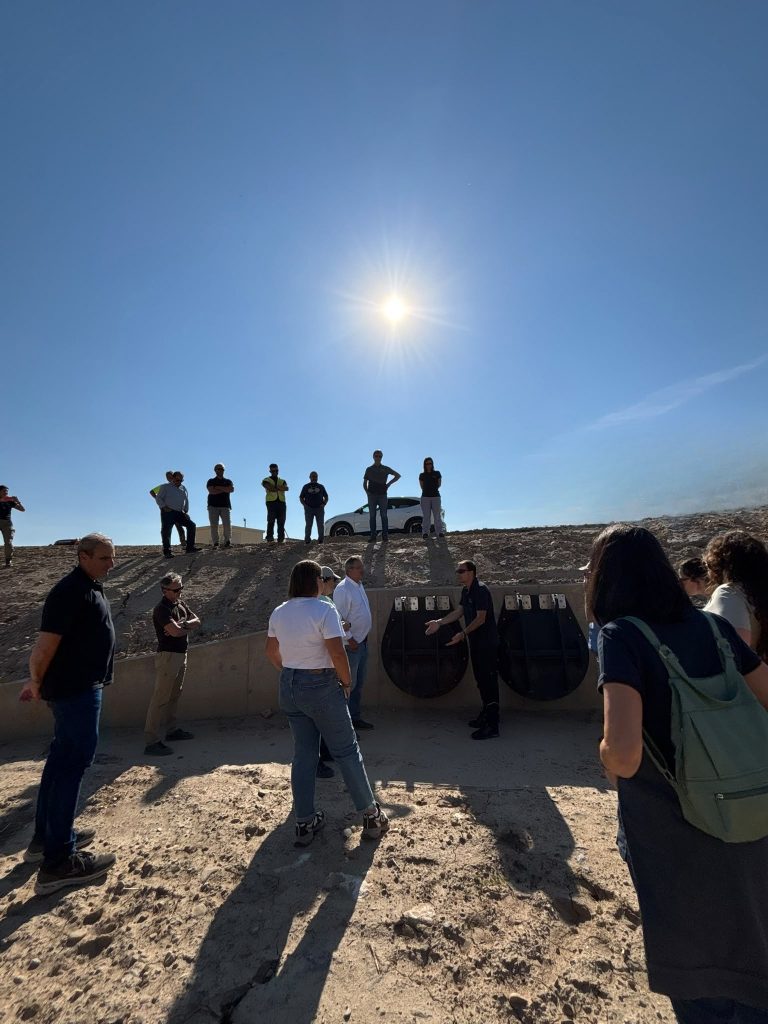
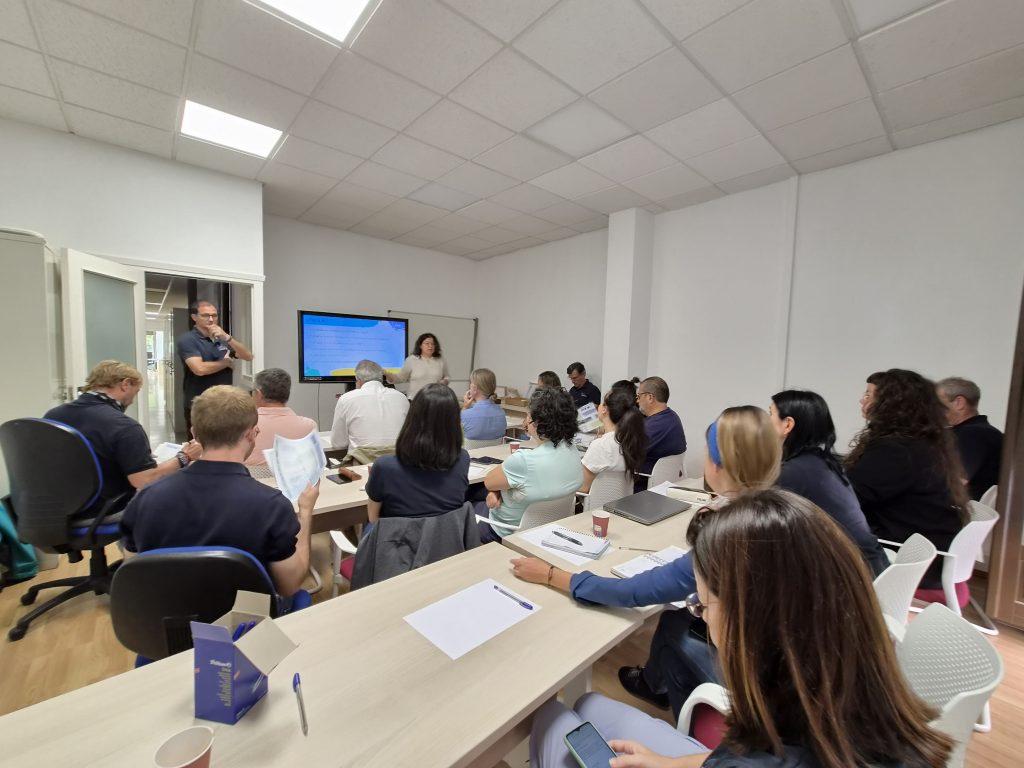
On September 16 and 17, the technical teams from the LIFE IP Duero and LIFE Ebro Resilience P1 projects shared their experiences and expertise on river restoration and flood risk adaptation, during sessions that included field visits to project sites in the middle reaches of the Ebro River and presentations on public engagement and communication activities held at the headquarters of the Ebro River Basin Authority in Zaragoza.
The meeting was a follow-up to the networking event held in March 2025, when the LIFE Ebro Resilience P1 team traveled to the Duero River basin to learn about the work being done on the Zapardiel, Arevalillo, and Tormes rivers.
It thus embodies the spirit of exchange and cooperation promoted by the LIFE Program, encouraging projects funded by the European Union to share their experiences and learn from initiatives carried out in other regions.
Here, solutions are compared and ways to address challenges are analyzed. The exchange between the Duero and Ebro river basins does not end with the visit; rather, it is part of a learning process. In this case, sharing information and experience regarding participation and communication has made it possible to contextualize the visits to the projects by showcasing the process of dialogue with the people and sectors that coexist with the river.
The meeting brought together technical staff from the partners of the LIFE Ebro Resilience P1 project (Ebro River Basin Authority, Orekan – Gestión Ambiental de Navarra, Government of La Rioja, Aragonese Water Institute, TRAGSATEC…), as well as technical staff from the Duero River Basin Authority and TRAGSATEC representing the LIFE IP Duero project.
The LIFE IP Duero works to restore and sustainably manage water resources in the south-central part of the Duero River basin through innovative, participatory, and replicable solutions. Its core focus is improving the condition of groundwater by curbing its overexploitation, reducing nitrate and arsenic pollution, and strengthening the connection between aquifers, rivers, and wetlands to ensure water quality and future resilience.
The first day focused on the section of combined measures between Alfaro and Castejón, designed as a demonstration site that combines various river restoration measures and natural water retention methods.
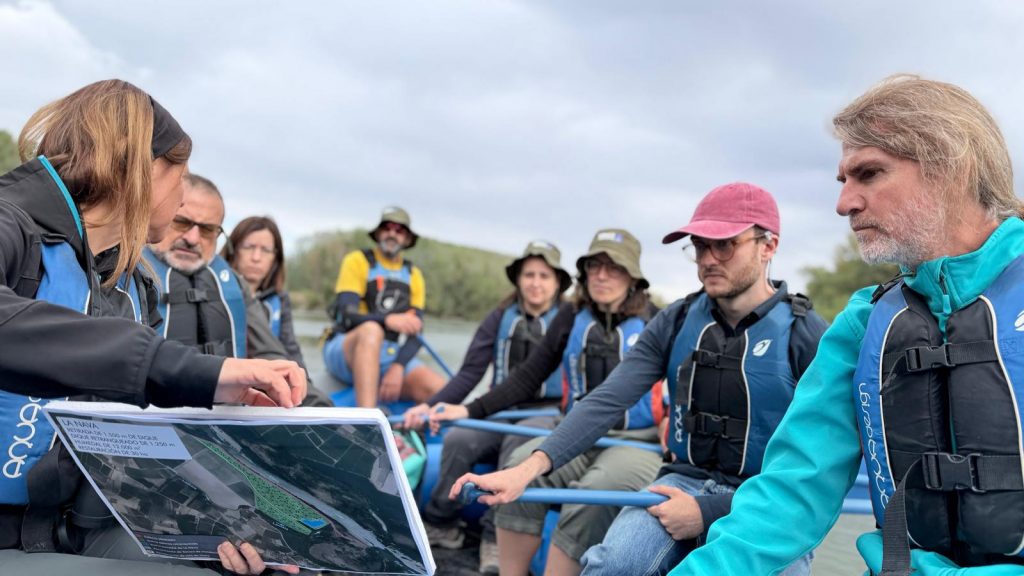
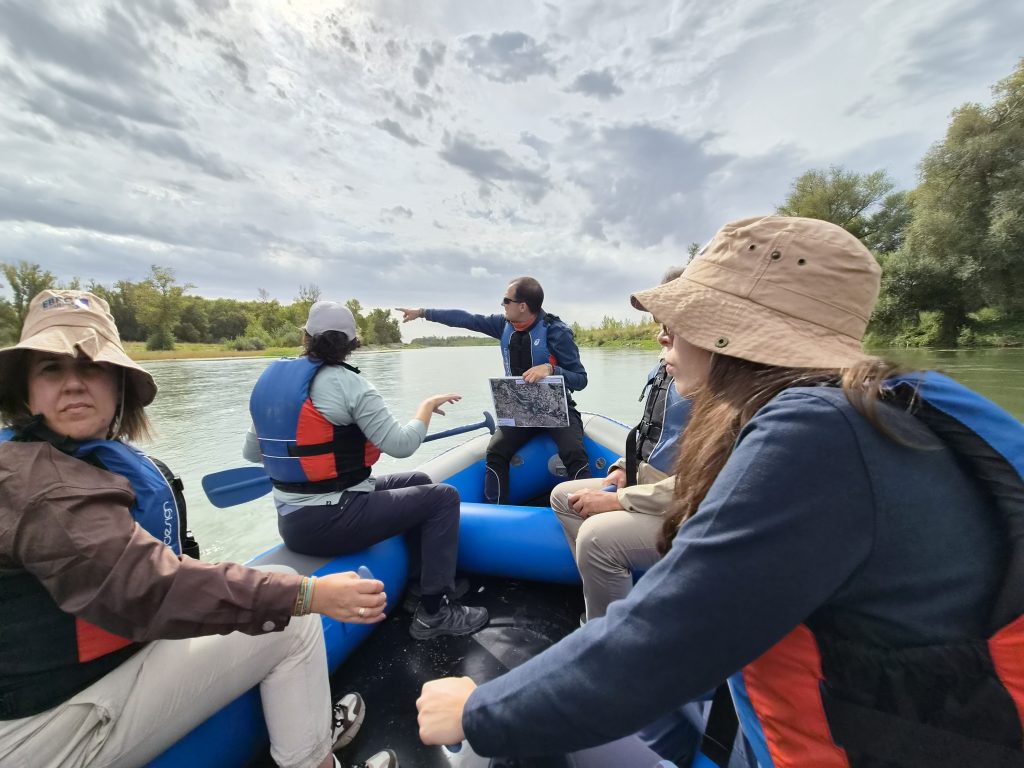
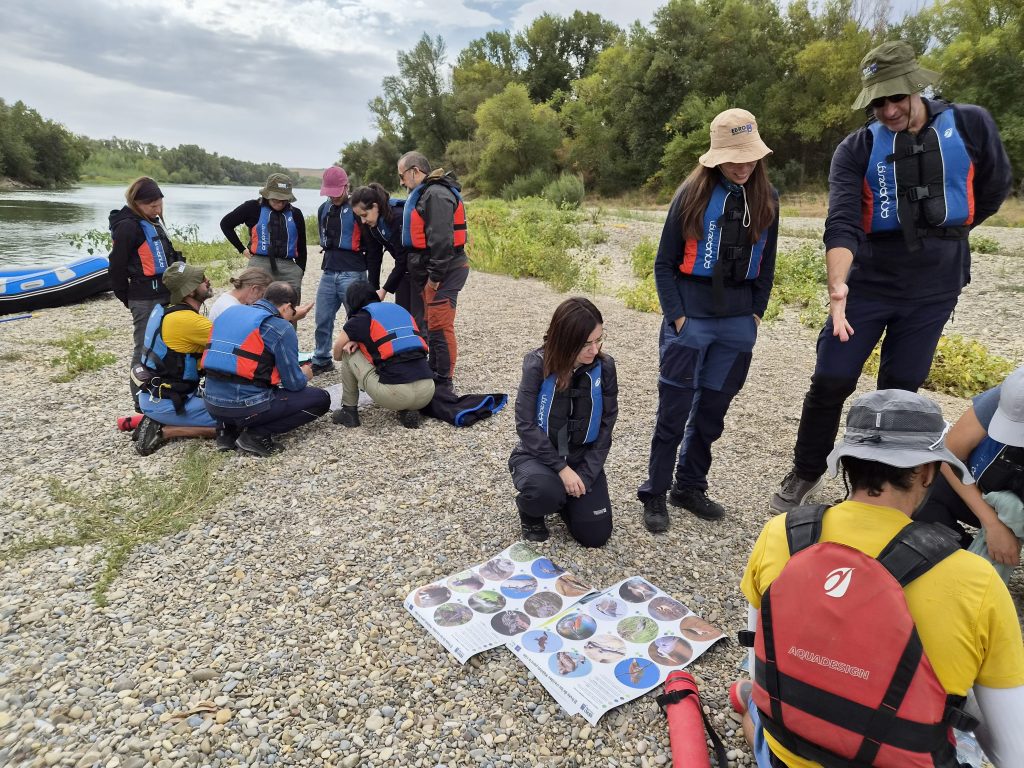
The tour took the form of an interpretive descent—a signature initiative of LIFE Ebro Resilience—designed to showcase the river’s changes from the inside, offering a unique perspective. They visited the El Ortigoso site in Milagro (Navarra) and the La Roza meander in Alfaro (La Rioja), where the LIFE IP Duero team was able to observe the transformation that has taken place through the restoration of meanders as part of the river ecosystem.
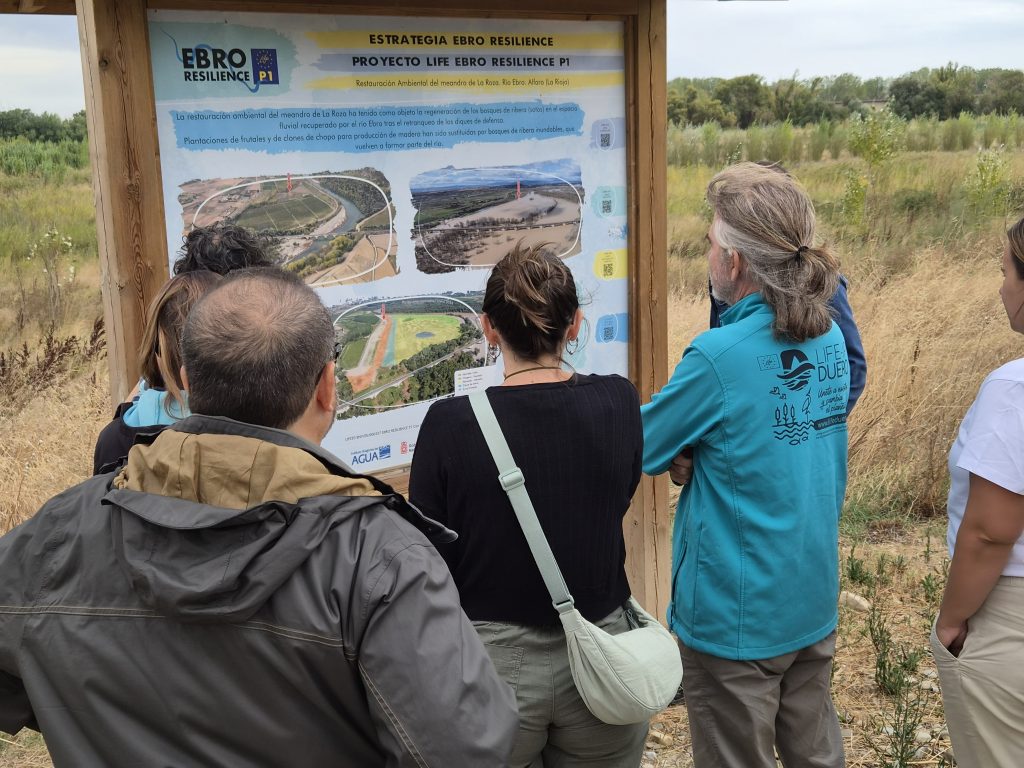
In La Roza, the morphological restoration was completed in November 2023, allowing for the recovery of 22 hectares as a riverine area within the “Sotos y Riberas del Ebro” Natura 2000 site. This was followed by environmental restoration, which involved planting 4,650 specimens of species native to the Ebro riverbanks and their groves across approximately 12 hectares; this project is currently in the monitoring phase.
The tour also provided an opportunity to learn about the project carried out in the Soto de Alfaro, where old river channels have been restored across an area of about 60 hectares. The reopening of these waterways restores the grove’s connection to the river’s natural flow and promotes its natural flooding and irrigation.
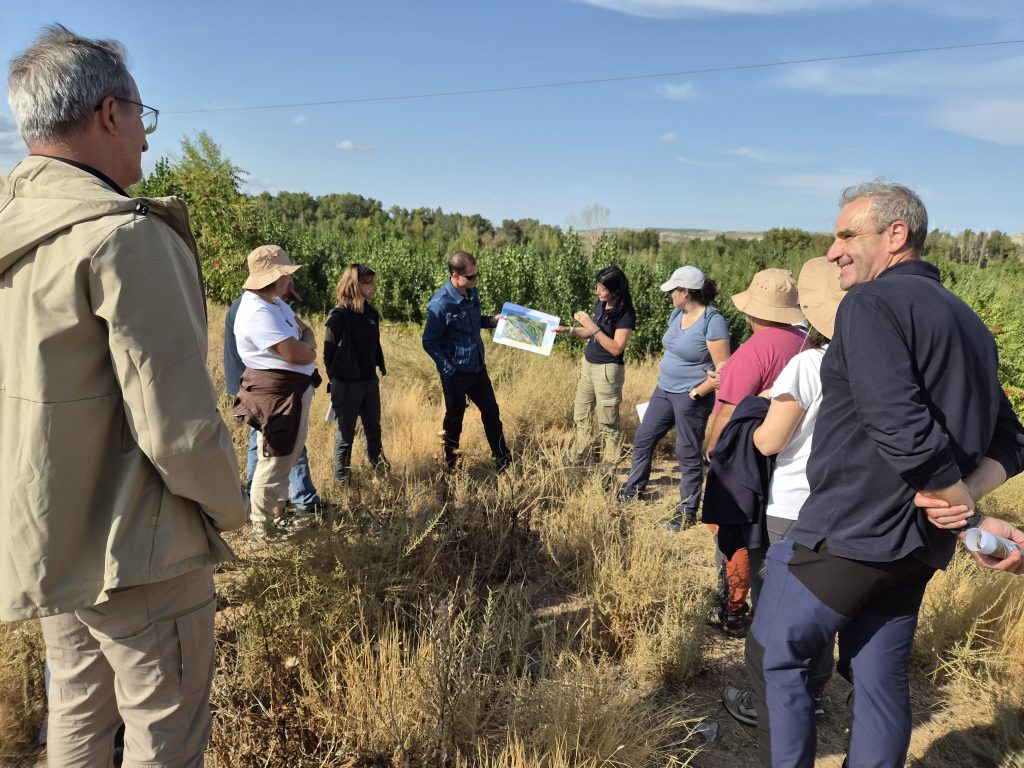
After leaving the river, the tour continued in the afternoon at the El Señorío meander in Castejón (Navarra), where the project calls for a new morphological restoration effort. The project aims to restore 23 hectares of riverine habitat by removing 1.3 kilometers of the perimeter levee. It also includes the creation of a relief channel that will restore a former branch of the Ebro River and connect natural areas via three ecological corridors.
Thus, the tour provided an opportunity to observe on-site the different phases of a single adaptation process: a project already completed and currently being monitored in La Roza, the restoration of river branches in Soto de Alfaro, and a project currently in the planning and preparation stages in El Señorío.
Addressing Adaptation in Agricultural Areas
The second day provided an opportunity to learn about another area of focus for the LIFE Ebro Resilience P1 project: the initiatives carried out in Osera de Ebro and Fuentes de Ebro (Zaragoza), where the project is working to reconcile an area of intensive agriculture with flood flows.
During the visit to the Lateral Flow Buffer Zones (ZAFL), the LIFE IP Duero team learned about the planned intervention model designed to allow certain agricultural areas to receive water in a controlled manner before flood defenses overflow, creating a temporary storage space that reduces damage to farms and infrastructure.
In addition, they toured the projects that have already been carried out in the area, including the setting back of river embankments and the restoration of river habitat, which has eliminated narrowings in the river channel and restored 23 hectares of river habitat, as well as the adaptation of the irrigation system of the Huerta del Ebro Irrigation District through a new underground pipeline located farther from the riverbed.
The ZAFLs thus represent a different model from the measures implemented along the Alfaro-Castejón section, but they are based on the same principle: adapting the territory to the river’s behavior, reducing risk through the reclamation of land and the use of solutions that allow for better water management when floods occur
An Experience Working with the Local Community
A significant portion of the meeting was devoted to learning about the LIFE Ebro Resilience P1 project’s experience in the areas of communication, public participation, and social capacity building—an area that is one of the project’s distinguishing features.
Since the LIFE project began, engagement with the local community has been viewed as an essential part of the process of adapting to flood risk. It has not been limited to simply providing information about the actions taken, but has sought to foster shared knowledge, incorporate different perspectives, and create opportunities for dialogue among those who are involved in, live in, or work in the area.
During the session held at the headquarters of the Ebro River Basin Authority, the project team explained to LIFE IP Duero the tools and experiences developed over the years and the work carried out with a wide range of stakeholders: irrigation communities and farmers, municipal technicians, school teachers, environmental educators, the university community, and people directly affected by flood risk, among others.
An example of this work is the processes developed with the irrigators of the Huerta del Ebro, particularly in connection with the projects in Osera de Ebro and Fuentes de Ebro, where adapting the territory requires taking into account both the river’s flow and the needs of an intensively farmed agricultural area.
Specific forums have also been organized with local government technicians, professionals in education and environmental outreach, and university faculty, in addition to activities aimed at schools and initiatives to promote knowledge of the region. This diversity of participants has made it possible to address flood risk from different perspectives and to bring the project closer to those who will play a role in the future transformation and management of these areas.
As part of this process, co-creation groups and a Conflict Transformation Group have been established, along with participatory workshops, working sessions, public meetings, and field visits. In addition, the Social Capacity-Building Plan was designed to provide knowledge and tools that enable people to better understand flood risk and participate more informedly in adaptation processes.
LIFE Program
The LIFE Ebro Resilience P1 Project, which receives financial support from the European Commission’s LIFE Program, is an innovative initiative to address the issue of flooding in the middle reaches of the Ebro River, with a clear objective: to ensure that the population and economic activities coexist with an Ebro River in a good state of conservation, while reducing the damage associated with floods that are part of the river’s natural dynamics.
The project is led by the Ministry for Ecological Transition and the Demographic Challenge (MITECO), through the Ebro River Basin Authority (CHE), in collaboration with the public companies TRAGSA and TRAGSATEC, the Government of La Rioja, the Government of Navarre, through Orekan-Gestión Ambiental de Navarra, the Government of Aragon, and the Aragonese Water Institute.