


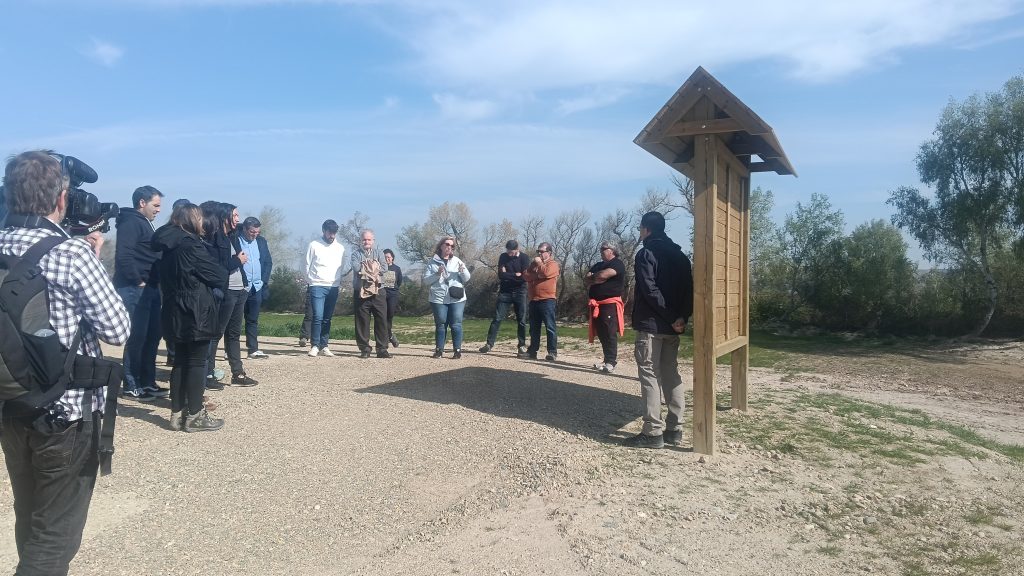
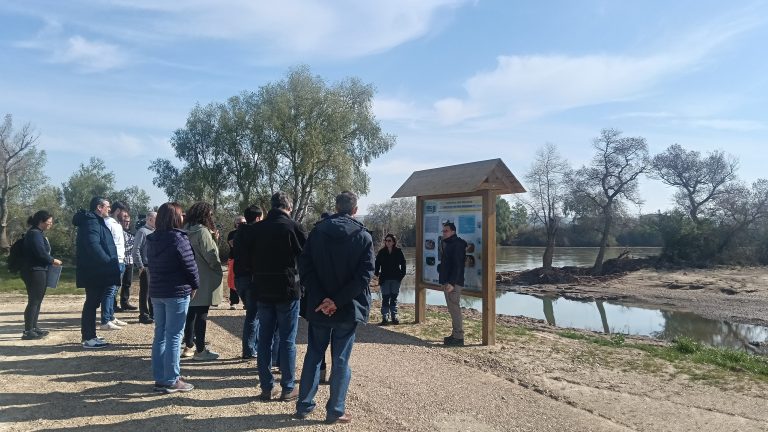
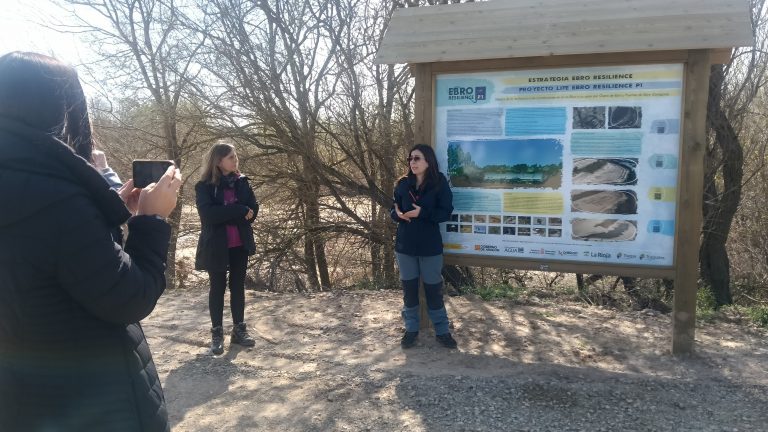
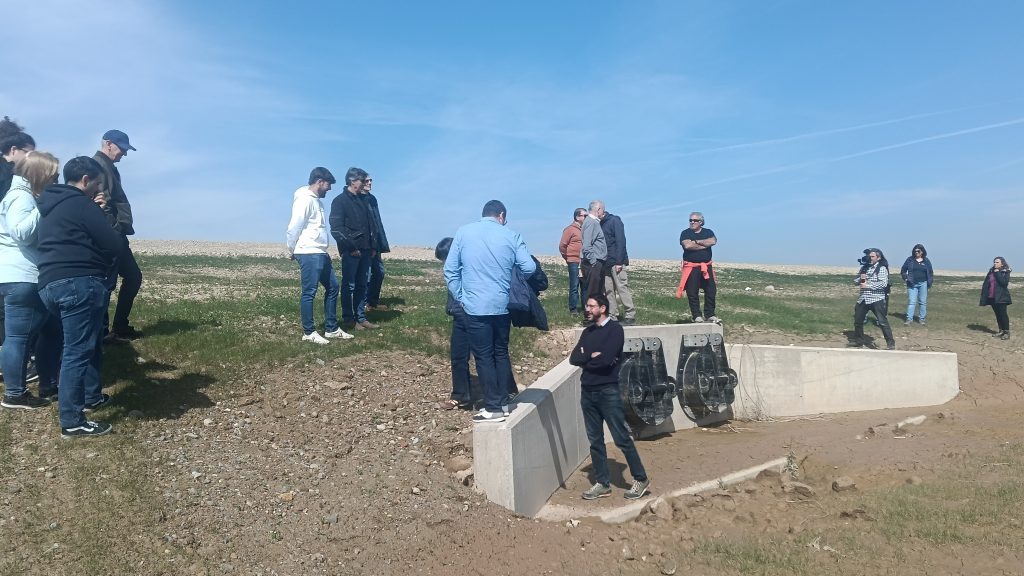
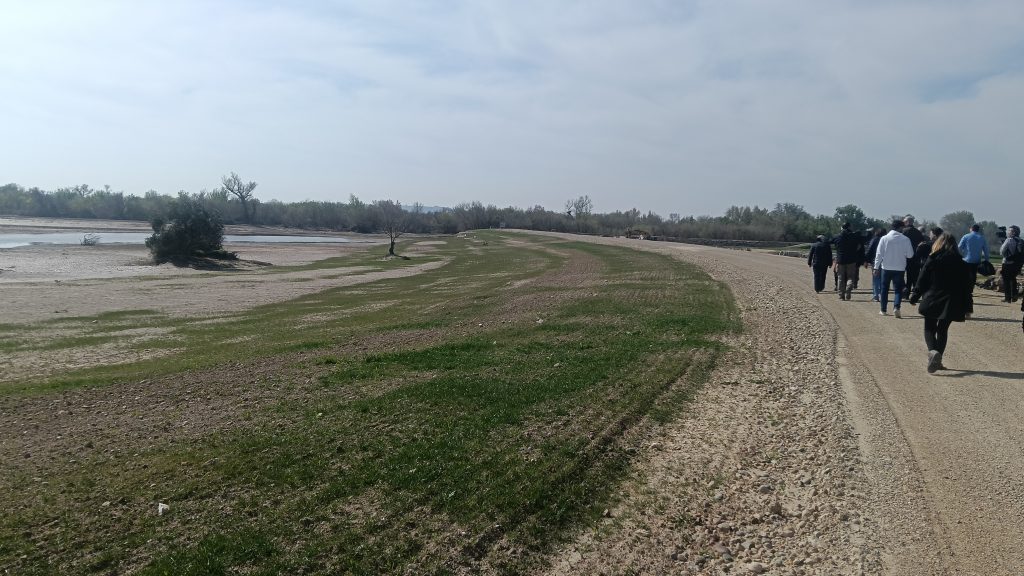
The Forum of Local Authorities of the LIFE Ebro Resilience P1 Project has gathered again, this March 20, municipal representatives in a day focused on the technical exchange and the field visit to the section between Osera de Ebro and Fuentes de Ebro (Zaragoza).
This activity of the Local Entities Forum, one of the experiences for the strengthening of social capacities launched by the LIFE Ebro Resilience P1 Project, was attended by representatives and municipal technicians from Fuentes de Ebro and Quinto (Zaragoza), as well as by the Irrigation Community of the Ebro Orchard and technicians of the Project.
A space to continue informing, educating and reporting the progress of the work to the municipalities, a crucial part of these actions. But also, a day to value the common effort of the riparians, farmers, landowners, municipal entities, the Administrations that have worked in a coordinated manner and the technicians to implement the actions of adaptation to the floods that are already showing their benefits, as was seen in the flood of last February.
On behalf of the partners, attended, among others, the director of the Aragonese Water Institute, Luis Estaún, from the Ebro Hydrographic Confederation, the technical coordinator of Ebro Resilience, David Gargantilla and the person responsible for the works of this section, Tatiana Garza, and from the TRAGSA Group, the coordinator of the LIFE Ebro Resilience P1 Project, Eduardo Murillo (TRAGSATEC) and the coordinator of Participation and Social Capacity Building of the Project, Alba Ballester.
A growing forum: participation, doubts resolved and coordination between administrations
The Forum has held previous sessions in Alfaro (La Rioja) and Quinto (Zaragoza), where municipal technicians and officials from the Ebro Hydrographic Confederation and regional governments addressed practical issues such as:
The field visit has made it possible to continue this work, bringing the debate to the territory itself and providing the municipalities with first-hand knowledge of the actions implemented and underway.
Field visit to the Osera-Fuentes section: seeing on the ground what is already changing
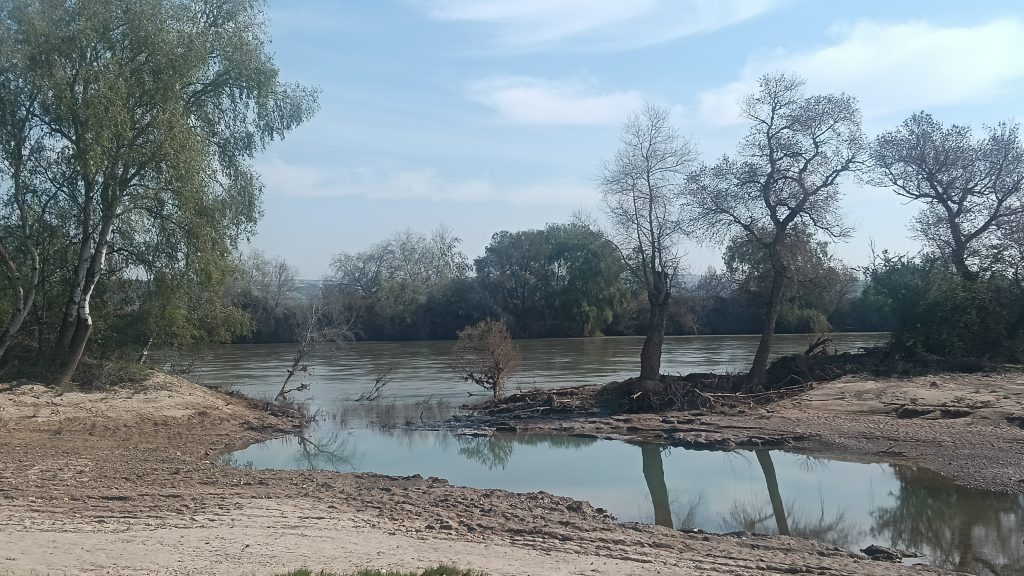
The participants toured several points along the stretch where the project has recovered space for the river and initiated environmental restoration processes. The day served to explain how these actions contribute to reducing damage in future floods, improving river dynamics and favoring biodiversity.
Among the interventions already carried out in this section, the recovery of 23 hectares of floodplain through the relocation of defenses in the Mejana del Conde and the Meandro de Aguilar, where an environmental restoration intervention is already planned.
These actions, already known by the municipalities, have been reviewed today from a practical perspective, analyzing their operation, their integration in the territory and the lessons learned.
The day also provided an opportunity to review the status of Phase 2, which provides for the creation of 14 Lateral Flow Buffer Zones (LFBZ) along 11.3 km. These temporary flood cells will make it possible to reduce the energy of the water in flood episodes and reduce damage to farms and infrastructures.
The municipalities have been able to raise doubts and provide feedback on the design and implementation of these measures, reinforcing the shared vision that characterizes the project.
LIFE Ebro Resilience P1 continues to work with a participatory approach and a focus on social capacity building.
LIFE Ebro Resilience P1 Project
The LIFE Ebro Resilience P1 Project (LIFE20 ENV/ES/00327), approved by the European Commission in the LIFE 2020 call, covers La Rioja, Navarra and Aragón, has a duration of six years and a total budget of 13.3 million euros, 55% co-financed by the European Union.