


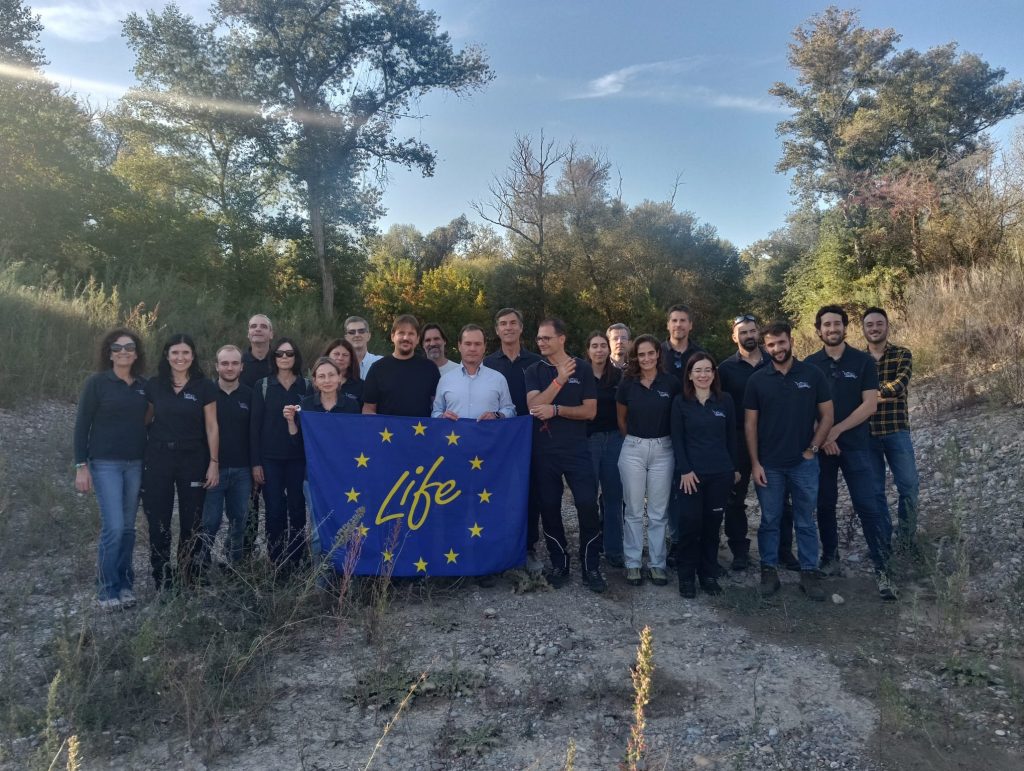
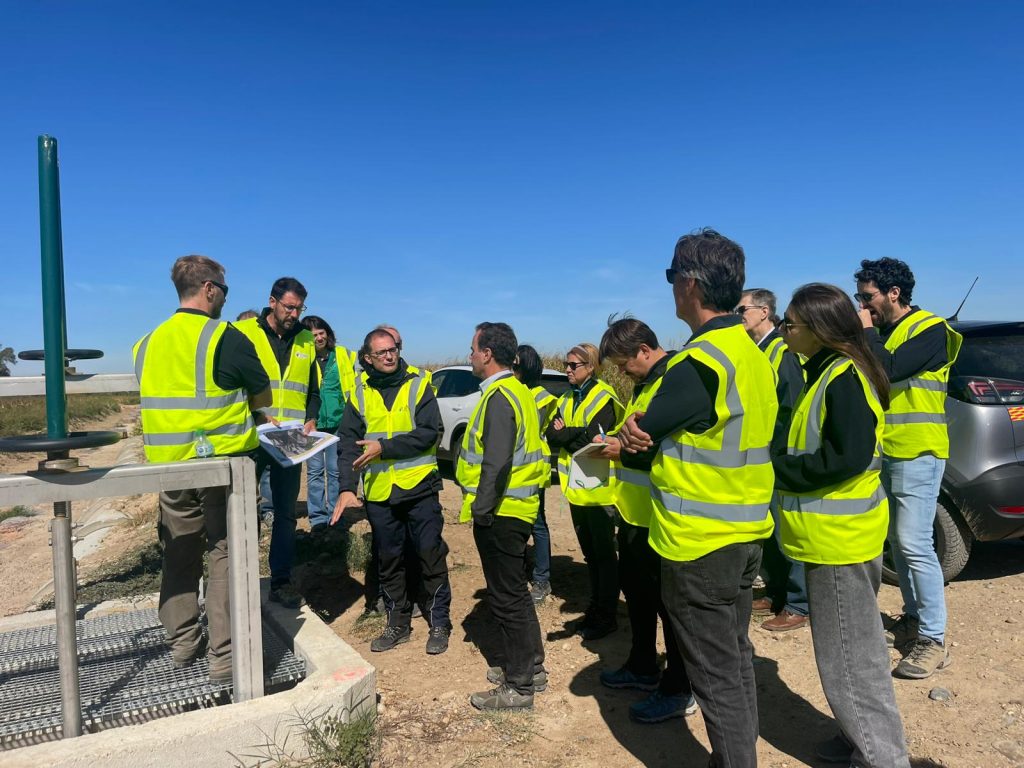
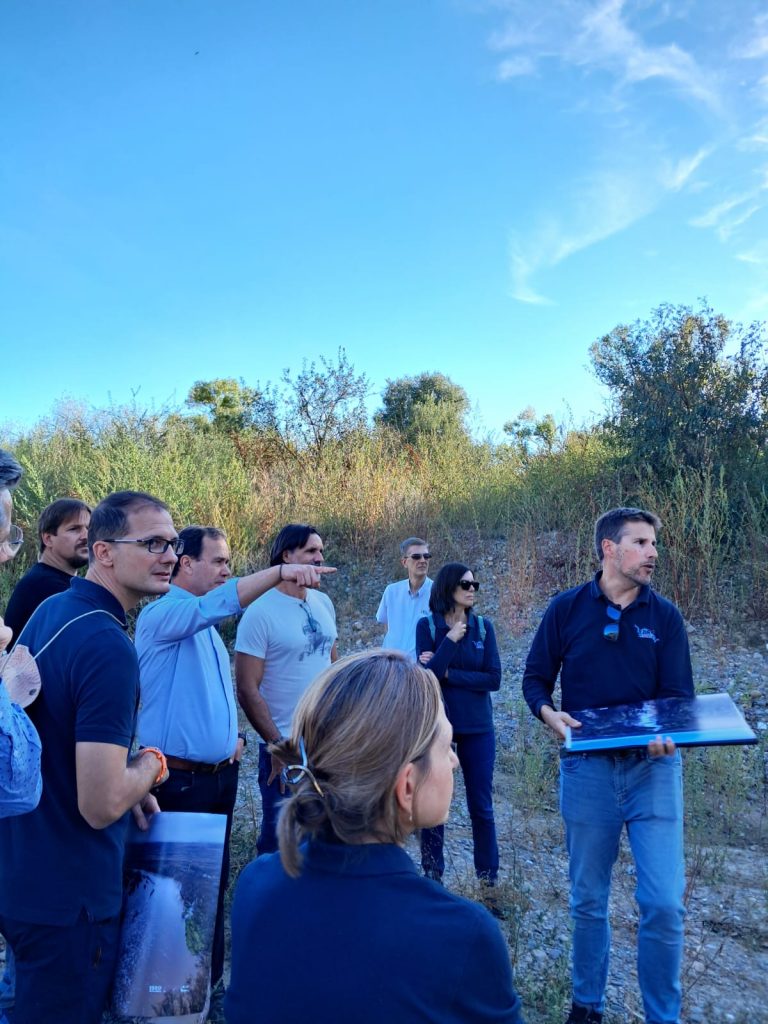
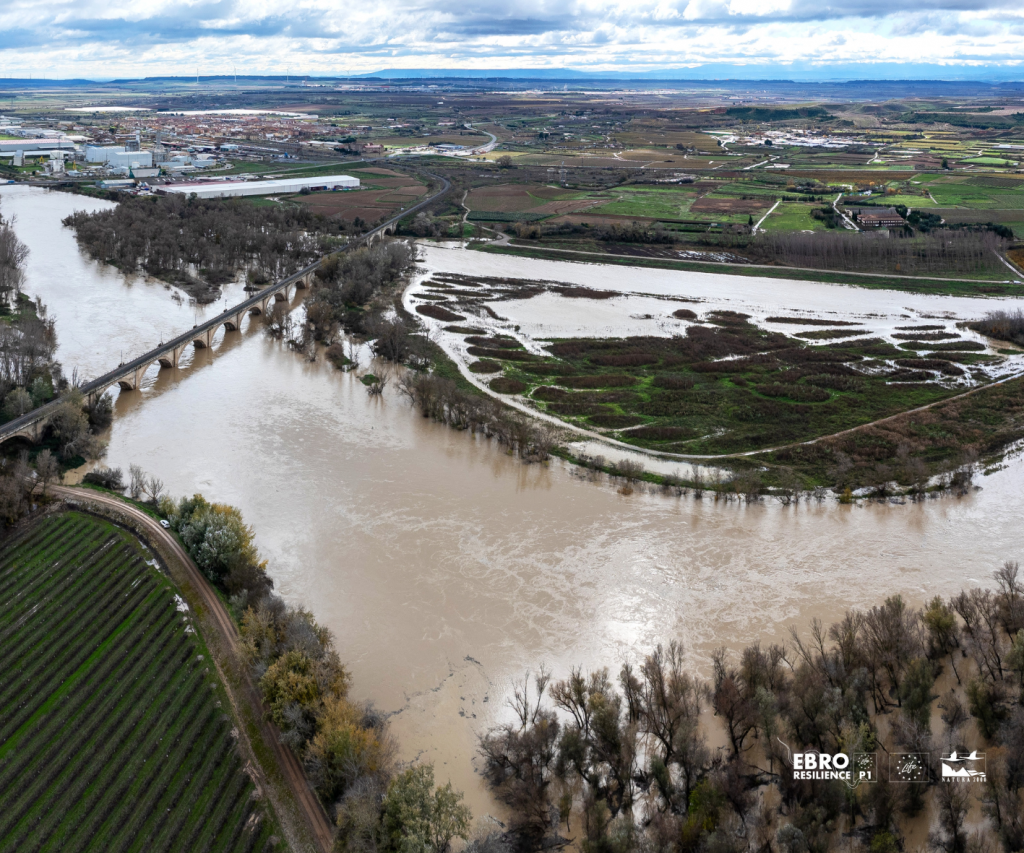
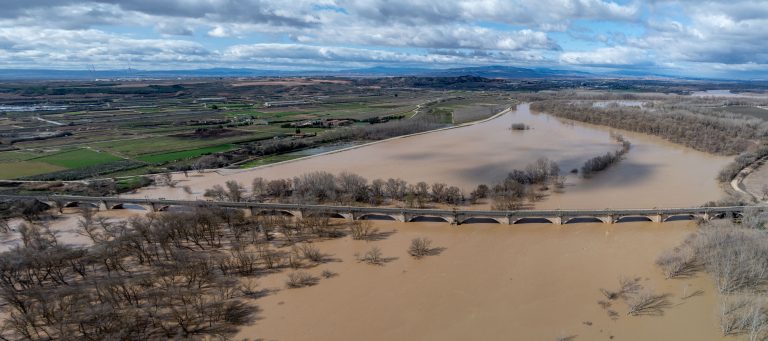
The European Union has shown its interest in the actions for the reduction of flood risk and adaptation to this extreme phenomenon being carried out by the LIFE Ebro Resilience P1 in the middle stretch of the Ebro, with significant progress in the planned work. This was conveyed by the representative of the European Climate, Infrastructure and Environment Agency (CINEA) of the European Commission, Federico de Filippi, who attended the coordination and monitoring meetings of the technical team and, together with various institutional representatives, visited the intervention areas of the Project between September 30 and October 1.
Together with Borja Domínguez, monitor of ELMEN EEIG, the consultancy that carries out the periodic evaluations of all the projects of the LIFE Program, they have checked the compliance with the indicators and the execution of the works. They also wanted to know in depth other experiences beyond the field work, such as the commitment to real public participation and coordination between the public administrations partners of the project.
These two issues, together with innovative technical proposals, such as the adaptation of agricultural areas to river floods by applying the pre-flooding of land (the Lateral Flow Buffer Zones in Osera de Ebro and Fuentes de Ebro), have made the LIFE Ebro Resilience P1 Project a reference for the LIFE Program and the object of replication of these measures in other riverbeds, both in other rivers of the Ebro basin and in other Spanish and European basins.
Among the main advances advances advances:
All actions have been carried out with the participation, through different forums, of stakeholders and the local population, generating the greatest possible consensus on the interventions and responding transparently to the demand for technical information.
The European Commission’s LIFE Program contributes 55% of the 13.3 million euros of the Project and is thus the driving force behind all the interventions of the LIFE Ebro Resilience P1 during the period 2021-2027, integrated in turn in the Ebro Resilience Strategy, which provides for interventions to reduce the risk of flooding in the entire middle stretch of the Ebro.
LIFE Ebro Resilience P1 has as partners the Ministry for Ecological Transition and Demographic Challenge (MITECO), through the Ebro Hydrographic Confederation (CHE) and the public companies TRAGSA and TRAGSATEC; the governments of La Rioja, Navarra, through Orekan- Environmental Management of Navarra and Aragon and the Aragonese Water Institute.
Alfaro
On Tuesday, September 30, De Filippi participated in the meeting of the technical working groups held at the Alfaro City Hall, with a review of the Project’s actions, administrative procedures and fulfillment of objectives.
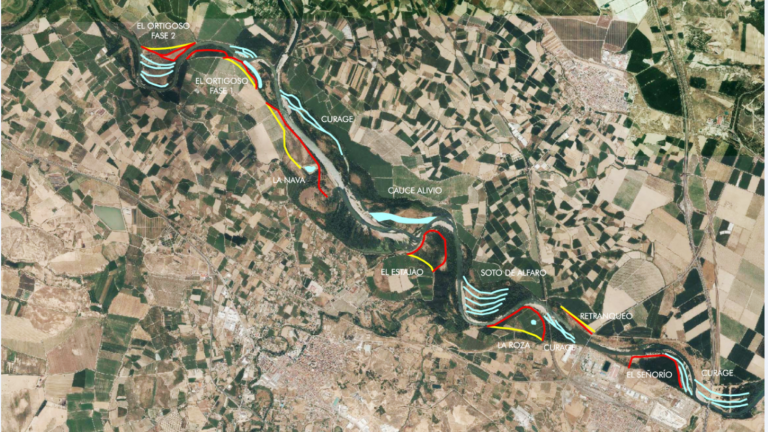
In the afternoon he visited some of the interventions of the so-called Zone 1 of the Project. In the meander of La Roza and in the meander of El Soto de Alfaro, he verified the positive effects of the actions carried out between the CHE and the Government of La Rioja, with the support of the City Council, in a commitment to administrative coordination.
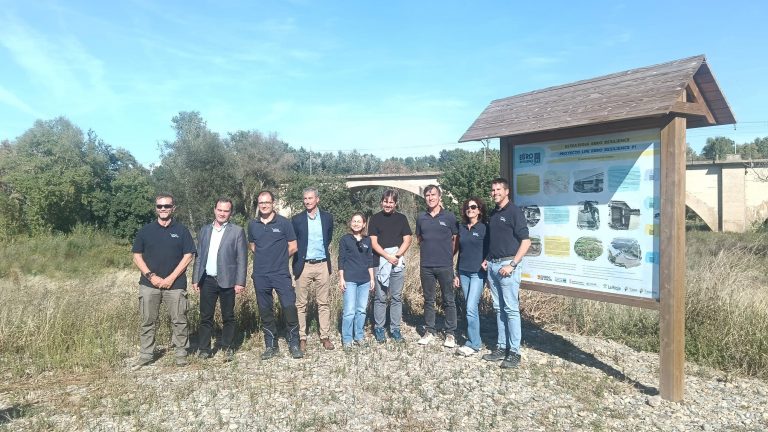
There he was accompanied by the Director General of Natural Environment and Landscape of the Government of La Rioja, Ignacio Saenz de Urturi; the Deputy Deputy Director of Water Protection and Risk Management of MITECO, Monica Aparicio and the Mayor, Yolanda Preciado, along with the technical team of LIFE Ebro Resilience P1 with partners from the Communities of La Rioja, Navarra and Aragon.
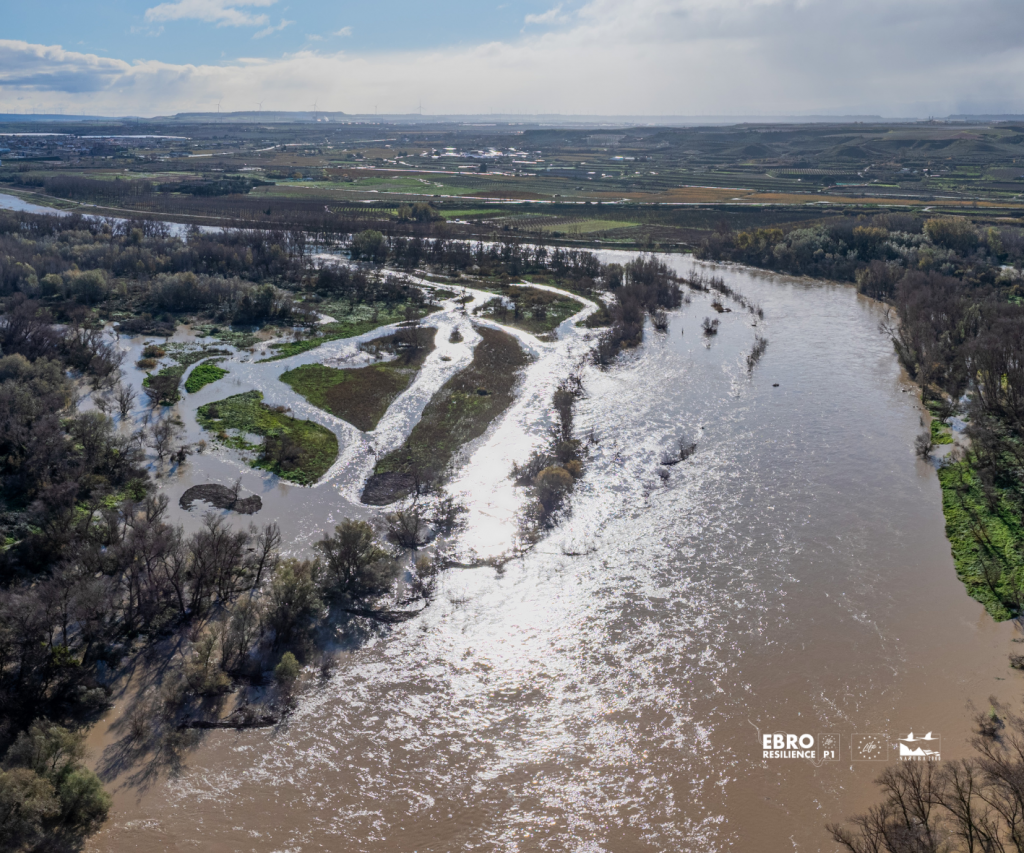
Nature-based solutions for flood risk adaptation are being implemented in this area. The Alfaro actions, together with those also planned by the LIFE Project in the Señorío meander, in Castejón (Navarra), and the interventions previously carried out through the Ebro Resilience Strategy in the Ortigoso site (Navarra) and the meanders of La Nava and El Estajao, also in Alfaro, make up the Section of combined actions The combined actions: actions carried out successively that together amplify their improvement effects in the reduction of flood risk for the whole stretch.
In addition, river dynamics have been improved:
2. In the
Soto de Alfaro
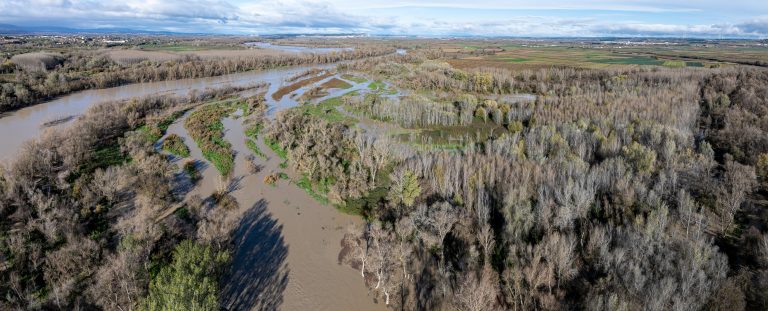
the lost branches of the river have been reopened. The recovered branches, in a space of 60 hectares,
3. In this section, in addition, an interesting experience of participation has been carried out with the collective definition of the uses in a parcel of land . the collective definition of uses in a plot of land located outside the public located outside the public hydraulic domain, which was released during the process of making land available for the morphological adaptation of the La Roza meander, in Alfaro (La Rioja).
Osera de Ebro – Fuentes de Ebro
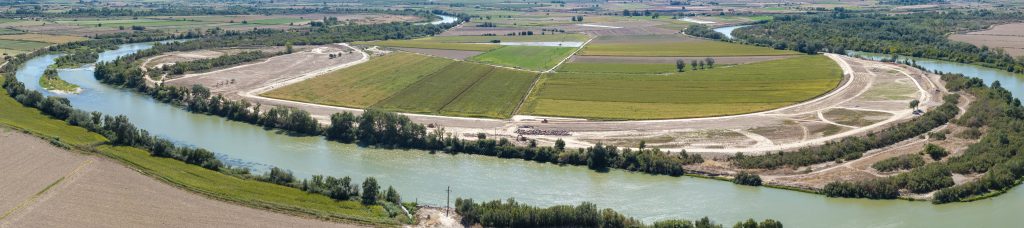
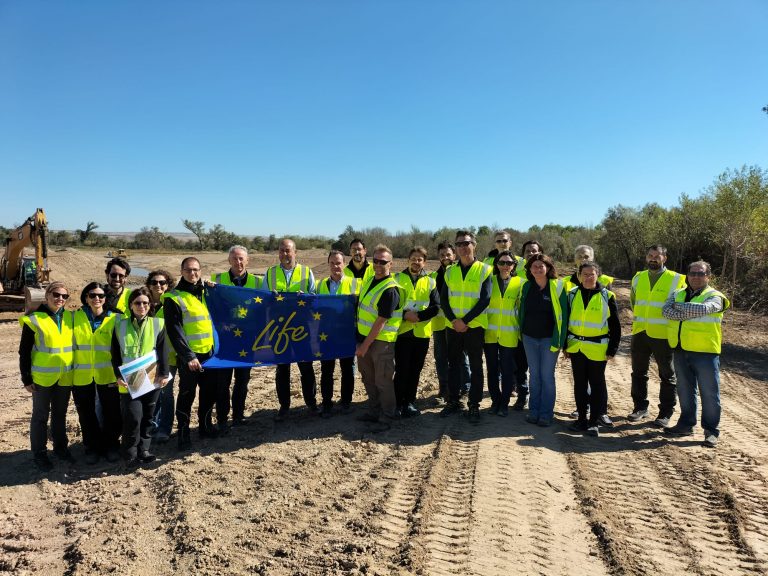
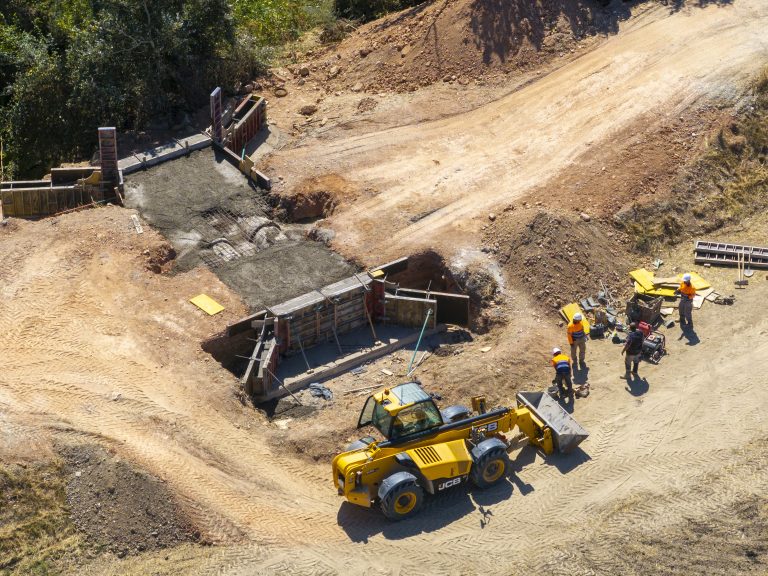
On Wednesday, October 1, the visit focused on the section Osera de Ebro – Fuentes de Ebro (Zaragoza), where the works to recover river space in the mejana del Conde and the meander of Aguilar are already concluding. They were accompanied by the president of the CHE, Carlos Arrazola, the director of the Aragonese Water Institute, Luis Estaún, the mayor of Osera de Ebro, Enrique Gómez, and the mayoress of Fuentes de Ebro, María Pilar Palacín, together with the entire technical team.
This October, work will conclude on phase 1 of the phase 1 of the flood risk adaptation of agricultural areas. of agricultural areas.
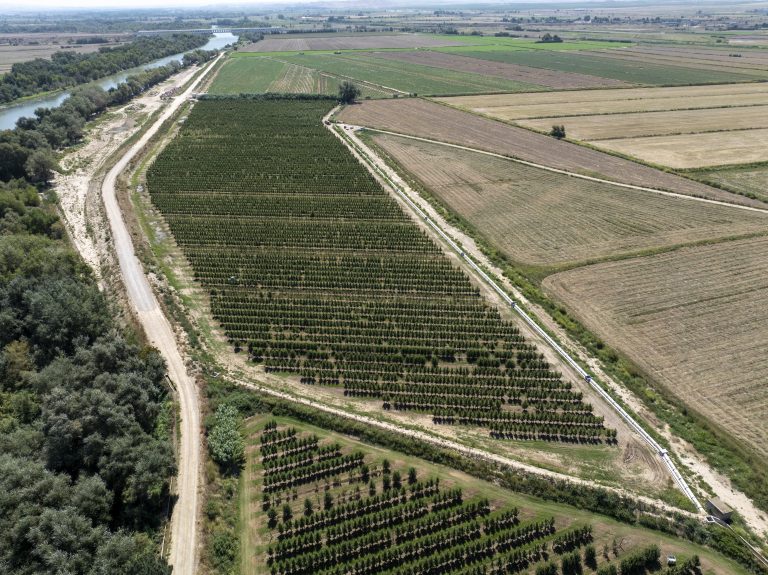
In parallel, phase 2 is progressing , a reference intervention for the European Commission due to the innovative nature of the proposal: the creation of Lateral Flow Buffer Zones (LFBZ).
The AFZs are pre-flooded in a controlled manner during extraordinary floods and create “water mattresses”. Here, water flows over water and, as it does not impact on rigid elements and surfaces, damage and erosion are reduced. The innovative idea is that they are prepared so that the overflowing water passes continuously over the pre-flooded areas, flowing parallel to the river and helping drainage after the episodes.
The participation of farmers in the area, the Irrigation Community of the Huerta del Ebro, the municipalities and other sectors involved, has been key to move forward with this approach to flood adaptation.
In this section, the Government of Aragon has adapted a section of the irrigation system of the Irrigation Community of the Huerta del Ebro, which has been buried and moved away from the riverbed. Together with a greater adaptation to the flooding of the Ebro River, by preventing the irrigation ditch from being an obstacle to the flow of water, it also increases the efficiency of the irrigation system, reducing losses and maintenance work.